Table of contents

“My first view of AI was that it is a new software, it’s a very technical thing, and you just learn how to use it, like you would learn a new language.”
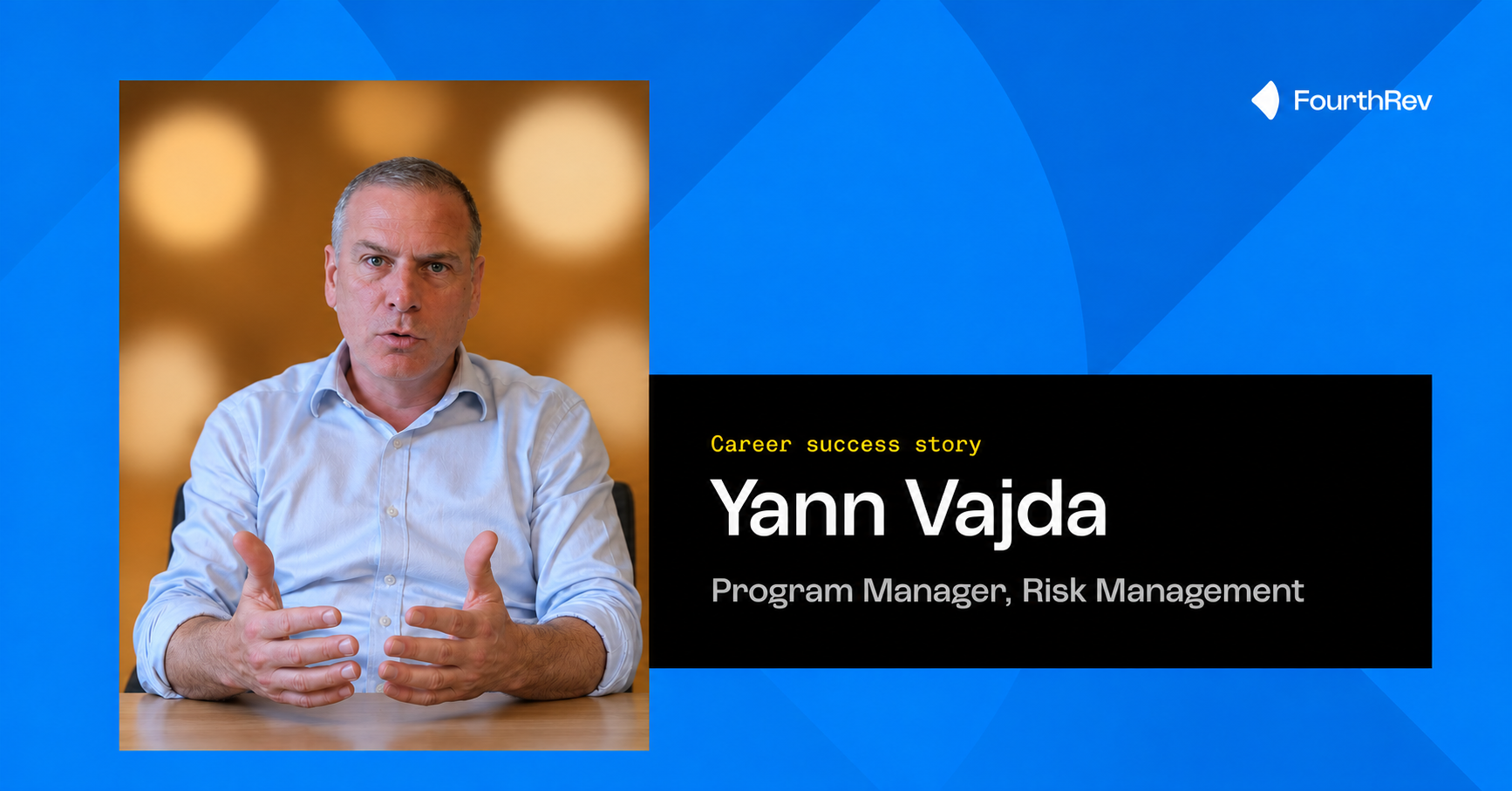
Yann Vajda has spent about 20 years in banking, working as a project manager for several London banks. His work has covered change management, trading systems, and front-office risk management, and he has an engineering background, where he studied physics and electronics and learned to code.
From 2023, the UK bank he worked for invested in AI and set aside budget for it. Yann began building projects and solutions with AI himself and enrolled on the LSE AI Leadership Accelerator. Partway through the programme his role was made redundant, and he continued studying while he looked for his next role.
He recently spoke to us in an AMA webinar about his experience in AI leadership.
Leadership as a subject
Yann’s biggest shift came from the leadership content. He describes himself as a “medium-level leader” and hadn’t expected to study leadership.
“I never thought that leadership would be a science that you have to learn as a science, as a subject. And it is.”
The 1:1 leadership coaching gave him a starting point for that development, and he recommends it to anyone on the programme.
“It’s essential, I think anyone should do that, even if you don’t have any specific goals, but it’s very helpful.”
From software to strategy
Over the four courses, Yann’s view of AI moved from a tool to learn to a question of strategy, adoption and keeping people in the loop. He found the material on bias in AI-assisted recruitment especially useful, because the frameworks for spotting and managing bias apply to data and knowledge in any setting.
His day job centres on managing knowledge across projects that run for a year or two and involve tens of people, from budgets and requirements to technology and regulation. He now uses AI to organise that information, so he can give a high-level view and still answer detailed questions on the spot.
“So the amount of work you can deliver has increased with AI, with the programme.”
Making the case to senior leaders
The programme also changed how Yann approaches the board. He learned that AI-led change needs top-level backing, and that a proposal must cover data, testing, adoption, and governance, as well as the build itself, including how models will be monitored as they drift over time.
“When you are serious about this, and you answer all of these aspects in a simple and structured way, then that’s a very strong message.”
A demanding, academic programme
Yann is clear that the LSE’s academic approach is demanding. The frameworks give you the tools to build your own answers for your organisation’s problems, and he found it all came together by the end. His routine was simple:
“Attend the session, prepare half an hour before, spend an hour after the session, and do that every week, and I think that works.”
The outcome
When asked whether the investment was worth it, Yann answered yes immediately.
“I was made redundant, I found a job. I think just saying that I was studying at LSE on this matter helped me to secure the job.”
He sees the programme as preparation for the next 10 to 20 years rather than for the latest tool, and he now draws on its material in almost everything he takes on.
Want to see whether the programme fits your goals? Download the brochure.
Share:


