Table of contents

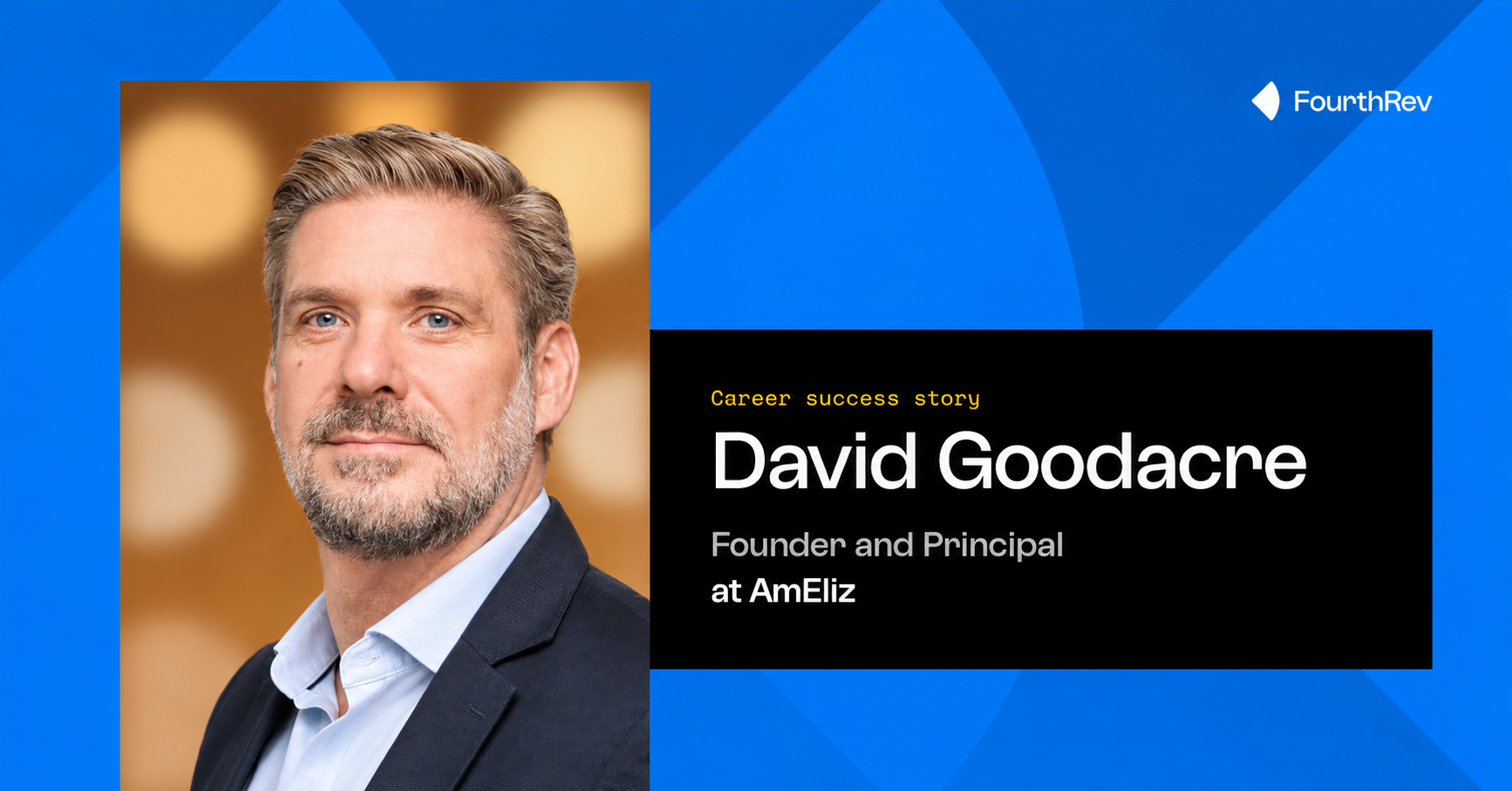
David Goodacre is the Founder and Principal of AmEliz, a board and executive advisory business focused on cybersecurity, AI and resilience.
In an AMA webinar recorded halfway through the programme, David shares why he chose a cybersecurity leadership programme, despite a background in leading people rather than technology, and how it’s helping him have technical conversations with boards.
Leadership first, then cyber
David spent 25 years in the Army as an infantry officer, followed by five years in the Chief Information Security Officer of a bank. Leadership was his background. He built security along the way.
“I saw this course as an opportunity to get some credibility from Cambridge, because I have no security qualifications as such, it was getting that qualification behind me.”
His time at the bank shaped how he sees the field. He noticed people treated security as a technical issue, when it’s just as much a people issue, one that comes down to leadership, culture, and education. That view now drives his advisory work with boards and executives.
A gap he saw in the boardroom
David sits on boards, and he noticed a pattern. Many directors lacked the background to discuss cyber risk in depth, so they leaned on a single CISO, CIO, or CTO to make risk decisions the board should own. In his view, these are business decisions about how much risk an organisation is willing to take, and cyber risk is unusual because getting it wrong could end the business.
“You wouldn’t be on a board if you didn’t understand finance. So why are you on a board if you don’t understand cyber? I think it’s really important, and that’s what this course is giving people the skills to do.”
That gap became the focus of his business. After a career spanning the Army and banking, David narrowed AmEliz down to one area: helping boards and executives get to grips with cyber and AI resilience. That specific focus needed credibility, and that’s what he was looking for when he found the programme.
“I sit on a few boards…[and] have a view that boards don’t talk…enough about cyber. So I’ve narrowed [my professional focus]…to educate my peers on boards and in the C-suite around cyber and AI resilience…This course aligned really [well] with that, and [has] credibility in that area.”
Why this programme, and why now
David came across the programme on LinkedIn. What stood out was the combination of cyber, leadership, strategy, and AI in one programme.
He saw it as “quite unique in having that strategic-level conversation”. As he put it, “A lot of courses aren’t aimed at that level, they’re aimed at technical skills.”
The Cambridge PACE certificate mattered too.
“I went to university many years ago, and I went to a Polytechnic. So for me to have a top-tier university on my LinkedIn profile, on my CV when I’m talking to people, adds a massive amount of credibility as far as I’m concerned, and that for me was a large part of the investment.”
So did the timing. AI has made things change so quickly that, in David’s words, “businesses need help, boards need help”. He saw the chance to “get in and help them now”, and that was part of his decision to start the programme straight away rather than wait.
He was honest about his hesitations before enrolling: the cost, and whether he’d have the knowledge to keep up with the content. Several conversations with the FourthRev enrolment team helped him work through both.
“I already speak board, I want to speak tech”
Much of the programme focuses on helping technical professionals speak the board’s language. David is coming from the other direction, and he argues the shift needs to happen both ways: boards need to understand some of the technology, too.
“Leadership, I thought, was my skill before I came on the course. What it’s allowing me to do is link the two, so I now have more confidence if I get asked a technical question. I already speak board, I want to speak tech, and I’m kind of meeting in the middle.”
He’s already applying what he’s learned with clients.
“I ran a tabletop exercise for a company last week, and I was able to use more technical language than I would have done six months ago, because I’ve been able to see it and learn it on the course. I’m using it, I’m gradually upskilling myself, and being a bit more capable as I talk.”
Support and a cohort to learn with
As a business owner, David has found the 1:1 career coaching that comes with the Career Accelerator especially useful.
“For me, I’ve got my own business. The only person I get to talk to about it is Claude. So it’s quite nice to have a human being to run my ideas past as well, who runs their own business. We bounce ideas, and she gives me feedback.”
Alongside his coach, the Success Manager team runs weekly sessions and is easy to reach directly. If anything, he says, the limit has been his own time, not the support on offer.
His peers have been just as valuable. Learners in his cohort work across a real mix of sectors and countries, so they stay in touch through a group chat, share content, motivate each other before deadlines, and meet new people in breakout rooms during live sessions. He’s looking forward to meeting them in person at the Cambridge Leadership Immersion.
The effort it takes
David admits the programme is a real commitment, especially since he runs his own business and every hour away from client work is unpaid. He blocks out a couple of hours most evenings, and he gave up a full weekend to finish his first assignment.
Asked whether he’d do it all again, he said yes, with one change: more structure from the start.
He’d plan and protect the time earlier, because he’d expected to coast more than the programme allowed. For anyone who already knows they need to build their cyber leadership capability, he sees the decision itself as the easy part. Following through is what takes discipline.
Ready to take the next step?
Bring cyber leadership into the boardroom with this Career Accelerator.
Six months, part-time and online, with 12 months of 1:1 career coaching and a Certificate of Completion from Cambridge PACE.
Download the brochure to find out more.
Share:


