Table of contents

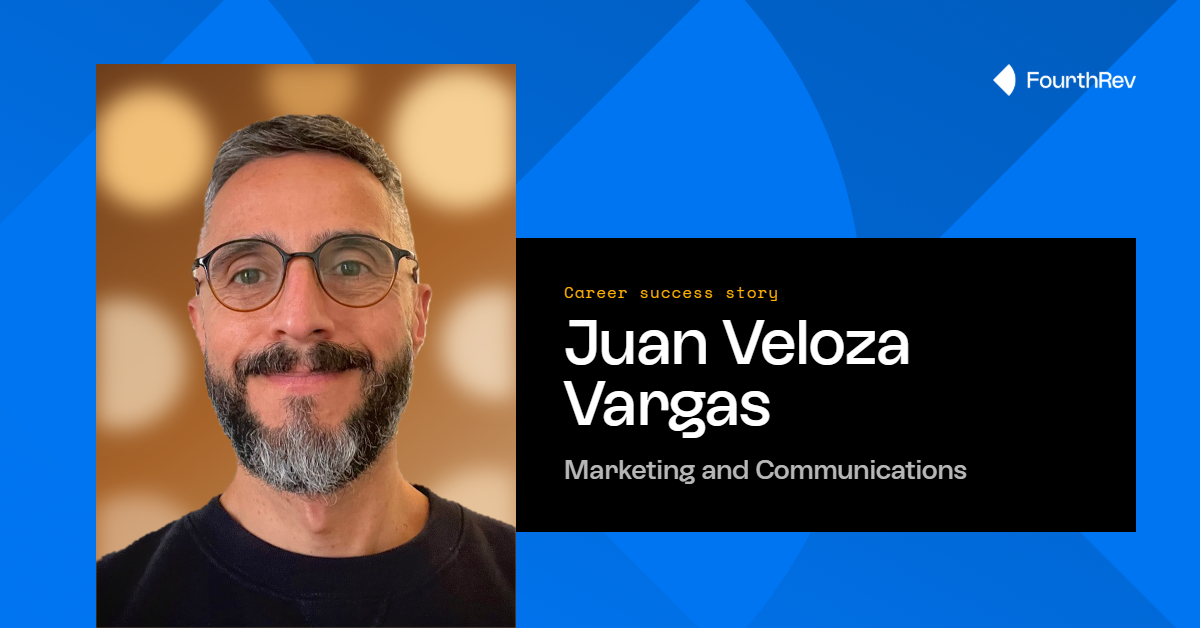
Juan Veloza Vargas works freelance in marketing and communications in London. Since completing the King’s Product Management Career Accelerator, he has applied what he learnt to his work, starting every decision with the customer.
Before the programme, he spent 18 years in marketing and communications, mostly in film and TV distribution. His experience spans e-commerce, PR, digital, project management and product development, and in his most recent role he headed the marketing and communications department at a UK distribution company. His team licensed content from producers including Fremantle and ITV and launched its own small streaming platform.
Product decisions were part of his working life. Juan sat in the room when colleagues weighed up streaming platform features, e-commerce changes and what to build next with licensors and agencies. But he was always there as the marketer.
“I wasn’t entirely satisfied with the PR elements of it, with some of the marketing elements of it, and I just wanted to really be behind it, there where the decisions are made.”
A designer’s background
Juan is Colombian and has lived in London for nearly 22 years. He earned his first degree in industrial design, so thinking about the people who use a product was already part of how he worked. When he began looking for a change, he considered two routes: moving into data or product management.
He did his own research, watching videos, attending webinars and looking on LinkedIn at what past learners had gone on to do. He started with a Data Analytics Career Accelerator, then moved to the King’s Product Management Career Accelerator. He chose King’s for its reputation as one of the UK’s leading universities and for how the programme was shaped.
Learning what he thought he knew
One of his first projects felt familiar. Learners built a fictional streaming service and worked to improve its personalisation tool, the kind of feature Juan had marketed for years.
“I thought I knew a lot, but obviously, as the content was coming and the expectations were fitting, I realised, wow, this is totally new for me.”
Working on the product side meant creating roadmaps, setting KPIs and watching a product take shape alongside his research. Later, his team built a recruitment tool and used AI extensively throughout, which was part of what Juan had wanted from the programme.
He found the learning practical, even though it was all online. The facilitator encouraged learners to take part in live sessions, and the team project at the end brought together people from around the world, with different knowledge, personalities and locations. Juan compares it to a work project: the team had to agree quickly how it would work and what it needed to deliver.
The skills he uses now
When asked which skills he uses most, Juan starts with users: developing personas and analysing customer behaviour, what they prioritise, and what causes them pain. Then come roadmapping, prioritisation frameworks and OKRs, and balancing what the business needs against what customers want.
The biggest change is in his instinct. In marketing, he often started with the message. Now it is the person on the receiving end of the product. He also found that much of his experience carried across, once he learnt the language product teams use.
“But I mean, particularly with me, with my marketing skills, there are lots of transferable skills.”
Making the time
Juan is open about the effort involved. He had been out of formal study for more than ten years, and rebuilding a study routine was his biggest challenge. Some classmates already worked in product management and knew the terms. Others, Juan included, did extra reading to keep up.
“It is a big commitment, and I think this is obviously something that people need to know.”
Freelancing gave him some flexibility, and he followed his coach’s advice: short, scheduled study slots, regular breaks, and not taking on too much at once. New content usually dropped on Friday, ahead of the following week’s sessions, so he used weekends to read ahead, often studying for two hours after a morning run. His advice to future learners is to work through as much content as you can once it’s released, while keeping time for family, films and walks.
He quickly credits classmates who balanced more, including single mothers studying alongside full-time jobs. “They were absolutely brilliant.”
Support at every stage
Juan’s Success Manager kept the cohort informed through a dedicated channel, and the course facilitator was always available. A forum let learners answer each other’s questions. His career coach shared resources and helped him build a plan for his career change.
“So I felt really supported throughout the programme.”
The connections reached beyond his own cohort. Juan met up in London with a fellow learner who had also moved across from data, and joined coaching activities with learners from the design and data Career Accelerators.
Why a structured programme
Before enrolling, Juan had tried self-directed online courses and resources. He says they lacked the discipline and content sequencing that mattered most to him. A structured programme gave him both.
His advice
To anyone moving into product from a different background, his answer is short.
“Do it! I think it’s definitely a good step.”
He is honest that the change takes time and work. His key takeaway is structured thinking, and he’s now focused on building a portfolio that shows how he solves problems.
“It’s basically building a portfolio, something that you can, you can show.”
Thinking about a move into product management? Download the programme brochure to learn more about the King’s Product Management Career Accelerator.
Share:


