Pivot into a New Career with Confidence – Advice from a Serial Career Changer

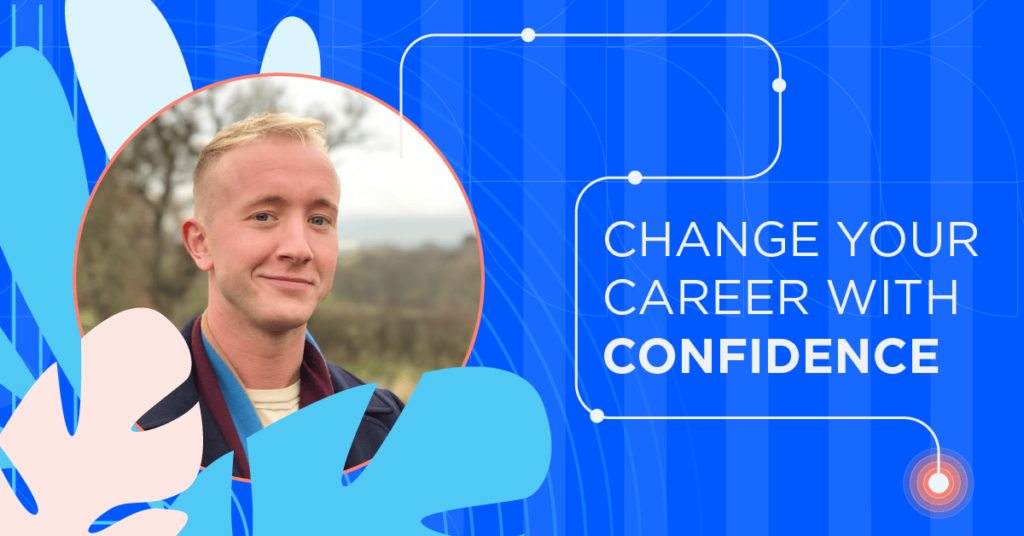
“We all have imposter syndrome, right? But you have to be brave and make that first move. Changing your career starts with changing your mindset,” says serial career changer, Matthew Bamber.

Matthew started his career as a ‘boring’ (his words) Tax Accountant in London. After that, he went on to work as a Financial Advisor and Bar Owner in Portugal, a Founder of a social impact start-up and a Product Manager. Throughout this career-switching journey, Matthew was searching for a role where he could have a real impact, which he says he’s found in his latest role as an Enrolment Advisor at Fourthrev.

Forbes notes that more and more people are thinking about pivoting professionally, opting out of jobs they dislike or that don’t offer them the balance they need, and are actively choosing to move into new careers. But in order to pivot with confidence, one needs to be open to possibilities and the challenges that might pop up along the way.

It’s all about mindset, and positive self-talk is key in order to push past your fears and move forward.

Matthew, now 30, started dabbling in career switching in his early twenties. For him, choosing a different career path at this time of his life carried less risk. Sure, the switch meant he’d change both careers and locations/cultures at the same time. But Matthew still had little to lose at this point in his life and had flexibility on his side. However, entering a completely new role in your 40s or later can be very daunting. The good news is that a study conducted by the American Institute for Economic Research found that 82% of the 47 and older career changes surveyed were successful in switching career paths mainly because they now did work that they were more passionate about.
The first career change

So, what instigated Matthew’s first career change?

He started his career in tax but says that after a few years, he found himself looking around the office and felt it littered with complacency. “The job offers a good salary. And that’s safe. But the safety of the job is complacency. I think it’s just a dangerous zone to be in where you can’t even remember who you are anymore or what you wanted to get out of the job initially. I didn’t want to be bitter.” 

The turning point came one day when Matthew had to join a webinar with 25 of his colleagues. “At some point in his presidency, Donald Trump made loads of tax changes, and we were in a webinar to discuss the impact on us in the UK. All of my colleagues were really excited. Like really excited. I felt like I was in prison. I realised then and there that I was never going to be as excited about tax as I maybe should’ve been.” 

Three hours later, Matthew was on a call with a financial management company he’d heard about when holidaying in Portugal the previous summer. The hiring manager asked him to come in for an interview as soon as possible. He booked the next available flight to Lisbon and got the job a week later.

The power of transferrable skills

From there, Matthew fell into several other careers over the years. They were never actively planned or researched but rather came through connections or out of interest. One thing that helped him along the way, he says, was his transferable skills. 

On his CV, he describes himself as ‘a dedicated and detail-oriented individual with an entrepreneurial mindset, who is personable and adaptable.’ “I’ve always been really conscious about trying to harness my hard and soft skills,” he says.  

Knowing Excel inside-out made him more analytical, which in turn helped him better advise his clients to make sound financial decisions in his role as a Financial Advisor. Being detail-oriented helped him in his role as a Product Manager, and his vibrant personality allowed him to connect with customers at his bar and with leads over the phone. 

What led him to FourthRev? When reading about the Career Accelerator programmes online one day, he immediately thought, “I would love to do that programme.” And now, as an Enrolment Advisor, believing in the product helps him convey its value to others: “It’s so impactful to feel like I had a little part in the decision-making of individuals who chose to grab onto the opportunity of changing their mindset and lives for the better.” 

Reflecting on his career journey up to this point, Matthew says that it’s important to industry-proof yourself from the start of your career by focusing your attention on building up a base of skills that make you a valuable employee, no matter what field you’re working in. 

Knowing what you want, why it’s important to you and how you can make it happen are key to feeling satisfied and excited about your career. If you’re unsure about how to make this happen for yourself, a Career Coach can help you. That’s why we’ve included one-on-one career coaching as an integral part of our Career Accelerator programmes. We have a dedicated team of coaches to help you understand and set your short and long-term career goals so that you plan for your future with confidence.

If you’re curious about this, you can read more here.

Are Older Workers Our Answer to Skills Gaps?

According to the Centre for Ageing Better, although almost a third of the UK’s workforce is over the age of 50, older workers are less likely to receive training than younger age groups in the UK. A decade ago, the company mindset might have been that you’re struggling to get the skills you need and worried about the future of your business, so you upskill your younger workforce to bring more sustainable, long-term benefits, as opposed to expending resources upskilling older workers who are coming to the end of their careers. 

But as skills gaps continue to grow globally, could this mindset be holding companies back from addressing skills gaps both now and in the long term? The theory goes that, as people are living and working longer than ever before, upskilling older members of the workforce could help businesses thrive and grow in the digital economy.  

Spoiler: I don’t think that upskilling older workers is the catch-all answer to fixing our global skills crisis. But organisations that do make the conscious effort to integrate those more established members of their team alongside other upskilling, reskilling and external hiring efforts will be on a far better footing than the rest. Let’s look at why in more detail. 

Changing demographics 

As already alluded to, the demographics of the workforce are changing. We all know that people are now living longer and, consequently, over the last few decades the retirement threshold has risen and we are all working longer on average.&nbsp

At present, almost a third of the UK’s workforce is over the age of 50. Breaking this down further, 50–64-year-olds represent over 10 million workers, while the proportion of people aged 70-74 in employment has almost doubled in the past 10 years.

For employers, this longer life expectancy and employee duration in the workforce creates an opportunity for both longer economic contribution and sustained economic growth. And in terms of the workforce itself, older workers are critical for the success of a generationally diverse team and culture. 

Are older workers easier to upskill? 

In the context of plugging skills gaps, the last point here is a crucial one: older workers bring a unique skill set to the workforce, which even makes them easier to retrain and upskill.  

Put simply, older workers hold vital skills that they’ve built up over years of experience, such as resilience, work ethic and general business acumen. As this article points out, older workers are also able to serve as mentors, coaches, or subject area experts to assist ambitious younger employees, as well as apply their vast networks and contacts, which cannot be replicated in a short period of time. 

The key point here is that older workers tend to hold the ‘softer’ or more ‘human’ skills that are harder to teach, and frequently what younger employees lack when starting out in the workforce. For any career in the digital economy, employers now require both technical know-how, as well as a softer skillset, such as problem-solving and emotional intelligence. This helps organisations and their employees move beyond just having people with the technical knowledge, and towards building teams that can apply, collaborate and drive growth. 

It also means that older employees are probably easier to upskill and retrain. That is, given older employees are more likely to have built up the pre-requisite more human skills needed in the digital economy, much of the work employers need to do to upskill has already been done for them. Contrast this with trying to upskill the younger people or those just entering the workforce, their more ‘human’ skillset is usually far less mature. 

The upskilling mismatch 

Taking all of this into account, it’s clear that the older demographic is a huge, untapped resource of experienced workers, who could help fill digital talent shortages. This is especially true in the tech economy, with a report by the British Computer Society stating that only 22% of those working in the IT industry are older than 50, versus 31% in the wider workforce. When combined with existing programmes that upskill and retrain younger workers, employers that tap into this resource would likely be able to create a more holistic solution to their skills shortages, addressing both young and old. 

But the problem is that, currently, there is a mismatch between opportunity and action. Only one in seven businesses stated that they would consider turning to recruiting or retraining older workers or retirees to tackle skills shortages. Other data shows that even though two in five (42%) said they planned to invest in training and development to tackle the skills gap, just 14% said they planned to recruit or re-train older workers.

The data is clearly varied, but the conclusions that we arrive at are the same: employers are not doing enough to upskill and retrain their older workers. And even if we take away the benefits this could bring for plugging skills gaps, the lack of attention being placed on developing older workers more broadly is incredibly damaging. According to Robert Walters, almost three in four over 50s (72%) were deprived of career growth from their current employer, making their skillsets increasingly less relevant and individuals less employable. 

Embracing a multi-generational workforce 

The contribution that older workers can make in this effort is not yet being tapped into on the scale that you might think. By mentoring and guiding younger colleagues, older workers can pass on their expertise and knowledge, while having the opportunities to reskill and upskill themselves. Surely that’s a win-win for a business? 

Overall, getting ‘future-ready’ doesn’t just mean pigeonholing training and development to younger generations – it means putting the structures in place so your entire workforce, now and in the future, have what they need to thrive in the digital economy. Those businesses that invest in retraining, reskilling and upskilling needs across their workforce, regardless of age, will be the ones that thrive in the coming years.


If you’re looking to learn new digital skills so that you can make a move in your career, find out more about FourthRev’s Career Accelerators.

Written by Mark Lester

Also published by HR Zone – 28/04/22