Section One — Portfolio Strategy Blueprint
What this section does
Helps you zero in on who your portfolio needs to impress, what projects should feature, and how you’ll tell a coherent story — before you touch a single pixel.
Quick-start Worksheet
Refer back to this worksheet as you move through the content of this section.
Quick-start worksheet:


| Step | Prompt | Your answer |
|---|---|---|
| 1. Define your target role |
“In 12 months I want to be a…”(e.g. Junior Product Designer, UX Research-heavy Designer, Freelance UI Specialist) |
Your answer here |
| 2. List your brand words |
Choose 3 words you want recruiters to associate with you. Tip: stick to verbs or adjectives you can prove, such as “analytical”, “collaborative”, “systematic”. |
Your answer here |
| 3. Inventory past & planned projects |
Use the project selection matrix below to list every project you could show (coursework, freelance, day-job, personal hackathon). |
Your answer here |
| 4. Score each project (1–5) |
|
Your answer here |
| 5. Build your short-list |
Keep projects scoring 15+ (out of 20). Anything <10 → archive. 11–14 → flag for revision. |
Your answer here |
| 6. Craft your narrative arc |
In one sentence, explain how the short-listed projects together show growth toward your target role. Suggested structure: In {Project}, I show how {Activities} achieve {Outcome} for {Client}. Tip: You’ll find a detailed overview of narrative arcs in Section 3. |
Your answer here |
Project Selection Matrix
Step 1: Review the scoring guide
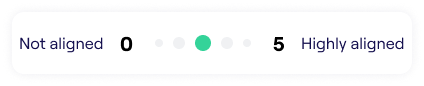
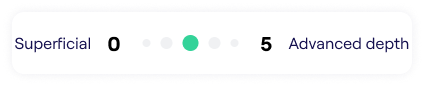
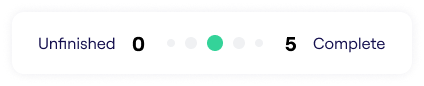
Use this quick scoring system to evaluate which of your projects are portfolio-ready. Score each project out of 5 in the four categories below. Projects with a total score of 15 or higher (out of 20) are strong candidates for inclusion.
Relevance
How well does this project align with your personal, professional, or learning goals?
Depth
Does the project demonstrate meaningful thinking, problem-solving, or complexity?
Outcome
How strong is the final result? Is it polished, complete, and clearly communicated?
Originality
Does the project feel fresh, unique, or differentiated from typical portfolio work?


Be honest, not harsh. A lower score doesn’t mean the project has no value—it might just need refining before it’s portfolio-ready.
Step 2: Score your projects
Use the table below to evaluate each potential project against key selection criteria to determine whether it deserves a place in your final portfolio.
In the example below, only the first project (16) would be considered portfolio-ready, based on the 15+ guideline. The second project might benefit from improved presentation or tighter alignment with your goals.
Example:
Project scoring
| Project title | Relevance | Depth | Outcome | Originality | Total |
|---|---|---|---|---|---|
Redesigning a Meal Delivery AppCase study focused on improving onboarding for a local food service |
5 | 4 | 4 | 3 | 16 |
Smart Plant Care DashboardPersonal project exploring IoT and data vis for indoor plants |
3 | 3 | 2 | 5 | 13 |
Final Blueprint
See this example of what your quick-start worksheet should look like after you’ve completed the exercise. Note that steps 3 (inventory) and 4 (scoring) are now combined.
Example:
Final Blueprint:
| Step | Answer |
|---|---|
1. Define your target role |
Junior Product Designer in a B2C SaaS company |
2. List your brand words |
Data-driven · Empathetic · Systems thinker |
3. Score each project |
Fitness-app redesign (18), FinTech onboarding flow (16), Marketing-site heat-map analysis (12), Logo revamp (9) |
4. Build your short-list |
Fitness-app redesign, FinTech onboarding flow |
5. Craft your narrative arc |
“Across both projects, I show how data-led research and systematic iteration improve activation metrics in consumer apps.” |
Why this exercise is useful
- Focus beats volume: Recruiters skim 2–3 case studies, not ten.
- Story sells: A cohesive arc signals intentional growth, not random work history.
- Scoring = objectivity: Taking emotions out of project selection prevents “pet-project” bias.