
5 Tips to Prepare for a Job Interview

In the 2022 Future of Work Global Report, ‘interview presence’ was listed as the number one factor that stands out to HR managers and recruiters conducting candidate interviews. This came above ‘relevant work experience’ at number two and ‘skills match’ at number three. 

With so many professionals looking for their next opportunity, the pressure to perform well in an interview is high. We’ve put together a few tips to help you feel more confident in your preparation and performance on the day.

1. Do your research

  • Start by reading the job post several times to ensure you thoroughly understand what they’re looking for: Take note of specific words they use to describe the ideal person for the job. Recruiters tend to immediately cross off applicants who they think didn’t read the job description or requirements.
  • Research the company to understand what they do and see if you share the same work values and culture: Look in their website’s ‘about us’ section to review the mission statement, company history, culture, products and services, and management structure. A solid grasp of their mission and operating style will help you both answer and ask questions in your interview more confidently.
  • Browse their social pages: Visit their LinkedIn page to get up to speed on the company’s recent projects, as well as new hires, promotions, vacancies, and other companies they are connected to. Follow the company’s Facebook, Twitter and Instagram to learn more about their employees, events, achievements and customer interactions. This will give you a more holistic idea about the company and might even prompt talking points. 
  • You can also sign up for their newsletter and Google them to find out what others and the media have written about them: The more you know about the company, the better you’ll be able to position yourself as someone who will bring value to them.

2. Optimise your application

Submitting a job application is typically the first contact you have with a potential employer – and, hopefully, what will get you an interview in the first place. Whether you apply via email using your CV and a cover letter or apply online using a template, you have to ensure the content of your application is primed for the job you’re applying for. 

  • If the CV is run through an applicant tracking system (ATS), you should optimise your copy to include keywords used in the job posting: If not, the person vetting your CV needs to pick up that you are a skills match quickly. Ask someone with language skills to cast an eye over your application, or run it through Grammarly and ask a mentor or a friend in the industry to read it for clarity. For more info, read our top tips for boosting your CV.
  • Many employers use applicants’ social media pages as a screening tool before hiring: Clean up all your social media pages, removing anything that can put you in a bad light. If you don’t have any social media profiles, consider at least a basic LinkedIn page with information about you, your qualifications and past experience. 
  • Write a cover letter that frames you as the perfect candidate: Keep your sentences short and include as much relevant information as you can efficiently fit into a few paragraphs. If the employer likes what they read, they will use the interview process to learn more about the goals or skills you mention in your cover letter.
  • If you’re applying for a tech job, like a UX designer or software engineer, for example, your online portfolio will give interviewers an idea of your skill set and topics to discuss with you: List three to five projects with quantifiable descriptions and position yourself as a curious experimenter that has taken on and completed programming challenges.

3. Be organised for the screening call

If you’ve made it through the first round, the company could contact you for an initial phone or video call interview. Here they’ll verify your qualifications and experience and ask logistical questions such as where you’re located and if you’re willing to relocate if needed. They’ll also assess your overall motivation for the role, company and industry. This is your chance to give the recruiter confidence in your claims and assure them that you meet the requirements of the role and that you are a good fit for the company. 

  • Once the phone or video interview is scheduled, prepare a quiet, uncluttered place where you can take the call. 
  • If it’s a video call, ensure you are neatly dressed and groomed.
  • Test your webcam, microphone and video chat software 15 minutes before the interview.
  • Ensure you know the name of the person interviewing you, and have pen and paper ready to take notes.
  • Listen carefully, don’t interrupt and be conversational and upbeat in your responses.

4. Map out your skills and previous experience to ace the behavioural interview

During the main interview process, interviewers will test your capabilities by asking you competency-based, behavioural and technical questions, giving you the chance to show you have the experience and skills needed to do the job well.

Competency-based job interview questions and answers relate to the skills required to perform the job. Your responses will typically be compared to a pre-identified list of answers. They will look at whether you have the hard skills needed to do the job, but also if you have the relevant soft skills—communication, teamwork, leadership, and attention to detail, amongst others.

Behavioural questions are used to gauge how you overcame/developed/resolved real-life scenarios and are designed to let the candidate talk. They could ask you to:

  • Give an example of how you solved a problem in a creative way
  • Describe your biggest achievement to date
  • Explain why they should hire you
  • Explain how you achieved a goal that seemed out of reach
  • Describe a situation in which you successfully led a team

Prepare for these types of questions by going back to experiences you’ve had in the past, the actions you took and the results you achieved. Look at the tried-and-tested STAR methodology that guides you on how to tell a story by laying out the Situation, Task, Action, and Result.

For more info on preparing for these questions, look at these great job interview tips from a FourthRev Career Coach.

5. Keep calm during a technical interview

Those applying for a job in tech will likely be asked to complete a technical assessment or attend a technical interview. This may be a homework-type assignment or conducted via Skype or Zoom and a web-based code editor like CoderPad or Collabedit. Sometimes technical interviews are conducted in person, in which case you’ll use a whiteboard while standing in front of the interview panel.

Here are some examples of what they could ask of you:

  • Give a technical presentation using PowerPoint. 
  • Write code in real-time or complete a coding test.
  • Work out a tech problem on a whiteboard and present your solution to the panel.

To get an idea of how big tech companies conduct technical interviews, look at Google’s Job Interview Questions and the Asana Engineering Interview. The technical interview can be long, sometimes taking up most of the day. During the test, interviewers—members of the engineering team, a senior developer, or even the CTO—will want to hear you explain your thought process as you work through a problem. This gives them insight into how well you know your subject, your personality, your ability to solve problems in a structured and systematic way, and how well you work under pressure.

Bonus Tip: Make a lasting impression on interview day

Familiarise yourself with the interviewer’s face, name and title by looking them up on LinkedIn. Regarding the dress code, it’s a good idea to dress one level above the company’s dress code. For example, if the company allows jeans and T-shirts, you should dress in business casual. 

Go through the directions the evening before, and give yourself enough time to get lost and still arrive 15 minutes early.

After the interview, send a general note of thanks to everyone. If you haven’t heard back after a week, send a short follow-up email reiterating your interest in the role and asking about potential next steps.

Work with a Career Coach to get 1:1 interview support

Career coaching plays a fundamental role in all of our Career Accelerator programmes. Every learner works with a dedicated coach to help them map out their career goals and plan their next move. We’ve had several examples of Career Coaches helping learners to secure fantastic career outcomes, including landing roles at major companies, doubling their salaries and pivoting into completely new positions and industries. 

If you’d like to find out more about our Career Accelerators and how a Career Coach can help you prepare for your next job interview or career move, book a call with one of our Enrolment Advisors.

10 Practical Steps for Career Progression in 2023

The last couple of years have been rough on the workplace. Redundancies, company restructuring and rapid technological transformation, have forced many employees to frequently reskill, upskill and even change jobs to remain relevant. 

New research from Workplace Intelligence and Amazon shows that 58% of employees are afraid that their skills have gone stale since the pandemic started, while 70% feel unprepared for the future of work. As we move into 2023, however, workers are laser-focused on remedying this situation. An impressive 89% said they were motivated to improve their skills, and 88% are already putting a significant amount of time and effort into this.

If you’re looking for a promotion, more responsibility at your current job, or to explore a new industry altogether, it’s important to know how to take action and meet those goals. This article shares ten steps you can take to supercharge your career progression.

10 steps to accelerate your career

1) Set goals and create a career roadmap

A career development plan – or roadmap – creates a framework for your development by outlining where you are, where you want to be, and how to get there. Consider your personal interests, values, and financial resources, then define what success means to you – is it reaching the C-Suite, or simply finding a fulfilling career that pays well? Create a chart of each position and title you’ve held up to now, and then fill in the blanks of where you want to be in one, five and even ten years. Link short- and long-term goals to a timeline to keep you on track to achieve them.

FourthRev Employer Partner, Robert Walters, has some great tips on how to create a plan for your career.

2) Ask your manager to work on a detailed career growth plan

Managers and tech leads are busy, but it’s in their interest to support their reports in all aspects of their careers and lives. Set up an initial 30-minute session with your manager to raise issues that are stopping you from taking steps to achieve your goals, and communicate where you want to be. By engaging with your manager and letting them know what your aspirations are, you put yourself on their radar.

If you’re unsure where to start, check out this template for creating a practical career progression plan.

3) Position yourself online

Your positioning on social networks and websites can create opportunities if you do it right. When setting up a LinkedIn profile, for example, use keywords associated with the career you want to boost your presence in recruiters’ searches. Update your status frequently with engaging links and insights, and post relevant articles to boost your profile views.

If you’re active on other social channels, cross-post this content to your other accounts to improve your reach and recognition. This will help establish you as an expert in the field.

4) Set time aside just for learning

Learning is essential to practical career progression, but you must make time for it. You could approach your employer for an agreed sabbatical to study or gain work experience abroad, filling gaps in your CV. Or, you could ask for dedicated study leave days once a quarter. If that’s not possible, evaluate how much time you can reasonably set aside during the evening or weekend to take online courses or fine-tune a specific skill.

Subscribing to relevant publications and committing ten minutes a day to reading is perhaps the easiest way to keep you in the loop on industry developments and trends.

5) Engage with a mentor

A mentor can help you stay focused on your career and improve your skills and self-confidence. Some larger organisations have mentor or alumni management software where you can connect with people who are in more senior positions. If your current organisation doesn’t offer this, start by researching inspiring leaders and approach them via a cold email or social media. 

Alternatively, you could register as a mentee on a mentor-matching platform, like Meet-a-Mentor.

6) Get a Career Coach

A Career Coach helps you understand what you want to get out of your career and overcome ways of thinking or behaving that might be holding you back from achieving your professional goals. They’ll help set you on the path to holistic career success by looking at your strengths, values and career drivers. Career Coaches can help you develop key outcomes, such as building an effective LinkedIn profile, CV, brand statement and cover letter. Generally, Career Coaches are also versed in soft skill cultivation, helping you develop leadership and networking abilities.

Here’s more insight into how a Career Coach can help you build a more fulfilling career.

7) Follow notable people on LinkedIn and Twitter

Twitter is a thriving career hub with thousands of knowledgeable people tweeting about tech news and trends and leadership advice. Follow companies and leaders you’d like to work for to get to know them better. If their DMs are open, approach these experts about how they broke into the industry and the skills they’ve developed at their job. Add these skills to your career progression plan as must-haves.

LinkedIn is great for finding inspiring people who do the job you dream of. Analyse their experience, activity, education, interests, skills – everything on their page – to see how they got to where they are.

To start you off, here’s a good list of Twitter and LinkedIn career influencers to follow.

8) Attend or arrange a meetup

Meetups are a great, informal way to do some serious professional networking. You will meet people in your industry or in an entirely different profession that might prompt you to consider a career shift. These events are also a place to learn about new business opportunities and establish working relationships with potential employers, partners and clients. 

If there are no meetups in your field of interest, set one up. This can be a speed networking and business matchmaking night, a mutual learning meetup, or a casual get-together of people with a common interest. 

Use social media or tools such as meetup.com to find events – like Tech Meetups in London, for example, or to arrange one yourself.

9) Attend online conferences and events

Conferences and external events offer valuable knowledge about your industry and allow you to see the bigger picture. They allow you to meet thought leaders, network with others interested in the same learning path and discover new ways of thinking about your job. 

Eventbrite has an updated list of tech-related events and conferences in London. Alternatively, try UK-based techUK, which brings together people and organisations to explore the positive outcomes and opportunities of digital technology.

10) Refresh your CV and craft a personal brand statement

Go back to your CV and add all your recent relevant experience, courses you’ve taken and new skills you’ve developed, including soft skills. 

Prepare a strong personal brand statement for the top of your CV, where it will catch recruiters’ attention. This can also be used in emails, your personal website, or your LinkedIn page. A personal brand statement comprises three key sections: what you do, what value you offer, and what you’re looking for next.

Here are some great tips for crafting a brand statement.

Take the next step in your career

If you’re looking for an online programme that will equip you with the technical, business and human skills you need to thrive in the digital economy and provide you with the support you need to gain clarity on what your long-term ambitions are, take a look at our Career Accelerators. Please feel free to reach out to one of our friendly Enrolment Advisors if you’d like to get more information.

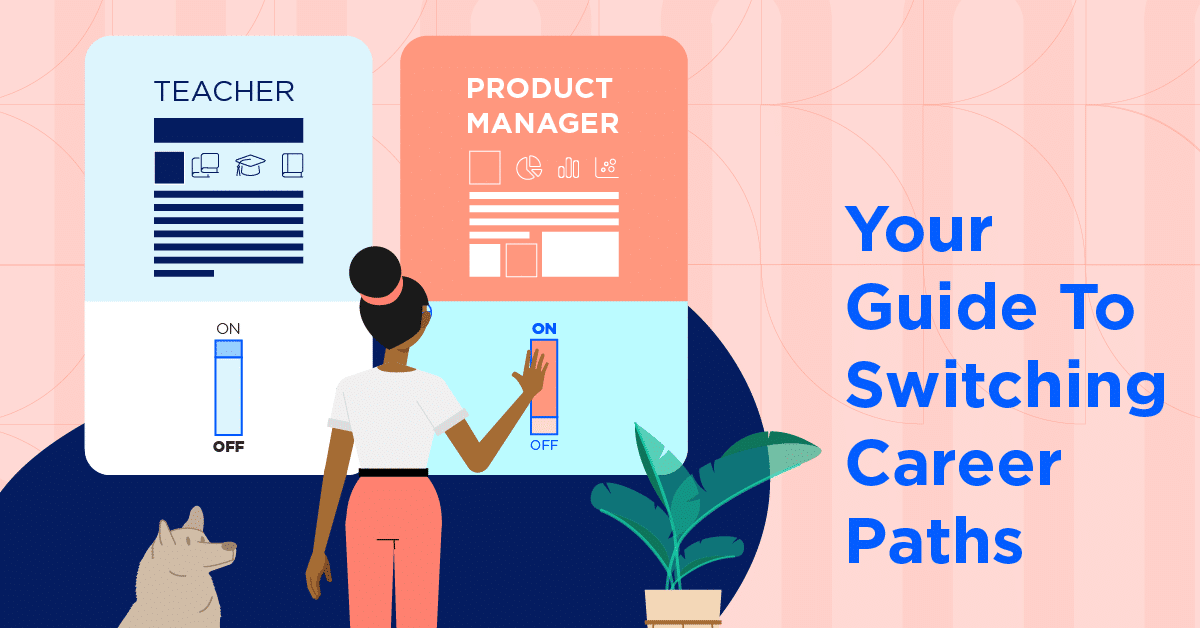
Your Guide to Switching Career Paths

In the wake of the Covid-19 pandemic, an interesting new statistic has emerged: 27% of students and graduates surveyed in the United Kingdom said the lockdown has had a significant impact on how they view their lives and has led them to rethink their careers. Reasons given included the increase in training and development opportunities and wanting to find a career that offered a better work-life balance.

Young people aren’t the only ones considering a career change. The UK Office of National Statistics published a report showing that 58% of workers aged over 50 years – who left employment since the start of the pandemic – are considering returning to work but are looking for jobs offering flexible working hours (32%), better pay (23%), and opportunities to work from home (12%). Incidentally, these are the professional values the tech industry provides in droves.

Considering a career change into tech?

Looking at the World Economic Forum’s Future of Jobs Report, the penetration of AI into virtually every industry is set to replace around 85 million jobs worldwide by 2025. That sounds alarming but in reality is a huge opportunity for those thinking of changing careers, especially if you’re drawn to a job in tech. The salaries are attractive, the work is stimulating, and very few other sectors can compete in terms of job security.

Not having a background in tech is also no longer a significant hurdle to making a career change into a digital field, and you don’t have to start at the bottom either. A background in finance, for example, sets you up for a job as a data analyst; a graphic designer can easily become a web designer, and a small business owner can quickly catch onto product management. Wise moves make career changes all the more accessible, and the barrier to entry may be less daunting when you consider your existing strengths.

What to consider before switching careers

Whether you’re in your 20s or approaching the half-century mark, it’s never too late to make a career switch and do what you love. The challenge, however, is knowing where to begin. If you’re ready for a change of career, follow along as we guide you through the five important career-switching steps that will greatly increase your chances of success.

1. Know yourself and discover your superpower(s)

One of the most important steps when considering a career change is to do some introspection. Jot down your interests, skills and values, what you’re good at, and where you want to go. Evaluate both your hard and soft skills and isolate those that are transferable. List positive feedback you’ve received and ask others for their objective opinion about what you’re good at.

Tracy Shuff, Career Coach at FourthRev has some great tips on how to get to know yourself. Her advice is relevant regardless of which direction you’re going in.

Transferable skills are those that enable you to do your job well, whatever it may be. They are personal skills that can be transferred between jobs, departments, and industries and are listed in almost every job posting.

In the job search Bible, Knock ‘em Dead: The Ultimate Job Search Guide, author and career guru Martine Yohn Yate lists the following as evergreen transferable skills: technical competence, communication, multitasking, teamwork, creativity, critical thinking, and leadership. If you’re considering a tech career, there are some specific transferable skills companies are looking for that should be added to the list. These are empathy, organisation, problem-solving, resourcefulness and time management.

As an example, and this goes for any industry, Randeep Sidhu, Chief Product Officer at Reliance Health, is clear when asked how easy it is to switch to a career in product management: “Easy – if you understand what you superpower is. Product Managers are like Avengers, each is different and we have each different specialist skills. Some powers are most useful in different environments, like I’m good at working in AI, Health and fast-growing start-ups. Understanding what your core skills are means that you can transition into a Product role, but only after you have mastered the basics.”

If you’re thinking of a career in tech, and once you’ve identified what skills your new career requires, the fastest route to acquiring them is by working with a career coach who can help you hone those skills and put them on your CV with confidence.

2. Are you happy in your current role/field?

You wouldn’t be considering a career change if you were happy in your job, right? This may mean the time is right for you to make the switch. See if any of these describe how you feel in your current job:

  • You’ve been robbed of your confidence
  • You have no work-life balance
  • You’re eternally bored and don’t see a future
  • You’re just in it for the money
  • You stay because it’s comfortable, despite being uninspired or demotivated
  • You feel undervalued
  • You’re not learning or growing
  • You’re don’t enjoy what you’re doing
  • You’re constantly stressed
  • Your place of employment’s values don’t align with yours

If you tick a couple of these boxes, the time may have come for you to not only make a job change but to rethink your entire career.

3. Research your future career

When preparing for a career change, the more research you do, the better position you’ll be in to make the right decision. Here are five actions you can take:

  • Browse job boards for careers you’re considering going into and note the job requirements, skills and KPAs.
  • Contact others who already work in the industry you’re interested in. LinkedIn is a great place to start, and you can also see what paths others have taken to get where they are.
  • Find out about courses you could take to give you the necessary hard skills needed to make the leap.
  • Speak to professional career coaches and mentors who can help you identify your strengths and weaknesses and how well you’re suited to your dream job.
  • Internships, job shadowing, work placements, volunteering and part-time work are great ways to build skills and try out a job before making a switch.

4. Upgrade your skills

Once you’ve narrowed down what human skills your new career requires, look for ways to develop those you’re not that good at before making the transition.

You can read books, watch YouTube videos, or do short online courses to learn how to be a good leader. Or, if you’ve decided to make a career change to tech, you can join our Career Accelerator programmes, where you can gain both the hard and soft skills you need to take the next step. Each learner is assigned a Success Manager and Career Coach who help them understand their skills gaps, such as collaborating with peers, goal setting, and ways to present themselves with confidence.

A career change likely comes with a new set of hard skills. Tackle this by finding out whether the path requires additional education or certifications, and consider taking online courses and gaining work experience in your new industry.

With COVID-19 accelerating the need for digital skills, employers are looking for people who can hit the ground running. To this end, a project-based learning approach provides those considering a change to a job in tech with the technical, business and human skills they need to solve real-world challenges and thrive in the digital economy.

Make your career change a reality

If you’re considering switching to a tech career, we have a dedicated team that will help you identify and develop your human skills – while providing technical knowledge in high-demand technologies – to ensure a holistic approach towards career advancement.

Speak with an Enrolment Advisor to learn more about our Career Accelerators and how our career coaches and success managers can enable you to harness your transferable skills and keep you on track to meet your present and future career goals.

Book a call with an advisor on the King’s Product Management Career Accelerator.

Book a call with an advisor on the LSE Data Analytics Career Accelerator.

5 Ways a Career Accelerator Will Help You Achieve Long-term Career Success

FourthRev has partnered with the world’s leading universities and technology companies to build the Career Accelerator model – a project-based online programme designed to develop the digital and human skills sought after by employers in today’s digital economy.

The Career Accelerator programmes have been designed to equip you as a learner with the relevant skills you need right now to take the next step, as well as set you up for long-term career success. This means helping you understand what your career goals are and how to continuously work towards them as your career progresses over the years. Important skills like goal setting, presenting yourself with confidence and collaborating with peers are taught alongside the practical information to ensure a holistic approach towards career advancement.

Here’s a closer look at five key ways the programme sets you up to thrive in your career, both now and in the future.

Practical content designed by industry and academia

As the digital economy is advancing, it’s becoming increasingly important for candidates to demonstrate relevant, real-world experience. At the same time, employers still look for a quality education when considering CVs. We’ve brought together experts from both industry and academia to equip you with all of the skills you need to stand out to employers and gain the confidence you need to make your dream career move. The project-based learning approach ensures that you apply everything you learn to real-world challenges that you will likely face when working in the field. There are industry-backed projects attached to each of the three courses, as well as a final Employer Project, where you’ll work with your peers to solve a problem set by an employer.

One-on-one career coaching

At the start of the programme, you’ll meet with a Career Coach who will work with you to understand what your long-term career ambitions are. You’ll meet as frequently as required during the six-month programme, and they’ll help you set goals for yourself as you progress and plan for what comes next after the Career Accelerator. Depending on where you’re at in your career, they can help you prepare for future job interviews or discussions with your manager about a promotion. When working with a Career Coach, you are very much in the driver’s seat. They are there to help you and provide guidance and support where you need it most. Here’s some more insight into the value a Career Coach can provide for you.

A dedicated Success Manager

We very much believe that undertaking a career change is something life-changing and not something you should do alone. In the first week of the Career Accelerator, you’ll meet your Success Manager, who will work directly with you throughout the six months. They will be your go-to person for any advice, tips, queries and ideas. You’ll meet frequently over video calls where you’ll get the chance to discuss how the course is going, career advice or extra support you might need as you fit studying into your daily routine. Your Success Manager will be your biggest cheerleader and your first port of call as you work through the programme.

The opportunity to work and network with peers

Despite the Career Accelerator being a fully-remote, mostly self-paced programme, we recognise that interacting with peers is crucial for developing the human skills needed in the workplace. During Orientation week, you’ll have the chance to meet other learners on the programme, and once the course kicks off, you’ll have access to the online forum where you can interact with your peers. Once a week, there will be a live lecture that all learners are encouraged to attend so that they can engage with the experts leading the programme and each other in real-time. At the end of the programme, you’ll collaborate as part of a small group on the Employer Project, where you’ll be tasked with solving a real business problem. This will help you form relationships that you can take forward even after the Career Accelerator ends.

Certification from a top university

We’ve worked closely with some of the world’s most prestigious universities, like The London School of Economics and King’s College London, to develop our Career Accelerators. These institutions recognise the value that an industry-backed education provides and have invested time and resources into creating high-quality content that will accelerate learners’ career growth. At the end of the six-month programme, you’ll earn a certificate from the university that will make you stand out to employers.

We’re currently accepting applications for the next Career Accelerator cohorts:

LSE Data Analytics Career Accelerator
King’s Product Management Career Accelerator

Book a call with one of our Enrolment Advisors to get your application started.

How a Career Coach Can Help You Reach Your Career Goals

What do you want in your career? When asked this question, many of us might answer, “I want the opportunity to grow,” or “I want to make a difference at my company.” 

Knowing what you want to achieve is the first step, but knowing how to do it is often where we get stuck. When our goals are to change career paths or step into a leadership position, deciding on the steps to take can be a daunting and even lonely process.

Turning your ambitions into a reality takes goal setting, planning, and actionable steps, and often, a bit of professional guidance and support. That’s why we’ve integrated career coaching into the learning journey on our Career Accelerators. 

From the start of orientation, you’ll meet with your coach to map out a tailored approach to the next six months and your career. Our learners have said that they had no idea what to expect, and a few have doubted the value coaching could bring them. That doesn’t last long. When our learners achieve results – like changing careers, getting a promotion, salary increase, or advancing in their current role – they often say that their coach was essential to helping them do it. 

Here’s a closer look at how FourthRev Career Coaches support learners on Career Accelerators. 

What is a Career Coach?

A Career Coach is someone who helps people set and achieve goals, and overcome challenges in their careers. They offer a personalised service by working one-to-one with someone to understand their particular career goals and develop a tailored solution to help them move forward.

When working with a Career Coach, you’re in the driver’s seat. The coach’s job is to provide you with career support that will help you reach your own decisions and outcomes. They cannot make things happen for you, like getting a new job or securing a better salary, but they can help you lay the right stepping stones to get there. 

This is how coaching has impacted our learners:

The goals our coaches can help you achieve

We’ve listed a few examples of the work our past learners have done with their coaches:

My Career Coach helped me boost my confidence

Iryna was transitioning from a career in fashion to product management. With no previous experience, she assumed she’d be starting as an intern. Her Career Coach helped her see the value of her experience and transferable skills. She said: “Just this one hour was so important for me because she boosted my confidence so much.”

It also motivated Iryna to aim higher – in the last two weeks of the programme Iryna landed a job as the sole product manager in an exciting startup. 

Rethink my career as I prepared to make a change

Transitioning careers and totally reskilling is no small feat, but our coaches turn it into a manageable and exciting journey. 

So I think the most rewarding thing from this programme was just how manageable and bite-sized the pieces of advice were. So rather than thinking about: ‘I need to get a job in this industry by this time’, it was: ‘have you thought about what motivates you, what interests you,’ then think about where you’re most engaged or at least engaged, and then you start thinking about where those skills might be most applicable.” – Hussein Farook, LSE Data Analytics Career Accelerator 

For Hussein, his coach gave him a foundation to rethink what was possible in his career and gave him the skills to build his brand on LinkedIn, which ultimately helped him land a new role just four months into the programme. 

Take stock of my transferable skills and potential

Elodie’s coach helped her realise the value of the skills she gained and mastered during her 16 years in education. She was able to take those transferable skills and apply them to a new career in data analytics; she’s now a data scientist. 

It’s been a complete eye-opener for me. As someone who’d just turned 50 when I started the course, I really questioned whether it was too late for me to do something completely different. My coach completely opened my eyes to the world of possibilities that are out there. It’s never too late to start something new.”

Prepare for interviews

Aman felt her Career Coach was invaluable, and it was one of the features of the Career Accelerator that stood out to her.

My Career Coach was really helpful in prepping me for interviews, telling me what I was doing right and also what I needed to improve on, and just helping to build my confidence because I think that was personally something I was lacking when I first joined. To have that mentorship was really valuable.”

Our coaches have also supported our learners in approaching their managers to discuss their career ambitions, like promotion goals and salary increases. 

You can listen to Clare, our Career Coach Community Manager, explain the benefits of coaching here:

Professional, unbiased support for your goals

Our coaches are here to support you in achieving long-term fulfilment in your career – whatever that may look like for you. It’s totally tailored for you and can evolve depending on what you need at that point in your journey. Iryna said “They study your needs and explore your background. After that, they offer you the best plan for you.”

It’s through this professional and unbiased lens that they’re able to reframe your challenges, limitations, and insecurities, and offer solutions and perspectives that could radically alter the career choices you make and opportunities you chase.

The coach is fantastic and was able to take what I was saying and reframe it in ways that I hadn’t thought about that offered clarity to my personal and professional goals. And so that’s been super helpful just to have that unbiased outside perspective, saying, you know, ‘have you thought about it this way?’”– Kelli Wingfield,  King’s Product Management Career Accelerator learner

A structured approach to making your career goals a reality

Our approach to working with learners during the Career Accelerator is three-fold: 

  1. Goal setting: During the Orientation phase of the programme, coaches work with you to reflect and gain insight into your strengths, values, and career drivers to develop meaningful career goals, which then enables you to start building your personal brand. 
  2. Developing key outcomes: Once you’ve identified your motivations, your Career Coach will help you craft the practical components you need to move forward. These include polishing up your LinkedIn profile, resumé, and cover letter. They also work with you on strengthening your leadership skills and networking strategies. 
  3. Walking the journey with you: With the foundation for your progress solidified, you’ll set short-term priorities that your coach can assist you with during the programme. This might include support during the interview process or guidance as you implement leadership practices at work.  

From the coaches’ perspective 

Reflecting on her experience working with the learners who were enrolled in the LSE Data Analytics Career Accelerator, one of our Career Coaches shares: 

“I’ve had the chance to meet and work with people who come from multiple backgrounds with completely different career goals. Taking the time to really dig into who they are and what brings them a sense of joy and success as an individual has helped us work together to achieve incredible results. Over the last few months, I’ve seen learners double their salaries, secure positions at dream companies and even pioneer new teams. My goal is always to help people build a “bigger picture” path so that they can take the next step and keep on going as the future unfolds.” 

So, how can we help you go further in your career, faster? 

If you’d like to find out more about how Career Accelerator works, visit this page.

12 Tips to Ace Your Next Interview: Advice from a Career Coach

Whether you’re starting out in your career or making a change, chances are you’ll have an interview lined up very soon. For many people, the mere thought of an interview – whether it’s virtual or in-person – can be nerve-wracking.

We spoke to one of FourthRev’s career accelerator Career Coaches, Adele Leah, about what you can do to effectively prepare and go into any interview with confidence. Here are her 12 top tips.


Do your research

Way too many people turn up to interviews not knowing any details about the company, the role or who they are interviewing with. One of the best ways to make a great first impression and demonstrate your genuine interest in the opportunity is to prove that you’ve done your research.

  • 1) Spend time looking through the company’s website: It’s important to have a clear understanding of what the company does. Being able to explain this in your own words is a great way to show that you’re interested in what they do. 
  • 2) Check out their social media pages: This will give you an idea of the company’s ‘voice’ and how they communicate with the outside world. This can also be indicative of what the culture is like.
  • 3) Look up your interviewers: If you know who will be interviewing you, don’t be afraid to look them up on LinkedIn. Many people are hesitant to do this because of LinkedIn’s notification feature, but it’s a direct way to show that you’ve done your research. It might also give you a conversation starter!


Practice makes perfect

The good news is that most interviews follow a standard blueprint. While you can’t anticipate everything that will come up, there will be a few fundamental questions that you can prepare for.

  • 4) Have a confident answer to the age-old question, “So, tell me about yourself”: Take some time to work out what your personal story is. A good answer will encompass your skills, strengths, a bit about your personality and what you enjoy doing outside of work. Try writing this down to get your thoughts in order, and then practise saying it aloud in the mirror or to a friend. 
  • 5) Map out your answers to scenario-based questions: Many employers will ask questions to get an idea of how you handle challenges and work with others. Go back to experiences you’ve had in the past, the actions you took and the results you achieved. The STAR methodology is helpful for thinking through this. 
  • 6) Be prepared for more negative questions: While much of the interview will likely focus on your strengths and what you can bring to the organisation, you should also be ready for more ‘negative’ questions. These might include, “What are your weaknesses?” or “Why are you leaving your current job?” When you’re feeling the pressure to present your best self in the moment, these questions can cause panic. To avoid this, be honest with yourself in advance and map out a candid answer that offers an explanation as well as a considered way forward. This will demonstrate self-awareness and a positive attitude. 
  • 7) Get ready for ‘curly’ questions: You might get asked something completely random, like, “If you were a sandwich, what would you be?” It’s not guaranteed that something like this will come up, but it does happen. There’s no real way to prepare, so take a deep breath and just roll with it if it does come up.
  • 8) Think about your own questions: Asking your own questions is the mark of a good candidate for many organisations. You want to assess whether the company aligns with your values and whether you feel it would be a character and culture fit. You also want to get an idea of the expectations they would have of you in your new role and if there is potential to grow in your career. Many people forget that interviews are a two-way street, so maximise the chance to get the answers you need to make the right decision. 

If you’d like to get even more practice, there are thousands of websites with interview questions that you can google. Don’t overwhelm yourself, though! Remember, no interview will follow an exact formula. The ideal outcome of your preparation is to feel confident in telling your story, no matter how they ask you to share it.


Set yourself up for success

On the day of the interview, you want to prioritise feeling calm. Get everything ready in advance to avoid any last-minute panic.

  • 9) Dress the part: Whether you’re interviewing virtually or in person, wearing clothes that you feel confident in will put you in the right mindset. During your research, try to figure out if it’s a more formal or casual company and dress accordingly. You don’t want to turn up suited and booted if your interviewers are all in jeans and trainers, but equally, you don’t want to go the other way either. 
  • 10) Get there early: Don’t agree to a time that you’ll have to rush to get to and turn up flustered. If you’re meeting at their office, plan your trip to get there about 10 minutes early. Check the route the night before so that you know exactly where you’re going – don’t try and figure it out as you’re leaving. If your interview is taking place online, make sure you’re settled in a quiet space, your headphones and laptop have enough battery and all your technical permissions, like mic access, for example, are functioning properly. 
  • 11) Make sure you’re comfortable: Pop to the toilet before the interview starts. Seriously! You don’t want to go into the conversation with that on your mind and not be able to concentrate.
  • 12) Relax and be yourself: Your interviewers are as interested in you as they are in your skills. Let your personality shine through as much as you can. And remember, people don’t remember everything you say – they remember how you made them feel, so the aim of the game is to make them feel like you are a safe pair of hands for the job.

If you’re looking to make a change and want to have the competitive edge in any interview, take a look at our career accelerator programmes. Co-designed by faculty from the world’s best universities and leaders from global tech companies, they equip you with all the technical, business and human skills you need to thrive in the digital workplace. You also get to work one-on-one with a Career Coach, like Adele, to understand your career goals and chart the way to achieving them. Find out more here.


Written and compiled by Summer Smith and Adele Leah