What Career Progress Means to a Single Mom: Read Gåbriela’s Story

We’re often our own worst critic. But when we’re able to move beyond our professional insecurities is when real potential and career progress is unlocked.

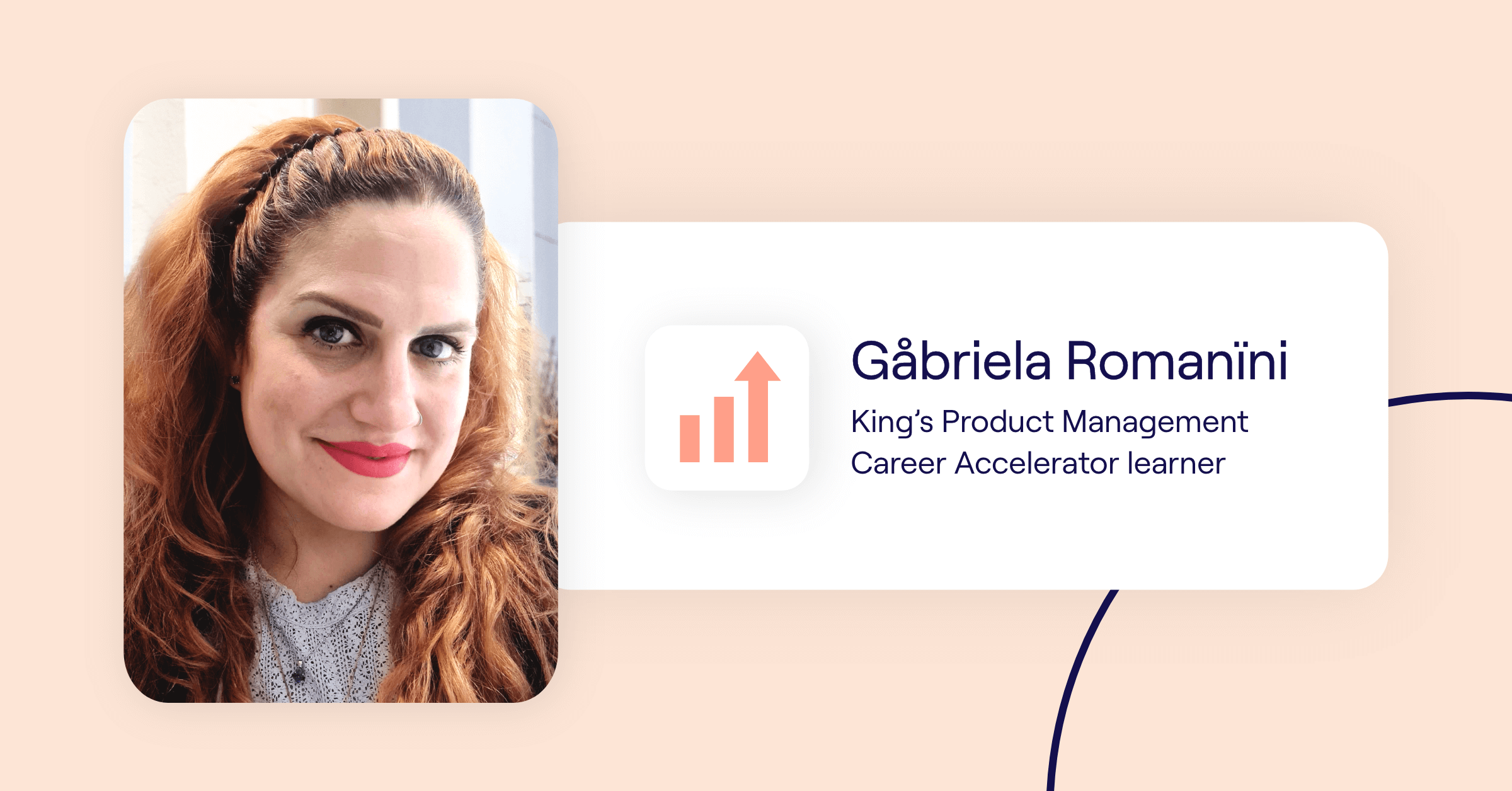
That’s exactly what happened to Gåbriela Romanïni. Since 2008, Brazilian-born Gåbriela has been working as a business analyst in the insurance industry in London. Recently, she began to doubt her career choice and felt she needed more serious qualifications to excel in her job. The King’s Product Management Career Accelerator gave Gåbriela the validation and confidence to achieve just that. 

After only two months on the programme, she landed a new job. The Career Accelerator helped validate all the knowledge Gåbriela had gained on the job over the years, and took her skillset to new horizons. It re-invigorated her passion for her career path and gave her the power to choose a new company that aligned with her professional goals for the future.

We recently ran a Q&A with Gåbriela where she shared some personal and inspiring stories of her experience on the Career Accelerator programme. 

How did your Career Coach and Success Manager help you to find a new job?

“My Career Coach helped me prepare for the interview. My Success Manager also helped me to calm down and trust myself. It’s fantastic the structure we receive here, and I’m getting biased now because my Success Manager was my rock during this course.”

“I’m a single mom and I have a 12-year old and I live by myself. I need to support myself; I have no network support. So I study and I work and I need to take care of a house, all on my own. So having that person that you know, the course provides that care for you […], for your problems, it’s massively important. I recently had a personal problem, I thought I wasn’t going to be able to deliver the assignment. And her words kept resonating with me: […] “you can do it”. And it sounds silly, but it’s so important. And I kept remembering that and I managed to do it. They […] sympathised with the problem that I was having at the time, and they gave me an extension, because one of the things here is that we’re all adults. I’m not in my 20s anymore where I only study and can dedicate all that time – I have a whole life going on. And the structure provided makes the whole difference to get there.”

How are you balancing a full-time job and single parenting with studying?

“The course tells you that you need to dedicate 10 to 12 hours a week. And it seems a lot and it is a lot. It’s not easy, it’s content heavy, but the structure is exciting. At the beginning I used to take maybe an hour and a half to consume the contents of one chapter within a module. And now I do five or six because the more you practise, the more you read, because remember, I was 20 years without studying, it started to all come back to me. It’s like your brain adapts to that speed, and information starts to come easier for you.”

“[My son and I] study together. I help him and then he asks me questions about what I’m doing. I did explain to him: it’s not going to be forever, but this is important for me to do now.”

It’s a six-month programme – how do you keep yourself motivated? 

“I think it’s really important to keep yourself motivated but it’s the respect for the money I invested in this course. I think you need to be very conscious – it’s an expensive thing. But it’s a great investment, I don’t regret it. And if you allow me, I’d like to share a personal story.”

The video below holds the full story of Gåbriela’s journey to career development; it’s personal, inspiring, and shows her commitment to learning.

How practical is the learning?

“It’s very practical; you’re given a technique and you need to apply the technique.”

Employability is at the core of Career Accelerators. We partner with tech and employer partners, such as Atlassian and Dropbox, to ensure you gain the skills and practical experience to get you hired as a product manager.
Watch the King’s Product Management Career Accelerator video to find out more about the programme.

Tell us about your fellow peers – do you feel connected to your cohort? 

“I was part of an incredible cohort of students, very respectful people, and people willing to help each other. […] And in the peer reviews, they’re so respectful with you, because you need to remember that we’re all learning. There’s no stupid [answers], we’re all trying our best. And you get motivation from your peers to carry on.”

Meet Kelli Wingfield, another learner from the King’s Product Management Career Accelerator. Like Gåbriela, Kelli was also promoted while on the programme. She attributes her success to the Career Accelerator. Read her story.

Much of your cohort don’t have product management experience. How did they progress?

“They’re dedicating themselves and they’re doing really well. They agree with me that the way that the course is structured is helping them to achieve what they want, which is a career change.”

Do you feel the Career Accelerator impacts your employability and earning potential?

“Definitely. Because I’m a mother, and I’m […] in my 40s,  I couldn’t afford to take a smaller salary to change industries. […] I started doing my own research into the industries where you can be a product manager. [But then I thought] I’m not being grateful enough for the industry I am in, because I already have all of the knowledge. So, why change? Why not improve all aspects, your technical abilities, your knowledge, and then you have the perfect employability package.”

“At the time, I was working in the insurance industry and I was questioning myself; I was feeling like a failure, like, do I know this enough? With FourthRev and King’s College, I’m learning so much that now I am finding the time to start […] dedicating [myself] to the insurance market again, refreshing my knowledge and understanding.”

“I’ll be straightforward about it: I do believe the programme can help you get a better paid job. I do believe that because I got it. The Career Accelerator helped me to change jobs. In my job interview the questions they were asking me were technical and I had the confidence to answer them because I was already studying those things.”

Feel inspired by Gåbriela‘s story? Download a programme brochure to see if this Career Accelerator is right for you.


In (and Out) the Office with the Global Brand Marketing Manager at Canva

Have you ever wondered what it’s really like to work in a dynamic, high-powered digital marketing role at a big company?

We recently sat down with Brony Popp, the Global Brand Marketing Manager at Canva, who contributed to the coursework material for the Digital Marketing: Analytics and Strategy Career Accelerator by Melbourne Business School Online, to find out more about what a day in her life looks like – both in and out the office.

Brony has worked in marketing for 13 years. She’s currently part of the brand marketing team at Canva and works with global campaign managers to roll out projects that boost the much-loved online design tool’s market growth and popularity. 

Getting to know Brony Popp

What does a typical workday look like for you?

“I either work from home or in the office, depending on what my diary looks like. I spend about half of the week in the office, which I find really good for me, and the incredible food doesn’t hurt! I’m really grateful to have a flexible policy at work because it allows me to manage other commitments.”

As a child, what did you want to be when you grew up?

“I loved the show ‘Changing Rooms’ and wanted to renovate spaces, but that’s about as far as I’ve taken my renovation dreams (for now).”

How do you wind down at the end of the day?

“Walking my dog is a good circuit breaker at the end of my day, and my notifications from Slack switch off at 6 p.m.” 

Do you have any general productivity hacks?

“The things that have consistently stuck over the years and are now part of my team’s way of working are:

  • Start the week fresh: At the end of each week, I clean out my inbox and write a to-do list for the following week. My team and I schedule status updates for Monday morning while it’s still fresh in our brains so we can pick up where we left off.
  • Prioritise: I often block out my diary to do certain tasks that have deadlines or the days just disappear. Not everyone’s focused time is in the morning, so I “Eat The Frog” at the time of day when I get the most focus, which is the afternoon after our US team logs off or on my meet-free Monday when it’s their Sunday. 
  • Don’t get distracted by things that aren’t urgent: This one is Slack related but works with a lot of software – send things back to yourself later. I push a lot of ‘later’ jobs to come back and remind me when I have capacity. This ensures I’m focusing on what’s important, not just what’s the latest alert (this takes practice!).
  • Monthly reflections: I asked my coachees what we do that helps productivity, and they said the monthly snapshots. This is a Confluence page where they each track highlights, lowlights, lessons learned, opportunities and progress towards growth goals. Only they and I see it, so it’s an honest way to keep track of progress and recurring issues and take stock so that the months don’t just roll into each other.”

Do you completely log off from work over weekends?

“I really do. Sometimes, this isn’t possible if I’m working on events or travelling for work but by and large, I keep work out of my weekends. We are all just better at our jobs when there is space and rest, and I think it’s important to set that example for others. I close work programs if I use my laptop on the weekend, so they don’t lure me back in. Also, I recommend taking some time to set up your notifications. I have them turned off on the weekend, except for certain key stakeholders.”

What’s the most challenging part of your job? And the most rewarding?

“The most challenging part is the ever-evolving category that Canva is in. Being in such a fast-paced industry means long-term planning can be difficult, and you need to be nimble and flexible to adapt and change strategies to suit the vision and the market. But that is the most rewarding too. We often galvanise and pull off great things that weren’t even on the table a few months prior, so it’s never boring.”

What core skills do you look for when interviewing someone to join your team?

“I look for someone who is skilled at what they do but never too big to pack a box. The only way we get ahead is by everyone really working as part of a team and being willing to take on jobs that aren’t always in their remit for us to get to the result. Our team works with a lot of stakeholders and connects a lot of the dots across the company, so incredible communication is an absolute must-have – both written and verbal.”

What would you say to someone looking to achieve a better work/life balance by moving into this field?

“Take responsibility for your personal life as you do for your work life by setting boundaries to facilitate both. There will always be more work to do, but making the hours you work more impactful is the key. It’s important to have a well-rounded life because I believe it makes us better at our jobs.”

Launch your own career as a Digital Marketing leader

You can now register to secure your place in the Digital Marketing: Analytics and Strategy Career Accelerator by Melbourne Business School Online in partnership with FourthRev.

Download a brochure here and then book a call with one of our friendly Enrolment Advisors to discuss your interest further.

From Store Manager to Head of Retail: Read Francesca’s Story

Just a few years ago, not many people knew what ‘product managers’ were. But today, they’ve become synonymous with digital products and services. 

Francesca Abossey, originally from Italy, was one of these individuals, despite her already doing many of the tasks product managers focus on as a manager of two retail stores in London. So, when the King’s Product Management Career Accelerator ad appeared on LinkedIn, Francesca immediately thought “that’s it”. 

With a Master of Sciences in Digital Innovation Management, Francesca joined the King’s programme with an impressive wealth of knowledge. She’s now able to combine her creative thinking with product management skills in her role as head of retail – a role she was promoted to during her time on the Career Accelerator. 

We sat down with Francesca to understand her journey towards product management, and how the King’s Product Management Career Accelerator has impacted the future of her career.

What about the Career Accelerator resonated with you?

“It combined all of the things I wanted to study. While I was searching for courses, I saw that most of them were focused on one topic. So, you have one course about user experience, one course about how to launch new products; instead this programme was doing everything, all together.”

Who would you recommend this Career Accelerator to? (Subtitles available)

Tell us about the stand out moments of this programme for you?

“What I enjoyed the most was the Master Classes. So, each week, we have these Master Classes that will help you to understand your studies. Sometimes if I didn’t have time, like study during the week, then I was able to understand what I had to do for my assignments, so that was very helpful.”

You recently got promoted – how did that come about?

“Yes, I got promoted to head of retail at the end of February 2023 while on the programme. They appreciated how hard I worked and how innovative I am. I love what I do. I like knowing how I can help customers. I think the fact that I worked in retail for so long helps, as I know what they want. And I know what is needed to support the customer”.

Tell us more about the value of working with a Success Manager and Career Coach during the programme?

“I think what helped me the most was the people that supported me, like my Success Manager and my Career Coach, who have helped me set boundaries and celebrate myself. I’m always doing things for others and never doing things for myself. I see them as my guardian angels.

“My Success Manager, he held me accountable. He would say things like ‘this is what you told me the first time, and this is what you’re doing – what are you going to do to change?’ He even helped me to say ‘no’ more and ‘yes’ less, because I’m always saying yes to everyone, and that doesn’t always help me”.

What have been the biggest challenges you’ve encountered during this programme?

“For me it was the time. For instance, my master’s degree didn’t give me one module each week. So here, it was one module each week. And in one module, there is a lot to study. But my Success Manager helped me to prioritise.”

If you could describe the programme in one word, what would that be? 

“I would say, ‘faster’ as it is such a fast-moving programme. But I would also say “grateful” for [my Success Manager, Career Coach, and the learners who were really great to interact with].”

Also interested in getting the same return on education by investing in your future like Francesca has? Then Download a programme brochure and book a call with an Enrolment Advisor to learn more about this Career Accelerator in Product Management.

King’s Alumni Student Lands Big Role in Product – Attributes Success to Career Accelerator

Life often works in roundabouts. For Kelli Wingfield, a King’s College London alumni student and current King’s Product Management Career Accelerator learner, this couldn’t be more true.

In 2015, Kelli, originally hailing from the US, toyed with the idea of going somewhere new. What should I do? She asked herself. Why not go to graduate school abroad? Before she knew it, she was enrolled in the MSC Emerging Economies and International Development Master’s programme at King’s College London.

I was very interested in development at the time. And then there was King’s. I mean, it’s King’s. It’s a dream for any international student to study right on Strand.”

Her dissertation at King’s was on youth theory/youth personalities, and gang violence in Central America. After graduating and getting her first job in the UK at a youth charity, she remained within the same sphere, working with young people. She’s been at her current company, a leading platform providing young people with free career education and experiences of work to drive equality of opportunity for all, for several years.

I did our front-end delivery for a couple of years. And, yeah, just through conversations with my CEO saying, like, ‘Look, I’m kind of bored with this side of things, what else can I do?’ it’s evolved into Product roles over the last two years. Coming into Product in a startup is very much learning as you go, and winging it a bit. But what I find very enjoyable at the moment is the challenge of trying to problem solve and making sure that whatever is being delivered is actually what our students in our schools want. Not what we think they need.”

How did you end up enrolling in the Career Accelerator in Product Management?

“We do performance reviews once a year, so I was trying to evaluate what I wanted to do. And this Career Accelerator popped up on LinkedIn. It sounded great. I basically took it to my company and said, ‘Hey, I’m looking at this for myself.’ My CTO has been super supportive and is really keen to help me develop and solidify the Product side of our company. The company ended up funding my studies, which is great.”

After completing only one course of the programme, Kelli was promoted from Head of Product Management to Product and Delivery Director.

How did the promotion come about?

How are you able to apply what you’ve learned in the programme so far in your everyday role?

“I’ve only completed the first course of the Career Accelerator, but already, I can tell that I’m approaching challenges differently.”

“The other day, I led sessions with the team, with the product lens and with the full team lens, instead of being siloed. What we’ve done so far in the programme has been looking at the user personas and problem statements and understanding the goals and being user-centric. And now I’m able to implement that with my team.”

Has working with a Success Manager and Career Coach during this programme been valuable?

“The coach is fantastic and was able to take what I was saying and reframe it in ways that I hadn’t thought about that offered clarity to my personal and professional goals. And so that’s been super helpful just to have that unbiased outside perspective, saying, you know, ‘have you thought about it this way?'”

“The Success Manager has been great at checking in. The way that I was a student in my early 20s was definitely not the best in terms of life balance, so I’m definitely trying not to fall back into that now as a working professional. So she’s been really good about saying, ‘how are you balancing this? What are you doing to make sure that doesn’t happen?’”

What have been the biggest challenges you’ve encountered during this programme?

“It is tough. I think it’s been getting better. The first week felt okay. The second week, I was like, ‘Oh my gosh, what am I doing?’”

“It’s not the course itself – it’s more realigning my mentality around it that this is a course, this isn’t just like a one-day conference, upskilling situation, you know.”

“So, what I do now is block out time and say this hour is homework, and I just have to be really strict and stick to it. I’ve also been setting timers to say like, right, I’m focusing for 45 minutes, because this assignment should take this amount of time according to the guidelines, and then I’ll give myself a 10-minute break.”

One word to describe the programme?

“The first word that comes to mind is ‘exciting’. And that sounds very, I feel like that sounds silly, because everybody uses the word exciting. But it’s honestly how I feel about it. It’s exciting to read something one week, and then literally the next week, I am applying it, whether it’s with the activities or with my actual work.”


Download a programme brochure and book a call with an Enrolment Advisor to learn more about this Career Accelerator in Product Management.

In (and Out) of the Office with a Product Manager

We recently sat down with Nick Jemetta, a product management expert who contributed to the coursework material for the King’s Product Management Career Accelerator, to find out more about his day-to-day, both in and out of the office, to help paint a more holistic picture of what it’s like working in Product.

Nick has specialised in product management for the last 11 years.

His business, Stories Matter, enables teams and people to thrive by facilitating product-driven agility, wellbeing-first cultures and human leadership. It’s disruptive yet pragmatic – combining coaching, training, speaking and consulting – to create impact and generate value.

A day in the life of a Product expert

When asked about what a day in his life looks like, he said, “I don’t think there can ever be a ‘typical’ day for a business owner/dad/product manager. That’s the beauty of the worlds I work in and the roles I perform – every day is different, exciting and full of potential,” says Nick.

He did, however, share a snapshot of the routine he’s trying to cultivate:

☀️ Morning

  • Coffee first. I try to only have one per day.
  • I’m a morning person, so I try to get some exercise about 3 days a week.
  • Meditation and mindfulness, although I’m very inconsistent with this.
  • Before doing any work, I write my intentions, so I’m clear about where my energy will go and why/for what impact.
  • I turn on ‘Do not Disturb’ mode on my phone to facilitate deep work.

? Afternoon

  • I structure my work activities based on energy levels.
  • I try to go for a walk.
  • When my children come home from school, I focus on being present.
  • Throughout the day, I create physical separation from my phone – for example, there are no phones at family meal times.

? Night

  • I try not to burn the midnight oil unless it’s essential.
  • I consciously think about how I spend my time and what time I’ll go to bed to ensure I always sleep enough.

Interested in finding out more, we asked him to share some insights about his career journey, how he thinks about work/life balance and his advice on how to communicate effectively as a product manager.

Q&A with Nick

As a child, what did you want to be ‘when you grew up’?

I had no dream job until I fell in love with food. I made the decision to study Home Economics and had ambitions to be a chef. I was the only boy in my school studying the subject, so I was a target for the bullies.

It was a difficult time, but I didn’t let their ignorance stop me from completing my studies. In the end, it was my lack of ability that stopped me from pursuing a career in food. Burning one of the items in my final exam didn’t bode well!

Do you completely log off from work over weekends?

Since running my own business, work is one piece of my broader ‘life’ puzzle. That gives me the flexibility to move pieces around as necessary so whilst I prefer not to work on the weekends, I think less about what day it is and more about the balance I’m trying to create and the outcomes I want to achieve.

What are the main challenges product managers face on a daily basis?

Product managers have to balance and optimise for an almost unfair number of competing priorities. Recognising that they are only one person in a bigger team is crucial for managing the overwhelm.

There’s a constant risk of being drowned in ‘busy work’, which takes product managers away from the essence of their job – creating value for customers to create value for the business. Being very clear on the organisational goals and connecting the work of the team to these goals is a good sense check to mitigate this.

Many product managers can feel like order takers or backlog managers, which can be incredibly disheartening. These situations are often caused by a lack of strong product leadership and/or the absence of a compelling product vision underpinned by a clear product strategy. Getting these aspects right will start to shift conversations from building features to creating value.

Do product managers need to have a specific communication style? How do you best communicate with your team?

Effective product managers are like chameleons – they are adaptable. Communication, influencing and negotiation are three of the core ‘human skills’ for high-impact PMs. They need to be aware of their styles and adapt those styles to different situations and when working with different people.

Some general principles that served me well as a PM:

  • Over-communicate. Keep everyone updated on what you’re working on and why. Be clear about challenges and mitigations and don’t be shy to ask for help (just do it early and often).
  • Influence with context, not control. Unless you’re the manager of other product managers, you won’t have line management responsibility for the people you work with. But you’ll be completely reliant on them to achieve your goals. Focus on context and collaboration to drive alignment.
  • Show some humility and vulnerability. Product management can feel lonely and overwhelming. But remember, it’s a team sport. Share how you’re feeling with your team because a problem shared is a problem halved.

If you could go back in time and change one moment in your career, what would it be?

My first product job was a hybrid project/product role. I was given responsibility for building a strategic capability that would enable new customer experiences and open new revenue streams.

I was excited and anxious to have so much responsibility on my shoulders. I bore the burden of this responsibility too heavily, falling into the trap of believing success/failure was entirely down to me. I struggled to manage upwards and didn’t communicate early enough that I needed support.

The personal impact was substantial, and I nearly burned out.

I would go back to the moment I first felt completely overwhelmed, and I would have stopped. I would have communicated the challenges, communicated the impacts – customer, business and personal – and I would have insisted on the right level of support (resources, time, money, leadership engagement).

What would you say to someone who is keen to achieve a better work/life balance by moving into this career? Is this the role?

As I reflect on my own journey and look at how the industry is evolving, I believe product managers can have a fulfilling career and well-balanced life. To achieve this balance:

1) Individuals must take their well-being seriously, including setting clear boundaries.

2) Individuals must also accept that work will ebb and flow, which makes an ongoing commitment to well-being essential.

3) Organisational cultures and leadership structures need to evolve, creating the conditions for sustainable value creation instead of growth at any cost.

4) Line managers need to learn how to coach through context instead of managing through control.

For any aspiring product managers reading this, you can control points 1 and 2. For points 3 and 4, do your homework and ask the right questions of prospective employers.

Launch your own career as a product manager

You can now register to be part of the next cohort of the King’s Product Management Career Accelerator. Download a brochure here and then book a call with one of our friendly Enrolment Advisors to discuss your interest further.

How to Become a Product Manager in 2023

As companies increasingly focus on digital products and services, the role of the Digital Product Manager has become proportionally important and in demand. Product management is a hugely diverse role that comes with a lot of responsibility and exciting career growth opportunities. As more and more companies shift their focus to digitally-enabled products, Digital Product Managers are becoming crucial to their success, offering PMs exciting opportunities for growth and specialisation. 

Job seekers with a passion for working with people, technology, and business may find product management an ideal career choice, with ample job opportunities in the current market. Let’s dive deep into exactly what the role of a (Digital) Product Manager is, how it fits into a business’s structure, and how you can upskill yourself for this role.

The rise and rise of Digital Product Managers

Product Managers have been around for many years – albeit often as a function without a clear definition. But with technological transformation rapidly changing businesses’ processes, people, and systems, the job title has evolved and the associated responsibilities have become more solidified. This essential role now sees its incumbents as responsible for the end-to-end life cycle of digital products – from concept to launch, the customer journey, and beyond. 

Today’s Product Managers drive innovation and are responsible for the larger business objectives that a product or feature will fulfil. They map out how to turn visions into reality and articulate what success looks like for that product.

Product Managers have become one of the most sought-after new hires across every business around the world and are listed as one of the top most in-demand tech jobs for 2023.

US-based management consulting firm, McKinsey & Company, says, “The role of the Product Manager is expanding due to the growing importance of data in decision-making, increased customer and design focus, and the evolution of software-development methodologies”. 

Product management jobs are quickly becoming a way for people with non-technical backgrounds to earn the high salaries that come with working in the tech industry. With high job satisfaction and a median base salary of £69,888, Technojobs rates product managers as one of the top 10 IT and tech jobs in 2023.

Where do Product Managers fit in a company’s structure?

Product Managers act as the central point of communication and work closely with company management and clients, as well as designers and sales, marketing and engineering teams – just about everyone involved in a product’s lifecycle. 

McKinsey estimates that around 80% of Product Managers are involved in design activities and go-to-market decisions, while 50% are involved in decisions around pricing. Interestingly, the report shows 60% of Product Managers have the basic data analytics skills needed to draw insights from metrics without relying on analysts.

What background do you need to become a Product Manager?

Product management really is a diverse role. Generally speaking, a Product Manager will have knowledge of business, marketing, data analysis and technology, plus excellent communication and organisational skills. Essentially, the ideal PM will have a solid mix of technical, business and human skills.

Many of our King’s Product Management Career Accelerator learners come from diverse career backgrounds, and not all of them are wanting to pursue traditional product manager roles. Take Malavika for example. She’s not a product manager, but the King’s Career Accelerator still benefited her career by giving her new frameworks to apply to her work – and career.

Delving a little deeper, product management requires being able to think strategically, having a good dose of business acumen, and being able to manage complex projects and processes. This means anyone who has worked in business analytics, marketing, or engineering, for instance, or has people and project management skills, will have honed some of the essential skills needed for the role. Similarly, those who have worked in customer-facing roles, such as in retail, sales, and customer service, and design-related disciplines such as UX/UI, will already have the user-centric mindset of a Product Manager.

Product School, a Silicon Valley company specialising in product management, recently published their third annual Future of Product Management report. They surveyed 5,000 Product Managers to get to the heart of what it means to work in this field and found that while Product Managers were once largely drawn from tech backgrounds, this is no longer the case. In fact, it’s reported that the most successful Product Managers don’t come from any one specific background. Instead, their success in the role comes from their ability to draw on their transferrable skills and approach problems with varying perspectives.

Typical Product Manager responsibilities

The responsibilities of a Product Manager vary greatly, depending on the company you’re at or the product you’d be working on. In general, a digital Product Manager’s daily tasks involve both inbound and outbound tasks:

Inbound tasks – or a focus on product development

  • Planning and strategising
  • Product roadmap development
  • Product testing and launch
  • Project and people management
  • Monitoring the performance of the product

Outbound tasks – or a focus on marketing and sales 

  • Product branding
  • Promotion and marketing 
  • Sales and distribution
  • Customer communication and feedback analysis
  • Monitoring the business success of the product

To get a more comprehensive overview of the responsibilities a PM would have, scour job boards and take a look at job postings to see what the requirements are. This will help you identify trends across industries and seniority levels.

How to develop the skills needed to become a Product Manager

The most successful Product Managers are equipped with the technical, business and human skills required by the role. The King’s Product Management Career Accelerator offers a project-based learning programme that allows you to apply what you learn to real-world examples, giving you a holistic idea of what working in the role entails. Developed in partnership with leading industry partners and digital humanities experts from King’s, you’ll get to connect with people who have years of experience in product management. You’ll also have access to a dedicated Career Coach and Success Manager, who will help you identify where your current skills are, which ones can be easily transferred to the PM role, and which growth areas you need to focus on.

Whether you’re wanting to start your career as a Digital Product Manager, pivot into the role or advance in your current position, the King’s Product Management Career Accelerator can help you:

  • Gain strong foundational product management knowledge and skills in product design, prototyping and testing. You’ll also learn agile methodologies, launch strategies, product growth and analytics, all in the context of product and organisational strategy.
  • Develop the human skills you need to thrive, such as communication and influencing, stakeholder management, prioritisation, decision-making and problem-solving. 
  • Acquire the relevant, practical abilities that get you hired through an Employer Project that has been co-designed by tech and employer partners. This not only gives you a sense of what a real-world business case might look like but also gives you exposure to an industry network.
  • Develop key employability traits and personal skills by attending 1:1 sessions with a Career Coach.
  • Learn from leading industry experts and academics throughout the course.

Ready, set, go

If you think the Career Accelerator might be the right choice for you, reach out to one of our friendly Enrolment Advisors to discuss where you’re at and where you’d like to go. They’ll give you more information about how our Career Coaches and Success Managers can enable you to harness your transferable skills and keep you on track to meet your present and future career goals.

What a Career Accelerator in Product Management is Really Like – A Learner’s Perspective

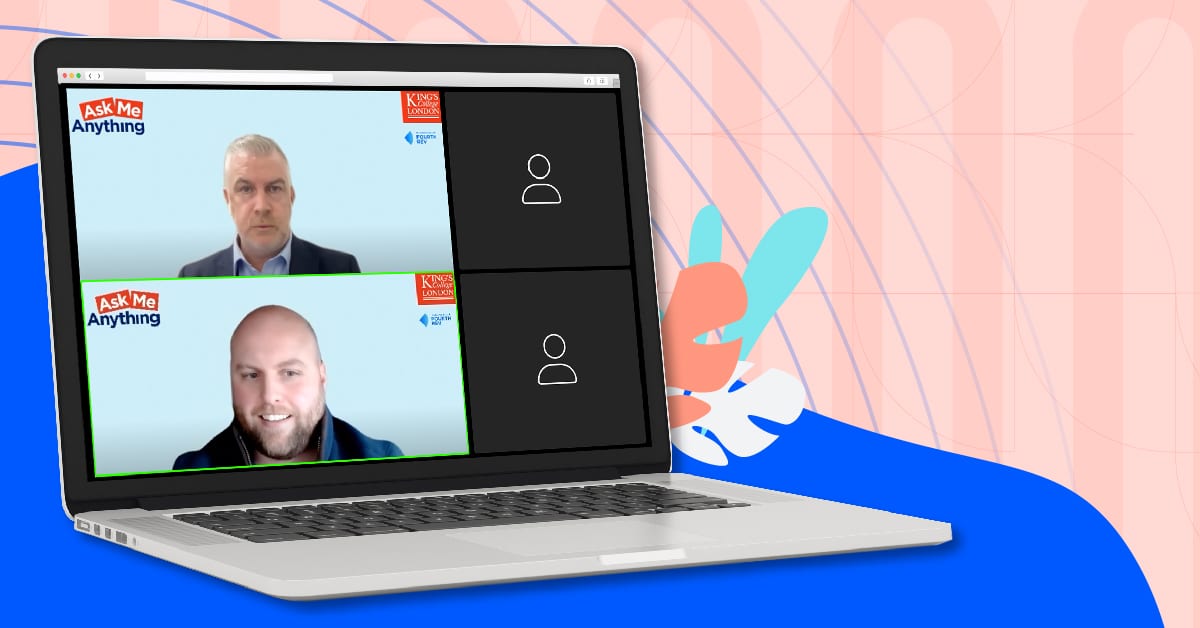
Before making any decision, it’s often useful to get more information from someone who has firsthand experience. That’s why we invited Adam Stead, one of our learners currently enrolled in the King’s Product Management Career Accelerator, to speak to us about how he’s found the programme so far and to answer any questions from prospective learners in a recent Ask Me Anything webinar.

Adam enrolled in this programme in order to move towards a more product-focused role at his current place of work. He has more than 15 years of experience working in the rail sector and is currently working as the Product Strategy and Concepts Manager at Transport for Wales.

During the webinar, Adam and FourthRev’s Head of Enrolments, Daniel Cairns, discussed: 

  • How the Career Accelerator is structured 
  • What made it stand out to Adam compared to other online offerings
  • How he balances studying with a full-time job and two young children
  • The practical nature of the coursework and how he’s been able to apply what he’s learning at work 
  • What it’s like to work with a Career Coach 

There were several questions from the audience, which Adam and Daniel addressed too, including: 

  • What technical experience do you need to have for this Career Accelerator?
  • Can you give examples of the real-world projects you’re working on and how they can help your employability? 
  • What are the programme facilitators like, and what’s the experience been like learning from them?

You can watch the full recording of the Q&A session here:

Highlights from the Q&A

What stood out to you about the King’s Product Management Career Accelerator?

I was starting to look into product management as a potential career avenue. Having researched the course, the fact that it’s very industry-led with practical content was a key factor in making my decision. There are lots of certifications out there, where you can attend for five half days and go well, we’ll learn a lot. I could also just read a book. But this course looked to be more practical and actively involved people who’ve done the job before, which I liked. Being able to engage with them was a real draw.

How practical have you found the content to be, and can you see ways it can be applied in the real world?

It’s very practical. I actually recently ran a workshop at work using all of the contents of the first assignment. A lot of the work we did for that involved building a business case for a new product or feature being introduced. For the assignment, it was for a hypothetical company that offered an online streaming service – not at all related to what I do for work – but it gave me a chance to learn some new techniques and methods for exploring ideation and prioritising solutions, which are all things that I’ve read about, but never worked through before. Having gone through the assignment, I now feel I’m not a total novice. So, when I was asked to run a product strategy workshop – even though I’m not a Product Manager yet, I’ve been seen as the guy to go to to help the business explore this space – I felt confident enough to do it. The agenda for the workshop was basically the content of the first assignment. 

How do you fit this programme into your life alongside a full-time job and two kids?

The way this course is structured helps a lot. It’s not just a case of reading some content, watching some videos, absorbing it all and then going away. You learn and then work through some exercises that you might share with peers, or discuss with them, which means you very much need to commit a block of time to focus. 

I’ve been going through quite a stressful period at work because it’s a bit of transformation going on. It’s also been the autumn in England where everyone’s got a cold or some of the illness – I think I’m recovering from my third or fourth now – so I’ve had to be quite good at focusing in the evening. We get the kids to bed, have some dinner and then I sit down for a few hours and study. I’ve also had to preempt things like if we’re going away for the weekend, I have to get more done earlier in the week so that I can go away and not panic that I haven’t done the work.  

I try and plan out my week to keep on top of the content by deciding what I’m going to do on which evenings and when I’m not going to be doing anything as well. Regular commitment is really the key.

My Success Manager has been great too because I explained my normal learning style at the start, and he helped me to plan during the induction phase so that I could start building better habits from the beginning and change my behaviours to be ready to learn. He also checked in when he hadn’t seen me do much to make sure I was okay. Once, we had a big assignment due, and I was worried about how much work there was. He helped put me at ease. I got a little email last Monday too, saying, “You’re doing great! Keep going!” and yeah, all that helps just to keep motivated and working towards those goals.

How have you found engaging with your Career Coach?

Invaluable. We’re going through a bit of a transformation at work, which caused me to question what my short-term career goals are and whether I see my future where I work right now or whether I should be looking for product opportunities elsewhere. My Coach was really useful in helping me frame what I want to achieve and what I value out of a career – and even out of my life. She coached me through my CV, creating a cover letter, applying for a job and looking at the experience through a different lens to understand what the hiring manager or target company might be looking for. It was really a really useful process. She helped me bring a whole new perspective to it. I had no product management experience on my CV, but there were elements I could draw out and tell a story about that could explain why I was right for the role. She was really, really helpful.

Is there anything you wish you had known about the programme before you started that you can share with others who are in the process of making a decision?

I hadn’t quite realised how practical it would be. From my academic background, I thought that it would be a lot more taught. It is taught, but I thought there would be more emphasis on that. It’s extremely practical. Another thing is the peer engagement. It’s a big thing. And it’s good. The peer review task, where you submit your exercise to someone else for them to comment on whilst you also received someone else’s to review, helped me reflect differently on what I’d done and really kind of grounded me a little bit. So I think the peer engagement on the course has been the most useful, almost surprising thing that I didn’t expect to find, and where I’m getting a lot of value from.

If you’d like to book a call with one of our Enrolment Advisors to start the application process or ask any questions, please download the programme brochure here and book a call today.

5 Top CV Tips from a Product Management Recruiter

We asked a top UK recruiter to share her tips for getting noticed and hired as a Product Manager.

“There are plenty of Product Manager roles out there,” says Annie Jackson, Head of Talent at Cleo.

Although tech hiring has slowed globally, the impact of the recession has mostly hit roles like Talent Acquisition and Human Resources, Sales and non-technical positions rather than core technical roles like engineering and product management. Still, it means more than ever it’s essential to network and be proactive when approaching companies.

Here are Annie’s top tips for boosting your CV:

1) Great presentation. Try to keep your CV succinct and highlight your achievements instead of listing your responsibilities. I normally recommend a one-page CV. It’s fine to go over that, but no more than 2 pages, as the longer it gets, the less likely people are to read it. Try and stick to a simple and easy-to-read font. If you want to get creative, there are some great CV templates you can use online.

2) Highlight relevant skills. Tailor your CV to the roles you’re applying for. Review the job description, highlight two or three top skills needed for the role, and then make sure that you’re demonstrating them somewhere on your CV.

3) Showcase industry experience. If it’s a role within a specific industry, highlight any relevant industry experience or exposure you have. For example, if it’s a FinTech role, highlight any FS experience you might have.

4) Go above and beyond. A great cover letter, an accompanying case study, or a portfolio can really set your application apart.

5) Don’t just apply – hustle. Look on LinkedIn and see if you know anyone at the company you’re applying to. Try to find the VP of Product/CEO/Head of Talent or recruitment manager on LinkedIn at that company and write to them to follow up on your application. There are some great product management-specific agency recruiters who will be able to support you with industry information and tips to help you stand out. They may even be able to connect you to great junior product management opportunities.

Pivoting into product management? What to do before you start preparing your CV:

Be curious

Spend as much free time as you have talking to technical staff like Engineers and Designers to gain more insight into what they do at a day-to-day level. Working with Product Designers and Engineers is a large part of the role, and building relationships with them is key too.

Develop a business mindset

Having a commercial mindset and understanding of business strategy is also important for a Product Manager, so try and speak to commercial strategy and operations staff at your company or even your CEO/COO to learn more about how your business model works and how your business could improve. It’s also important to read up about these areas, so connect with product leaders on Linkedin and Twitter and see which resources they recommend. You can always highlight those you’ve read on your portfolio or CV.

Showcase your transferable skills

Once you start putting your CV together, focus on showcasing your experience and skills with user focus, appreciation for the voice of the customer and a high-level understanding of UX/UI, particularly for consumer-focused roles. Try to shadow or partner with your user research or customer support teams to learn about what customers are saying and how you can use their feedback to drive improvements to your company’s product or service.

Accelerate your career progress with our Career Accelerator in Product Management. For more information on the King’s Product Management Career Accelerator, request to download the course brochure here. The next intake starts 24 April 2023.

What is a Career Accelerator in Product Management? FAQs with Professor James Smithies

Our recent ‘Exploring Careers in Product Management’ webinar series unpacked product management as a career choice and delved into the challenges everyday Product Managers face across industries.

For our final webinar in this series, Professor James Smithies, Professor of Digital Humanities at King’s College London and the course convenor on the King’s Product Management Career Accelerator joined the Head of Enrolments at Fourthrev, Daniel Cairns, for a deep-dive discussion and Q&A session on the programme. 

During the session, he shared his views on how the role of a Product Manager has evolved over time and how the programme’s practical approach to learning will help you gain the technical, organisational, and human skills that employers are looking for. 

He answered frequently asked questions like:  

  • How does the career coaching offering work?
  • What topics are covered in this Career Accelerator? 
  • What are the practical experience learners can expect to get from the programme?
  • Are you required to pay the tuition fees upfront?

Watch the full webinar recording here:

For more information on the King’s Product Management Career Accelerator, request to download the course brochure here.