10 Things You Need to Know About Career Accelerators

Making a career change (or stepping up in your current role) can feel overwhelming–especially if you’re balancing work, family, and the pressure to stay employable in a fast-moving UK job market.

It’s no surprise that confidence in traditional education-to-career pathways has been shaky. The Strada-Gallup Education survey found that only around one-third of students felt they had the skills and knowledge to succeed at work, and only about half trusted their studies would lead to a good job.

If you’re looking for a more career-focused route, a Career Accelerator programme can be a practical alternative. Explore the Career Accelerator options today. 

What is a Career Accelerator?

What is a Career Accelerator?

A Career Accelerator (or Career Accelerator programme) is a structured, career-focused learning experience designed to build job-relevant skills and apply them in real-world contexts. Unlike self-paced courses, it combines technical development with practical projects, coaching and accountability.

It is typically designed for working professionals and career changers who want a clearer, more direct route from learning to career outcomes.

What you can expect from a Career Accelerator

  • An industry-informed curriculum that reflects current employer expectations
  • Applied assignments culminating in a capstone Employer Project set by an industry partner
  • Structured support, with a dedicated Success Manager, 1:1 career coaching and scheduled check-ins to maintain momentum
  • A peer network and learning community
  • A recognised certificate or credential on completion (details vary by programme)

Career Accelerator vs bootcamp vs master’s

Option

Best for

Typical format

Key trade-offs

Career Accelerator programme

Career changers and working professionals looking for guided learning and real-world outcomes

Delivered part-time and online, with clear milestones and dedicated coaching

Varies by programme; consistent weekly study time is required

Bootcamp

Fast skills ramp for a specific role

Intensive, often full-time

Less academic depth; support varies

Master’s degree

Deep academic foundation and formal qualification

Longer, higher commitment

Higher time/cost; less directly job-application focused

Note: Always check the programme page for exact duration, weekly time, and project structure.

Are Career Accelerators worth it?

A Career Accelerator can be a good fit if you want a clear, supported way to build practical skills and can commit steady time each week.

Worth considering if you want:

  • A structured pathway rather than piecing it together through self-study
  • Accountability to stay on track and maintain momentum
  • Applied work you can speak to confidently in interviews, including a portfolio of evidence
  • Career support alongside your technical learning
  •  

Not ideal if:

  • You can’t commit weekly time for the duration of the programme
  • You want a purely academic route with minimal applied work
  • You need a full-time immersive bootcamp experience

If outcomes and accountability matter to you, review the Career Milestone Guarantee.

10 ways a Career Accelerator can set you up for a successful digital skills career

Programme details vary. See the programme page for current structure and time requirements.

1) Content is co-designed by academic and industry experts

A strong Career Accelerator programme balances academic rigour with real-world relevance. The best programmes are shaped by people who understand both: educators who know how to teach, and industry practitioners who know what employers actually need.

The input from industry professionals also ensures that you don’t only learn the technical skills you need to succeed in the workplace. You’ll also learn more about how to apply business thinking and develop the right human skills to be an effective team member.

If you’re exploring your options, start with the programme hub for a full overview, then compare each pathway to see how the curriculum focus differs.

2) You apply what you learn to practical challenges

Learning sticks when you use it.Case studies, assignments and a capstone-style project turn theory into workplace-ready capability. Employers look for evidence you can use what you know.

Across the three courses and final Employer Project, you will hear from industry practitioners applying these skills in their day jobs. You can ask questions, seek feedback and work on challenges that reflect real organisational problems. The focus is on practice, not just principle.

When choosing between pathways, focus on the kind of work you want to be doing next:

3) Built-in support helps you stay on track

Consistency is often the hardest part for working professionals. A Career Accelerator addresses that by building in structure and support from the outset.

Before the programme begins, you are matched with a dedicated Success Manager who becomes your primary point of contact throughout.

4) Coaching can help you plan for long-term career success

As well as having a Success Manager, every Career Accelerator learner has the opportunity to meet one-on-one with a Career Coach. They work with you on a personal level to help you think about what you want to get out of your career, both now and in the future. They’ll help you devise a plan to achieve these goals to help you really maximise your time during the six-month programme.

You can choose how you use your time with your coach and the cadence of your meetings. Some learners prefer to spend more time in the beginning planning how they’re going to tackle their studies, while others prefer to dive into the content and really take advantage of the guidance their coach can provide further down the line when they start actively planning their next career move.

Career Coaches have the knowledge and experience to help with a range of challenges, including goal-setting, addressing burnout and self-doubt issues, constructing stand-out CVs and preparing for interviews, amongst others.

Beyond learning the skills, you need a plan: what roles you’re targeting, how you’ll position your experience, and what evidence you’ll use to prove capability. Coaching can help you turn “I’m learning” into “I’m ready”.

If your goal is to move into leadership, you may want to explore an executive-focused pathway such as AI Leadership.

5) You can earn a recognised certificate/credential

Upon completion of the Career Accelerator, you’ll receive a certificate of completion from the university you’ve studied with to recognise your achievements – something that is highly valued by employers.

Explore all of the various Career Accelerator programmes, and start your journey today!

6) You build evidence you can use in interviews

Everything you work on during the Career Accelerator is linked to a practical example. This is to ensure that you can apply what you learn to a situation you might face in the workplace.

While the structure varies across programmes, the assignments you complete during the coursework are designed to be demonstrable examples of the skills you’ve picked up. The Employer Project, which acts as the capstone for some programmes, gives you the chance to build a business case that is relevant to a real company facing a real challenge. At the end of the six-month programme, you will have a bank of evidence that you can use to impress interviewers if you’re looking for a new job or your current employer if you’re going for a promotion.

Employers look for proof: how you think, how you solve problems and how you communicate. A Career Accelerator can help you build that evidence, from assignments to project work, which you can draw on in interviews or performance reviews.

If you’re building towards a data-focused role, compare:

7) You learn alongside peers and expand your network

While the programme is hosted online and most of the learning takes place asynchronously, we’ve built in regular opportunities for you to engage with the people you’re learning from. Live lectures happen weekly, and there are regular masterclasses that take place whereby experts give presentations and discussion follows. Working on projects, such as the Employer Project, will also give you the chance to interact with experts in the field, ask questions, pitch your ideas and receive feedback.

Career transitions often happen faster when you’re surrounded by people doing the same thing. Peer learning can sharpen your thinking, expose you to different industries, and keep your motivation high.

8) Career accelerators are designed to fit around your work and life

Deciding to undertake further studies while already managing other life responsibilities, like working a full-time job or looking after a family, can be a big commitment. Our Career Accelerators require between 12 and 18 hours of dedicated study time per week. 

Most of the learning you do is asynchronous, which means you can fit these hours in when it suits you best. To ensure that you get important face-to-face time with the people you’re learning from, there are designated live lecture slots every week that you can attend, often taking place over lunchtime or after hours to be as inclusive as possible. If you’re unable to make a session, everything is recorded.

A part-time online format can make it possible to upskill without stepping away from income or responsibilities. Just make sure you’re realistic about weekly time and check the programme page for the current expectations.

Start at the hub to compare time commitments

9) Payment options can make it more accessible

Cost matters, and so does predictability. Many programmes offer different ways to pay, and some learners explore employer support. 

Not everyone’s financial situation looks the same, so there are several options to pay the Career Accelerator tuition fees. 

  • Upfront payment of the full fee

  • Six-month payment plan with no added fees or interest

  • 24-month finance option via StepEx (available to eligible UK/EU applicants)

  • Employer sponsorship, with support to help you make the case internally

Feel free to discuss these options with one of our Enrolment Advisors, and work out a plan that suits you best. For the most accurate, up-to-date options, refer to the programme page you’re considering.

10) Join a community that sustains your momentum – online and in person

From peer WhatsApp groups during the Employer Project to in-person graduation celebrations and networking events on selected programmes, you’ll build relationships that last beyond the classroom.

Interested in enrolling?

If you’re based in the UK (or targeting UK roles) and want a part-time online route designed to support real career moves, start by comparing programmes in the Career Accelerator hub.

We’re excited to have three Career Accelerators live with more groundbreaking developments coming soon!

If you’re interested in a career in Data Analytics, Product Management or Product Design, our Enrolment Advisors would love to chat with you and share more information. 

FAQs about Fourthrev courses 

What is a Career Accelerator programme?

A Career Accelerator programme is a structured learning pathway designed to build job-relevant skills and help you apply them in practical contexts. It often includes support and accountability to help you stay on track. Explore options here: https://fourthrev.com/career-accelerators/

How long does a Career Accelerator take?

It varies by programme. Always check the programme page for the most up-to-date duration and schedule details: https://fourthrev.com/career-accelerators/

How many hours per week is a Career Accelerator?

It varies by programme and pathway. The best place to confirm weekly time expectations is the specific programme page you’re considering: https://fourthrev.com/career-accelerators/

Is a Career Accelerator worth it in the UK?

A Career Accelerator can be a good fit if you want a clear, supported way to build practical skills and can commit steady time each week. If outcomes matter to you, review the Career Milestone Guarantee and compare programmes: https://fourthrev.com/career-milestone-guarantee/

What’s the difference between a Career Accelerator and a bootcamp?

Bootcamps are often more intensive and can be full-time, while a Career Accelerator programme is commonly built for working professionals and may include more structured support and milestones. Compare options and formats here: https://fourthrev.com/career-accelerators/

Is a Career Accelerator the same as a master’s degree?

Not usually. A master’s degree is typically longer and more academic, while a Career Accelerator programme is designed to be career-focused and applied. Always compare the format, time commitment, and outcomes you need.

Do Career Accelerators help with career change?

They can, especially when they include applied projects and support that helps you translate learning into interview-ready evidence. Start by choosing a pathway aligned to your target role: https://fourthrev.com/career-accelerators/

What should I look for when choosing a Career Accelerator programme?

Look for role relevance, applied work, support structure, time commitment, and the type of evidence you’ll produce by the end. Then confirm the specifics on the programme page before you commit: https://fourthrev.com/career-accelerators/


Everything You Need to Know About the Employer Project

There is nothing more highly valued by employers than experience. 

But getting experience is not always easy. While traditional education models cover a breadth of theory, they often don’t include opportunities for practical application. 

FourthRev’s Career Accelerators are different. Developed by faculty from prestigious universities alongside leaders from innovative tech companies, the learning outcomes are practical, industry-aligned, and relevant in today’s digital economy. 

The Employer Project – the capstone project at the end of our programmes – is the ultimate opportunity for you to experience what it’s like to work on a real-life business case at a real company. You get to apply everything you’ve learned to the project and add the work you do to your portfolio to show to employers.

“It was really exciting to work with an established company and to be given the opportunity to work on a business challenge they had faced – pitching our insights to them.” – Rachel Ong, King’s UX & UI Product Design Career Accelerator Alumna

Here’s a closer look at how the Employer Project works and the impact it can have on your career.

The Employer Project comes after three structured courses

While not every Career Accelerator follows this structure to a tee, here’s an idea of what you can likely expect.

You’ll start off with an orientation week where you get to know the learning platform and meet with your Success Manager and Career Coach to discuss your career goals and what you want to get out of the programme. This is a time for you to settle in, find your feet, and practically prepare for the next six months.

After orientation, you’ll start the first of three six-week-long courses. At the end of each course, you’ll submit an assignment. Depending on the programme, these assignments might be course-specific or build on each other over the six-month learning period. Either way, these submissions give you the chance to put the skills you have learned into practice. The practical work you do can contribute to a portfolio of evidence that you can use in future interviews to demonstrate your abilities in job interviews. 


Eleonora Bacchi, a past learner on the LSE Data Analytics Career Accelerator, shares a look at her portfolio of learnings that helped her land a job as a research analyst soon after completing the programme.


A reflection week follows each three-week course. This offers a chance to meet with your Career Coach, revisit the goals you set for yourself, and track your progress. 

In the final six weeks of the programme, you’ll work on the Employer Project. It’s the capstone that brings together and applies all the skills you’ve learned on the Career Accelerator. 

“The Employer Project reassured me that I made the right choice in changing careers. It was the first moment I felt I could contribute something meaningful in a new industry, and that gave me a sense of confidence I needed moving forward.” – Rie, Career Accelerator Alumna

The project is a highlight for many of our learners – especially those pivoting their careers and needing proof of their skills. Megan, an Alumna of the LSE Data Analytics Career Accelerator, could lean on her project experience during interviews, which helped her land a job. 

Real businesses set the Employer Project

The project is designed by one of our Employer Partners and usually features a challenge or business case they need support or a fresh perspective on. 

Across our Career Accelerators, we’re excited to work with a diverse range of innovative organisations – from GAEA AI and Creative Navy to the Bank of England, DocuSign, Sky, and Cancer Support Netherlands – giving learners exposure to a wide range of real-world business challenges.


Recent projects our learners have worked on include:


“For organisations like Cancer Support Netherlands… initiatives like this bring fresh perspectives and innovative ideas that we could not realistically commission or pay for in the real world.” – Jill Murray, Board member, Cancer Support Netherlands.

The idea behind every Employer Project is to give our learners a real feel for what it’s like to work in the field they’re learning about. For six weeks, they become an extended part of the business team and work in groups to understand the dynamics that come with working together to solve a real industry problem. At the same time, while the learners benefit from getting a glimpse into the work and industry, the Employer Partners get a fresh and diverse perspective on a project or business challenge.

“Practical projects like these are priceless. They help learners decide if digital marketing is the right career for them, while giving them real-world experience that theory alone can’t provide.“ – Gabriela Lazova, CEO at Lean

Hear Graeme Scott, Founder & CEO of GAEA AI, introduce the Employer Project that the company designed for the LSE Data Analytics Career Accelerator.

The Project is designed for end-to-end problem-solving

Every Employer Project is unique, but they generally all follow this structure: 

  • Assignment 1: Project scope and demand
  • Assignment 2: Low-fi recommendation pitch 
  • Assignment 3: Final presentation and report
  • Assignment 4: Individual reflection

With your small group of programme peers, you’ll get to research, ideate, and develop a solution directly for the company. Along the way, you’ll get the chance to ask questions, present your ideas, and get feedback from the business, allowing you to be fully immersed in the experience. 

You’ll get a real ‘work team’ experience 

Before the project kicks off, you’ll be put into a small group with other learners in your cohort. Through six weeks of collaboration, you’ll better understand what it’s like to work as part of a team in the field that you’re interested in. 

Working so closely with others will also give you an excellent opportunity to practise the human skills, like communication and empathy, that are necessary in the role. 

“It felt like we were colleagues and they were supporting us and our learning process. They were open to all of the questions… really warm and clear and also very honest.
– Rubi Rodriguez, King’s Product Management Career Accelerator Alumna

Get feedback from industry experts 

We work with leaders in digital businesses and faculty from the world’s best universities to develop the core curriculum. This helps ensure what you learn is relevant to what is going on in industry right now and aligns with the highest standards of education. These experts may host guest lectures during the programme too. 

During the Employer Project, you’ll work more closely with a team from a specific company. To get you started, they’ll host a kick-off session to provide you with the brief and context you need. 

Halfway through, you’ll give a mini-presentation on the work you’ve done so far and conclude the project with a final, more in-depth presentation and discussion of your solution. If you have questions along the way, you can reach out to the team. The Employer Partner will grade your final submission and give you feedback. Because you’ll be working on a solution for a real business problem that the team is currently facing, there’s a chance your work will be picked up and implemented by the company. This could be something really exciting to talk about in interviews!

Build a portfolio of evidence 

Every Career Accelerator has been designed to ensure that everything you work on can contribute in a meaningful way to getting you hired. The coursework assignments and Employer Project can tangibly demonstrate the new skills you’ve picked up to make it easier for you to catch hiring managers’ attention.

“[The practical experience] is probably the reason why I got through the job interview process. Having that tangible evidence… is something I could really talk about in my job interview.” – Jon Minto, LSE Data Analytics Career Accelerator Alumnus

Due to the sensitive nature of some projects, however, and the relevant privacy agreements in place, there may be some limitations on the level of detail you can share about the work you do on the Employer Project. Don’t worry, though – if the project you work on does have some privacy agreements in place, your Career Coach will work with you to make sure you can present your new skills in the most effective way so that you can achieve your career goals.

“I’ve actually had feedback from the recruiter: they were very impressed with my competitive knowledge and technical capabilities, particularly noting the value of my AI/ML course at Cambridge. They highlighted that as very specific as to why they’ve taken me on.” – Sheldon Kemper, Cambridge PACE Data Science Career Accelerator Alumnus

You’ll be supported throughout your learning journey

Your Success Manager and Career Coach will be available to you throughout the programme. There’s no pressure around how you interact with them – they recognise that everyone’s learning journey and career goals are different and factor that into the relationship they build with you. 

You’ll also be supported by your peers – the people learning alongside you. There are regular opportunities to connect with the broader group during online sessions or in the community forum. We’ve had many learners stay in touch with their project group, even once the Career Accelerator has ended.

“The student community is a very important part of the experience as a learner. There’s a lot of encouragement from the course coordinators for the students to engage with each other and learn from each other, and there are a lot of structured opportunities to have that engagement.” – Andreas Yiallouros, LSE Data Analytics Career Accelerator Alumnus

Take a meaningful step forward in your career

The Employer Project provides you with a unique opportunity to experience what it’s really like to work in a role – before you get hired. You’ll get to test your technical abilities, feel where you fit in a team, discover what’s hard and where you thrive. It’s a chance to get one step ahead and make a more informed decision for future you. 
We’re thrilled to offer a range of Employer Projects across our programmes. Take a look at our programme portfolio to learn more.

The AI Skills Executives Actually Need in 2026

The gap between AI ambition and executive readiness is widening. Over the next three years, 92% of companies plan to increase their AI investments. Yet despite this rapid acceleration, only 1% of leaders describe their organisations as “mature” in AI deployment. Many have yet to integrate AI into everyday workflows or achieve meaningful results. 

This raises a clear question for senior leaders: how can organisations invest wisely and move closer to real AI maturity? The cost of falling short is already visible – failed projects, wasted resources and a weakening competitive position.

These challenges rarely come from weak algorithms or limited technical talent. They reflect a leadership gap – executives are now expected to make strategic, ethical and organisational decisions about AI, yet many lack the skills needed to guide transformation with confidence. 

This article examines the evidence behind the executive AI literacy gap, identifies the five key AI leadership skills leaders will need in 2026, and outlines practical steps to help build them.

The AI leadership gap is real – and growing

The pace of AI adoption now exceeds leaders’ ability to steer it. This widening AI literacy gap often determines whether organisations move beyond pilots or remain stuck in early experimentation. The impact is already visible across organisations:

Executive AI literacy lags behind organisational ambition

Boards are investing more in AI, yet many executives lack confidence in judging opportunities or readiness. The result is overselling and poorly governed projects. 

Organisational failures stem from leadership gaps, not technology

Research shows that most AI initiatives fail because of unclear strategy, weak governance and limited cross-functional coordination. The issue is usually not the model but misaligned leadership.

Formal AI training for leaders is still scarce

Despite rising demand for executive AI readiness, structured learning opportunities for leaders remain limited. Most offerings focus on technical concepts rather than the leadership AI skills required to make sound decisions on investment, governance and people. 

Why this gap exists

Analysts point to two pressures on leaders: less time to build judgement and far more information to absorb as AI accelerates change. Together, these pressures widen the gap between what organisations need and what leaders can provide.

Many senior leaders also built their careers before AI became central to strategic decision-making. AI introduces new demands such as uncertainty, data reliance, regulation and ethical expectations. These require updated ways of thinking.

The cost of inaction

The consequences of failing to close the AI literacy gap are already visible:

  • Failed pilots, often abandoned before value is realised
  • Wasted investment, when enthusiasm outpaces capability
  • Diminished competitiveness, as more mature organisations capture value faster
  • Talent exodus, when employees lose confidence in leadership direction.

Executives who build the right leadership AI skills will not only guide their organisations toward more mature use of AI, but also reinforce trust in their ability to lead through uncertainty.

If you would like to explore a structured learning pathway focused on strategy, governance and organisational readiness, then explore the LSE AI Leadership Accelerator.

Common misconceptions about leadership AI skills

The skills that matter are non-technical AI skills that enable leaders to make sound decisions, govern responsibly and align the organisation.

The myth of the technical executive

A persistent misconception is that executives need to learn to code. They do not. Coding is a specialist discipline, and executives will never out-code engineers. 

More importantly, technical fluency does not equate to strategic AI leadership. Leaders only need enough understanding of AI to question decisions, weigh options and keep projects on track.

Why coding bootcamps miss the mark

Most forms of technical training focus on algorithms and data engineering. These are essential for practitioners but insufficient for senior leaders who must:

  • Set strategic direction
  • Define credible business cases
  • Govern risk and ethics
  • Align teams and stakeholders
  • Prepare the workforce for change.

The real gap lies in strategic judgement, not syntax.

The five AI skills executives actually need in 2026

According to McKinsey, “Achieving AI superagency in the workplace is not simply about mastering technology. It is every bit as much about supporting people, creating processes, and managing governance.”

These five leadership AI competencies are becoming the basis of effective executive performance in an AI-driven environment:

1. Strategic AI thinking and business case development

Executives must be able to diagnose where AI creates genuine value and whether the organisation is ready to deliver it. 

This means being able to:

  • Diagnose where AI improves outcomes
  • Assess feasibility and strategic fit
  • Develop investment-grade business cases
  • Define KPIs and benefit realisation plans.

2. AI governance and responsible AI leadership

Governance is now a core leadership responsibility. Executives must ensure that AI is deployed ethically, transparently and in line with regulatory requirements. 

Effective leaders understand:

  • Ethical considerations and approaches to bias
  • Regulatory expectations and reporting requirements
  • Human in the loop safeguards
  • Organisational guardrails for safe experimentation.

3. Change management and organisational transformation

AI adoption succeeds or fails because of people. Effective AI change management helps leaders guide teams, and this is what speeds up organisational AI adoption.

Executives need to:

  • Guide teams through AI-related workflow changes
  • Address concerns about the job change with clarity
  • Build cross-functional alignment
  • Equip managers to lead with confidence.

4. AI-powered decision-making and executive productivity

Gartner suggests that more leaders will use AI as a mentor and reviewer to improve decisions. 

For executives, the real benefit is better judgment, not just speed. The challenge, however, is knowing when to draw on AI and when human oversight must lead.

5. Cross-functional AI collaboration and communication

AI work spans disciplines, so leaders must be able to bridge technical and non-technical teams. 

Effective leaders:

  • Set shared language and expectations
  • Balance innovation with risk
  • Ensure teams understand what is being built and why
  • Foster constructive dialogue across functions.

How to close the AI skills gap

Team leads, senior managers and executives can take practical steps to build capability in the areas that matter most.

  1. Start with an honest assessment of your AI literacy

Professionals should map their capability across four domains: strategy, governance, change and value measurement. Identifying blind spots is not a weakness – it’s a leadership strength.

2. Choose the right learning pathway

Awareness-only webinars or technical bootcamps are unlikely to shift leadership behaviour.

Options include:

  • Executive AI education programmes designed for strategic, non-technical roles
  • Peer learning communities where leaders exchange practical lessons
  • Structured frameworks that help connect AI concepts to organisational decisions
  • Applied, project-based learning that results in tangible artefacts.

3. Apply learning through real organisational projects

Skills developed by testing use cases, setting governance and planning for change.

4. Build cross-functional partnerships early

AI success depends on collaboration between technology, operations, HR, finance, legal and the executive team.

5. Seek structured guidance when needed

Coaching and practitioner input help leaders turn concepts into practical decisions.


The AI leadership gap is growing, and the AI skills for executives in 2026 are increasingly strategic and organisational. Addressing this gap requires purposeful learning and stronger leadership judgment.

Leading AI effectively is no longer optional. It’s a competitive necessity.

If you’re exploring how to build these strategic AI leadership capabilities, the LSE AI Leadership Accelerator, an LSE online programme developed in collaboration with FourthRev, offers a focused, non-technical pathway for executives. You can download the programme brochure to learn more.


Frequently asked questions

Q1: What AI skills do executives need in 2026?

Five skills matter most: strategic AI thinking, sound governance, effective change management, AI-supported decision making and cross-functional collaboration.

Q2: Do executives need to learn to code?

No. Executives create value through strategy, governance and organisational alignment, not through programming.

Q3: Why is there an AI skills gap at the executive level?

Many leaders were promoted for pre-AI capabilities. Most training still focuses on technical concepts rather than the judgement and governance skills executives now need.

Q4: How can executives close the AI skills gap?

By taking part in focused executive education, applying learning through real projects, learning with peers and using practical frameworks that link AI to organisational decisions.

Q5: What is the cost of the AI leadership gap?

Stalled pilots, wasted investment, rising regulatory risk, cultural resistance and loss of competitiveness.

From Classroom to Consultants: How an Employer Project Became a Launchpad for Two Career Changers

When Rie Kato and Maria Inês Pires started their final project, they were career changers learning product design. Six weeks later, they were offered consultant roles with the business they’d just designed for.

In six months, Rie Kato went from Senior Account Executive in public relations to confidently calling herself a product designer. Maria Inês Pires evolved her creative practice, bringing strategic, human-centred UX thinking into her brand design work. And before the programme even ended, both had been offered freelance consultant contracts with the health diagnostics start-up they’d just designed for.

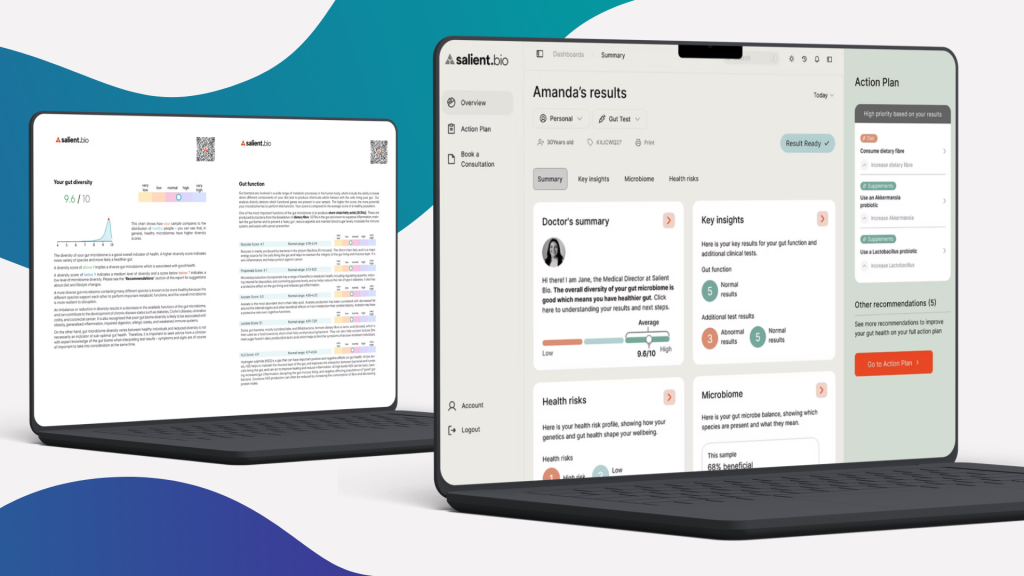
That’s what became possible during the King’s UX & UI Product Design Career Accelerator – specifically during the final Employer Project, where learners work directly with a real business. For Rie and Maria, that business was Salient Bioscience, an award-winning biotech company seeking to redesign its patient registration and results experience.

This is the story of how a live brief became a launchpad, and how academic rigour, practical learning, and real-world opportunity came together to change two careers.

Why learners choose King’s 

The King’s UX & UI Product Design Career Accelerator is a six-month, part-time online programme created by King’s College London in collaboration with FourthRev. Learners move from user research and journey mapping to prototyping and high-fidelity design, applying everything in a live Employer Project with a real industry partner and dedicated support throughout.

That combination of academic rigour and practical experience, and the chance to build a portfolio of real work, was what drew Rie and Maria in.

Rie was looking for something credible and immediately applicable.

“The programme really stood out – a friend who works in the industry said the process was very good, especially because of the Employer Project at the end. Having that real-world experience and something to put in your portfolio before applying for jobs was a big reason I chose the King’s programme.” – Rie, Career Accelerator Alumna

She also valued the depth of learning that came from studying with a world-leading university.

“Because it’s in collaboration with King’s, the course combines academic depth with practical application – guiding you through the theory, logic, and real-world implementation of UX.”

For Maria, who had worked with brands such as TikTok and Cult Beauty, it was about taking her design expertise to a more strategic, user-centred level. Both learners were ready to redirect their professional paths and to see where real-world experience could take them.

The employer challenge: Making science understandable

For Salient Bioscience, partnering with King’s and FourthRev offered a chance to explore how UX design could make scientific complexity feel clear, human, and actionable.

The start-up’s Scientific Lead, Rob Bradley, explained that his team wanted specialist UX perspectives to improve how patients interact with test results and registration forms.

“We knew we would benefit from some specialist UX knowledge as we look to improve the existing client-facing elements of our workflows.” – Rob Bradley, Scientific Lead, Salient Bioscience

The brief to the learners was precise: redesign the patient registration and results experience to help users navigate complex medical information with confidence. The goal was to make results actionable, not overwhelming, while maintaining scientific accuracy and trust.

For Salient Bio, collaborating with external product designers went beyond simply refining a process – it helped reimagine how patients engage with their health information, creating a more intuitive and meaningful experience in what can often feel like an overwhelming and complex journey.

Inside the project

Working in teams, learners approached the challenge from multiple user perspectives, applying the full UX and UI design process they’d developed throughout the programme.

In a unique opportunity specific to this Employer Project, the Salient Bio team invited learners to visit their London lab, giving the teams a chance to see the diagnostic process up close and connect design decisions to real workflows.

“One of the things that was really helpful was beyond the initial consultation, we did a site visit. We went into the lab, met everyone, and were shown the process from the moment the parcels arrive to what happens inside and what equipment is used.” – Maria, Career Accelerator Alumna

That visit helped the teams see the product from the user’s point of view and ground their design decisions in real context. Working collaboratively also helped Maria see the parallels between the classroom and the workplace.

“I found it valuable to work in a group because once you go into an actual project in a job, you’ll be working in a team with people who have different experiences, strengths, and needs.”

For Rie, the Employer Project was a clear milestone – the point where her learning turned into confidence.

“The biggest change is that I can now confidently call myself a product designer. Six months ago, I couldn’t say that. I’ve gained a completely new set of skills, knowledge, and confidence to apply for roles in UX/UI design. It’s been a huge transformation in a short time.”

The design outcome

Across all teams, the learners’ prototypes shared a common goal: to make complex diagnostic information feel clear, navigable, and reassuring. Using layered data visualisation, intuitive navigation patterns, and supportive microcopy, they reimagined how patients might receive and interpret their results online.

“A common outcome from all teams was a focus on communicating clearly what actions needed to follow the users’ results,” said Rob. 

“The teams produced lots of ideas to help users feel they had obtained good value from our test results and wanted to stay within our product ecosystem.”

He noted that each team contributed usable ideas that the company could combine as it builds the next version of its platform.

“All four teams produced outputs with unique and interesting aspects that we can now combine as we build the portal. Their approach and presentation were structured and professional.”

From project to opportunity

Both learners’ journeys came full circle when they were offered Product Design Consultant contracts with Salient Bio, a moment that validated everything they’d learned and built over six months.

“The Employer Project reassured me that I made the right choice in changing careers. It was the first moment I felt I could contribute something meaningful in a new industry, and that gave me a sense of confidence I needed moving forward.” – Rie, Career Accelerator Alumna 

Explore Rie’s portfolio of Career Accelerator work here, including her redesign of a health app.

For Maria, the learning experience reinforced just how much thoughtful design begins with understanding people – something she had come to value most throughout the King’s Career Accelerator.

“The tools I really valued were from the first course, especially when we were understanding user needs and learning terminology that was psychology-based – reframing mindsets, influencing users to take certain actions, and achieving results in an ethical way.”

She also reflected on how many of those lessons reached beyond design itself, influencing how she thinks and approaches challenges in her everyday life.

“A lot of those learnings I’ve translated into my personal life. For example, reframing mindsets – when I’m feeling negative now, I try to do that for myself.”

Visit Maria’s LinkedIn profile to view her portfolio in her Experience section.

Results and impact 

For Salient Bio, the partnership delivered prototype designs, information-architecture recommendations, and fresh ideas that have directly influenced their ongoing development.

“This partnership has been really beneficial to Salient. It’s brought in ideas and prototype designs that would have been impossible to achieve with our in-house team. We’ve also learnt a lot from the students about the underlying principles of UX, which will influence our approach to future projects.” – Rob Bradley, Scientific Lead, Salient Bioscience

For learners like Rie and Maria, the experience became clear proof of how a carefully designed, careers-first programme can help you make a successful career change possible in months, not years.

Rie said the strength of the course content and the calibre of her peers confirmed she’d made the right choice in joining the programme.

“A classmate who’s a senior UI designer told me the UX content was amazing. I imagine this is one of the best you could choose if you’re serious about changing your career.”

Design that transforms lives and learning

The Employer Project with Salient Bio stands as a clear example of what happens when education, industry, and careers intersect on the Accelerator.

For the employer, it produced actionable design ideas and new ways of thinking about user experience in healthcare. For the learners, it offered confidence, credibility, and their first steps into a product design career – proving that a rigorous, applied learning experience can lead not just to new skills, but to new careers.

If you’re ready to explore what your own journey into product design could look like, download the brochure for the King’s UX & UI Product Design Career Accelerator.

Transforming Learning into Action: The LSE Digital Marketing Employer Project

Where real briefs meet real careers: Step inside the six-week Employer Project that challenged learners to work with an $18m budget and real client expectations.


The LSE Digital Marketing Strategy & Analytics Career Accelerator culminates in a transformative Employer Project – a six-week live business project designed to bridge theoretical knowledge with real-world application. During this period, learners collaborate in teams to tackle a real business challenge presented by an industry partner. This immersive experience allows learners to engage in end-to-end problem-solving, from initial project scoping to delivering final presentations, thereby gaining invaluable insights into the dynamics of working together to solve real industry problems. 

For the 2024 cohort, the Employer Project was a partnership with Lean, a leading full-service digital marketing agency. Learners were tasked with designing a Q4 digital marketing strategy for Rugs-Direct.com, a prominent home décor platform. From crafting data-driven recommendations to aligning marketing strategies with business goals, learners tackled challenges that mirrored the complexities of the real-world job market.

This project wasn’t just an academic exercise, it was an invaluable opportunity to collaborate, innovate, and step into the shoes of a digital marketing professional. The results? Learners gained not only practical expertise but also the confidence to solve problems, make strategic decisions, and deliver business value in their future careers. For anyone considering the Career Accelerator, this project illustrates the kind of confidence, career readiness, and impact you could achieve.

The brief: A real-world challenge

Lean provided learners with a comprehensive brief outlining Rugs-Direct.com’s key marketing challenges, including:

  • Achieving a Return on Ad Spend (ROAS) of $13 across platforms, leveraging an $18-million Q4 marketing budget.
  • Aligning marketing objectives with a broader goal of increasing revenue by 30% while improving customer acquisition.
  • Strategically navigating the competitive landscape during Black Friday’s high-demand period.

Learners were required to deliver:

  1. A business context analysis and market research.
  2. Persona development with actionable insights.
  3. A data-driven, comprehensive marketing strategy addressing channel-specific objectives for Google and Meta platforms.
  4. A live group presentation summarising their recommendations for Lean’s leadership team.


This dynamic brief ensured learners were exposed to the real-world stakes and complexities professionals encounter daily.

Approach: From research to strategy

Learners approached the project with rigour and creativity, following a structured methodology:

  1. Initial research and hypothesis: Teams analysed publicly available data and provided metrics to explore trends, competitive positioning, and consumer behaviours. Personas were then defined based on these insights.
  2. Strategy development: Each team formulated channel-specific strategies, recommended budget allocations, and proposed innovative solutions to drive Black Friday sales.
  3. Presentation: Strategies were presented live to Lean’s team, who offered constructive feedback to help refine and strengthen the recommendations.


A few standout learners excelled in their approach by demonstrating the ability to translate complex hypotheses into actionable strategies, effectively mirroring the challenges faced by professional marketers. They achieved this by:

  • Leveraging data-driven insights to justify budget reallocations.
  • Connecting personas to specific ad strategies and landing page designs.
  • Demonstrating a clear understanding of attribution models and platform-specific performance metrics.

Outcomes: Bridging the gap between academia and industry

The Employer Project offered a transformative learning experience. According to Gabriela Lazova, Lean’s CEO, learners demonstrated:

  • Preparedness: “These were all beginners in the field, but the level of preparation and the data-driven approaches they demonstrated were above what I would expect from someone starting out.” 
  • Problem-solving skills: Learners tackled complex scenarios such as balancing ROAS targets with revenue growth objectives.
  • Actionable insights: The learner’s ability to connect personas to ads and landing pages showcased a nuanced understanding of strategy execution. Gabriela said, “What stood out was their ability to connect hypotheses about personas with actionable outputs, integrating this into ads, landing pages, and strategies tied to real industry trends.”

“The project gave learners a chance to see how marketing needs to interact with business goals. This was as close as one can get to a real-life scenario, with learners working on real data and being tasked with delivering actionable strategies. The learners didn’t just meet the brief – they approached it as if it was their own business, bringing a level of commitment and enthusiasm that really stood out. Their focus on problem-solving and being data-driven really aligned with what we look for in digital marketing talent.” 

Gabriela Lazova, CEO at Lean

Impact on Lean and Rugs-Direct.com

While the project primarily aimed to benefit learners, it also provided value to Lean:

  • Fresh perspectives: Gabriela noted that several tools and strategies proposed by the learners had the potential to inspire Lean’s own practices.
  • Real-world relevance: The learners’ strategies aligned closely with Lean’s approach, reinforcing the real-world applicability of the project.

“I was honestly impressed by the level of detail and how deeply they dived into understanding the insights, while still cherry-picking the most valuable information to present. Many of the learners demonstrated the core values and capabilities that we’re looking for in candidates, and if they were applying to Lean, we would absolutely be open to hiring them.” 

Gabriela Lazova, CEO at Lean

Reflections from learners

Learners reflected on how the project provided a deep dive into real-world complexities and how it prepared them for the workforce by simulating challenges that marketers face daily. For example:

“By working with an actual company, it provides a better understanding of the real market and how to apply my knowledge in practical scenarios, ultimately increasing opportunities for employment after the programme. While doing an apprenticeship with my previous company’s marketing team, I noticed that everything I learned in the course was directly applicable to my daily projects. So when my job came in August, they asked me to do a mini-campaign, including email, social media and SEO. I immediately knew what to do with a strategy, and trust me, I would never have been able to do it before.” – Sofia Stefou, Career Accelerator Graduate. Changed careers from employer branding and recruitment to marketing executive.

“We all worked in a cross-functional team. This was a new experience for me working with someone based in Luxembourg and another based in Lithuania, which was great. We also had to present to the employer the strategy we had done. You have to engage and give innovative ideas, so all of this experience is huge in a programme that is only six months.” – Mohamad Hakim, Career Accelerator Graduate. Advanced his career as a Communications Officer.

Key takeaways and advice

For aspiring digital marketers, hands-on projects can provide potential employers with evidence of your skills and assure leaders that you’re prepared to lead strategic initiatives.

“Practical projects like these are priceless. They help learners decide if digital marketing is the right career for them, while giving them real-world experience that theory alone can’t provide.“

Gabriela Lazova, CEO at Lean

The Employer Project with Lean was a proving ground for LSE’s digital marketing learners, showcasing their ability to rise to real-world challenges and deliver exceptional results. The learners’ data-driven strategies and innovative solutions weren’t just a testament to their hard work – they exemplified the qualities that drive success in the industry.

By fostering a culture of collaboration, critical thinking, and real-world application, the LSE Digital Marketing Strategy & Analytics Career Accelerator equips learners with more than just technical skills. It instills the confidence, adaptability, and strategic mindset needed to thrive in competitive, evolving markets. Whether your goal is to pivot into a new career, secure a promotion, or build expertise that makes you indispensable in your role, this programme provides the foundation for transformative growth.

If you’re interested in learning more about the Career Accelerator, book a call with one of the Enrolment Advisors. Our advisors are experts who can answer your questions about the curriculum, programme structure, and support systems, and will share examples of the career successes our graduates have achieved.


Proof in Practice: How Cambridge PACE Learners Turn AI Theory into Real-World Impact

From learning to proof

When you’re building a career in data science, what you know matters — but what really moves you forward is being able to prove it.

That’s the heart of the Data Science With Machine Learning & AI Career Accelerator, from the University of Cambridge Professional and Continuing Education (PACE) in collaboration with FourthRev.

This isn’t a boot camp. It’s where you learn to connect advanced AI techniques with commercial value, producing industry-relevant data science portfolio projects that demonstrate your capability for employers.

In this case study, you’ll explore how five Career Accelerator learners turned knowledge into real-world proof — through portfolio projects that put data science into practice across finance, education, and industry. Each story reveals how applied learning can lead to real career outcomes and business transformation.

Learning that proves itself

The Data Science Career Accelerator is shaped by a guiding principle: learning creates the greatest impact when it’s applied to real-world challenges.

Learners spend seven months developing advanced techniques — from NLP and time-series forecasting to generative AI and large-language models — guided by Cambridge academics and industry mentors from organisations such as the Bank of England, PureGym, StudyGroup and Inchcape.

Across 20+ portfolio projects and a final six-week Employer Project, every learner produces tangible work: code notebooks, AI pipelines, dashboards, and reports. By the time they finish, they have evidence of what they can achieve.

“It’s not just about algorithms or machine learning techniques; it’s about generating meaningful, actionable insights that can challenge conventional wisdom and enable commercial success.” — Dr Ali Al-Sherbaz, Academic Director for Digital Skills, University of Cambridge PACE

Sanya Setia — Building a portfolio that opens doors

Sanya came to the programme seeking depth backed by institutional credibility.

“I decided to do a programme that was backed by a university that’s well-renowned and also was long enough to go into the depths of the topic itself.”

Week after week, her portfolio grew; each project became reference material for the next challenge.

“My achievements were my projects that I was doing week in and week out because I could always go back to them and see how I approached a problem and how I could solve it and make it fit into my new project.”

That iterative approach built a data science portfolio spanning the full spectrum of machine learning applications.

📘 View Sanya’s portfolio

“This programme gave me an immense portfolio of projects on every machine learning topic that I have, and be able to put that on my GitHub and website, and to showcase that to my new employers.”

The outcome: Sanya secured a job at John Laing as a Business Information Analyst immediately after completing the programme.

“I did get placed in a job right after my course, and I have to say a big part of it in terms of my CV and confidence came from having done this course where I knew what I was talking about.”

Sheldon Kemper — When data engineering meets AI

When Sheldon began the Data Science Career Accelerator, he had a clear vision: he wasn’t looking to change direction entirely — he wanted to bridge AI with data engineering, creating a role that blends intelligent automation with scalable infrastructure.

With a strong foundation in data pipelines and cloud computing, Sheldon recognised that AI wasn’t just an add-on — it was transforming his field. Self-study had taken him so far, but integrating AI at scale required structured training.

“I quickly realised that building AI solutions required a different mindset than traditional data engineering.”

Through the Cambridge PACE programme, that mindset shift evolved into practical capability, reflected in a data science portfolio that combines engineering rigour with AI innovation.

Portfolio highlight: Predicting student dropout rates with machine learning

  • Goal: Help educational institutions identify at-risk students early.
  • Approach: Compared XGBoost and neural networks using SHAP analysis to evaluate feature importance.
  • Outcome: Achieved over 97% accuracy in identifying at-risk students, demonstrating the ability to translate technical work into social impact.

📘 Explore Sheldon’s full portfolio

Towards the end of the programme, Sheldon was headhunted by Capgemini for a new role as a Data Engineer, with a salary increase and a more AI-driven focus.

“Thinking back to my early journey into data science, I started by exploring theory and small-scale projects, but this programme helped me apply AI in a business-critical environment. Cambridge PACE gave me the technical expertise, leadership experience, and problem-solving skills to bridge the gap between data engineering and AI-driven decision-making.”

Juan Pablo Salazar — From public health researcher to AI-driven analyst

When Juan joined the programme, he brought a background in public-health research, but not computer science. Initially, he worried about his lack of Python experience, but that concern quickly lessened with the help of ChatGPT and drawing on his transferable skills.

“I’m not an expert in Python, so that was challenging. But with ChatGPT, you can work around that…. if you know your maths and stats and understand what you’re doing, you can complete projects without being a Python expert.”

Across his portfolio, Juan demonstrates how AI can drive smarter decision-making in regulated industries.

Portfolio highlight: AI-driven risk insights from public financial disclosures

  • Goal: Explore how NLP and generative AI could support the Bank of England’s supervisory monitoring of major banks.
  • Approach: Developed a multi-stage pipeline extracting risk and sentiment signals from earnings calls and strategic reports, using FinBERT, BERTopic, and Phi-4.0.
  • Outcome: A retrieval-augmented generation system surfacing sentiment drift and regulatory risk — replicating human analyst work with transparency and speed.

The Bank of England gave Juan strong feedback on his project: “This is an excellent submission demonstrating clear understanding of the regulatory problem and the potential of advanced NLP and generative models for supervisory monitoring.”

📘 View Juan’s full portfolio 

Sian Davies — Detecting anomalies before they become failures

As part of the coursework, Sian applied AI to a new context — ship engine performance — exploring how machine learning could detect anomalies in complex mechanical systems before failures occur. Even minor deviations in engine behaviour can lead to costly downtime or safety risks, making this an ideal problem for applied data science.

“Applying machine learning to this real-world anomaly detection problem was both fascinating and challenging, and underscored the practical value of the skills we were learning. It strongly highlighted the importance of careful assessment of the data…as well as considering the context of the problem to be addressed, i.e. what would be useful information for the client and how real-world confounding factors could impact the interpretation of results.”

Portfolio highlight: Anomaly detection for ship engine performance

  • Goal: Build a machine learning system to identify abnormal engine behaviour and enable proactive maintenance before faults occur.
  • Approach: Applied unsupervised learning methods, including Isolation Forest and One-Class SVM, to six key operational metrics: engine RPM, fuel and lubrication pressure, coolant temperature and pressure, and oil temperature.
  • Outcome: Delivered an intelligent anomaly-detection pipeline capable of flagging early warning signs in large-scale operational data, demonstrating how AI can translate raw performance data into actionable insights for safety and efficiency.

📘 See Sian’s portfolio

We asked Sian how building a portfolio impacted her readiness for the data science industry:

“Building a portfolio across multiple projects really helped grow my confidence in my own capabilities. Each project added depth to my understanding, as concepts learned separately were drawn together into a cohesive strategy for tackling real data science problems. These projects gave me invaluable experience in handling nuanced scenarios and messy real-world data, which I am carrying into my future work.”

Looking back on her work, Sian sees her portfolio as a record of growth and a clear direction for where she wants to take her career next.

“My portfolio is a great representation of my growth as a data scientist throughout the course — from the early projects focused on specific data science skills, through to the Employer Project with the Bank of England, which covered a wide range of skills and knowledge I’d gained, applied to a live business context. The project allowed us to choose the direction of the work, reinforcing skills essential for industry work, such as initiative, technical acuity, and the ability to define a problem and communicate the solution effectively.”

What current learners are working on

Dr Arunima Bhattacharya came to the Cambridge PACE Data Science Career Accelerator from a background in particle physics — used to handling complex data and building models, but keen to see how her skills could make an impact beyond academia. 

Through the programme, she’s learning to translate technical depth into practical, business-relevant solutions.

“Being part of the Career Accelerator has been genuinely transformative. Coming from a research background in particle physics, I was used to handling complex data and building models, but had little experience applying those skills beyond academia. This programme has shown me how my technical expertise can make a real impact on practical problems.”

Balancing research, learning, and career development, Arunima says she’s embracing both the challenge and the reward of applied learning while working full-time. 

“Above all, the programme has built my confidence and helped me grow not only as a scientist, but as someone who can bridge technology and human understanding in any context.”

📘Explore Arunima’s growing portfolio

Guided by mentors, built for the real world

Behind every project lies a team of mentors and tutors who make learning personal. Weekly industry-focused sessions connect theory to practice, while live mentoring ensures every project aligns with real-world expectations.

“Mentorship played a huge role in helping us stay on track and refine our approach. Regular feedback sessions made sure we weren’t just building something for the sake of it, but aligning with real-world outcomes.” — Sheldon Kemper

From Dr Ali Al-Sherbaz’s academic guidance to the expertise of industry mentors and tutors, this programme blends the University of Cambridge’s academic tradition with business-ready application.

Outcomes that speak louder than words

These learner stories show how Career Accelerator alumni don’t just finish with a qualification from a world-renowned institution — they finish with proof of what they can do.

It’s also one of the reasons why 88% of Career Accelerator graduates achieve their desired career goal within six months of completion. 

“For data engineers, [the programme is] the perfect way to expand into AI while keeping a strong engineering foundation. The experience of working on an industry-led project is invaluable, and the skills you gain — AI integration, retrieval-based models, and structured problem-solving — are exactly what companies are looking for.” — Sheldon Kemper

Your turn to build proof that gets noticed

Every learner’s story began with a question: What could I do with the right structure, guidance, and tools?

The Cambridge PACE Data Science Career Accelerator gives you all three.

You’ll gain hands-on experience with the tools shaping the future of data science, work on projects that test your skills in real business environments, and graduate with a portfolio that proves your capability.

The next question is: what will you build?

To learn more about the Career Accelerator, download the programme brochure.

All portfolio projects featured in this case study were completed as part of the Cambridge PACE Data Science Career Accelerator. Learners’ personal portfolios may also include additional independent or prior work beyond the programme.

“Python Is Less Intimidating Than It Sounds”: How Pre-Programme Python Training Built This Learner’s Confidence

When Thijs Verhulst first considered the Data Science with Machine Learning & AI Career Accelerator, he had no coding experience. As a business innovator and founder of Angle of Impact, he focuses on creating new commercial models in music and sport.

When we asked what motivated him to pursue advanced data skills, Thijs said he knew it was time to deepen his technical capabilities: 

“Working closely with emerging tech and tech hubs, I saw the impact that AI, but also data, was making. I knew this was going to be a big part of any future role and project I would work on.” 

And not having much experience in the field didn’t deter him:

“I did not have any technical skills prior to the Data Science Career Accelerator. I had once tried HTML for one or two weeks, but nothing more than that. All technical skills and code writing were completely new to me.”

So, what changed? Two things: a structured way to build the basics, and a mindset shift about what Python really is.

Like many others, Thijs did a Python preparation course to build confidence in the prerequisite skills before starting the Career Accelerator.

“It mainly took away the concern that Python is difficult to learn. The language actually makes a lot of sense and the basics are quite easy to understand.”

From day one to first wins

When Thijs joined the Career Accelerator, he shared a common concern among non-technical learners — that “starting from zero” might slow him down. Instead, his early momentum came quickly:

“After the first 2–3 weeks into the programme, I started to enjoy exploring data sets and being able to uncover simple insights. That was the moment I knew that I wanted to learn this more in-depth.”

That confidence mattered. He didn’t need to be a full-time data scientist to get real value from the skills he was learning; he needed enough fluency to ask better questions, test ideas, and communicate evidence with stakeholders.

The Data Science Career Accelerator from the University of Cambridge Professional and Continuing Education (PACE) is designed to build both the deep technical expertise and the commercial understanding needed to use data science effectively in real-world settings.

Applying data in the real world

For Thijs, the goal of the Cambridge PACE Data Science Career Accelerator wasn’t about changing careers to data science — it was about deepening the way he applied data in his existing work.

“Working with LLMs and extracting insights from text data — I’ve just done this in a research project I did for my MBA, and I never would have imagined I could even think about adding this.”

That’s the goal of the programme: to help professionals from all backgrounds develop the ability to apply data science techniques to real-world challenges — whether that means analysing trends, improving decision-making, or unlocking new opportunities in their field.

For learners starting with little or no Python skills

Many professionals begin this journey just like Thijs: motivated, but unsure where to start with coding. That’s why we offer our own free Python Preparatory Course, a short, self-paced introduction that builds confidence before starting the programme.

You’ll cover all the essential programming concepts required, practise writing Python through structured exercises, and get guidance from your Enrolment Advisor throughout the process — so you know exactly what to do and when.

Once you’ve completed your preparatory Python studies, your journey on the Data Science with Machine Learning & AI Career Accelerator begins with a short technical assessment (which only takes about an hour to complete). This step helps ensure every learner starts the programme ready to thrive in the first technical modules.

Is this programme still ideal for people who already code?

Absolutely. Many learners enter the Career Accelerator with strong Python experience and use it to deepen their expertise in areas such as supervised learning, natural language processing, and time-series analysis. 

The combination of Cambridge PACE academics, industry mentors, and a live Employer Project ensures that even experienced technical professionals sharpen how they apply data science — not just how they code.

Building confidence without pretending it’s easy

We’ll never tell you it’s effortless — both the preparatory Python course and the programme itself require time and persistence. Basic programming skills are a prerequisite before enrolling, and there’s real work involved if you’re new to Python. Thijs’s preparation ahead of the programme paid off:

“Coding is less intimidating than it sounds… the best way to learn it is to just start doing it.”

Importantly, he also found that a non-technical background isn’t a weakness — it’s part of your edge:

“Sometimes I did feel behind… however, I also had a wide range of other skills and knowledge my peers did not have and therefore we could learn a lot from each other.”

That sense of collaboration is central to the programme. Learners come from diverse industries and backgrounds, creating a peer network where technical specialists and domain experts learn side by side — sharing insights, tackling projects together, and building confidence as a community.

Thijs’s advice if you’re hesitating

Thijs’s journey is proof that with focus and the right preparation, the programme is completely achievable, even for those who start with no Python experience.

“Think about what you would like to achieve, and also what other great skills you already have. The most important thing is just do it, a lot, and not be afraid to make mistakes.”

That mindset — curious, consistent, and outcome-focused — is exactly what turns non-coders into confident data practitioners.

What’s next? 

In just two years, Thijs built an advanced data science skillset, launched his business while completing the programme, and finished his MBA in International Sports and Entertainment at LALIGA Business School in October 2025.

“I’ve been able to add and expand both my data science and analytical skills, and add deep knowledge about the sports industry to my skill set in just two years. This helps me to become a versatile business leader.”

Now, he’s focused on growing Angle of Impact, uniting the sports and music sectors to develop business solutions that help shape the future of both industries.

Ready to see your next step?

Download the programme brochure to start mapping your Python starting point and the shortest route to data science readiness. 

How to Unlock New Career Opportunities in 2025 With Practical Data Analytics Skills | LSE Data Analytics Career Accelerator

In a data-driven economy, career growth depends on more than job titles. Employers are prioritising professionals who can navigate data fluently, interpret patterns confidently, and communicate their insights clearly across teams, tools, and time zones.

This shift formed the focus of a recent expert panel hosted by the London School of Economics and Political Science (LSE) and FourthRev: How to Unlock New Career Opportunities in 2025 With Practical Data Analytics Skills.

This blog captures the most relevant, practical insights from the panel — featuring LSE faculty, a LSE Data Analytics Career Accelerator alumna, and a data leader — and explores how applied analytics training can act as a lever for career transformation.

You can watch the full webinar recording below: 

The career outlook in 2025: Demand, urgency and upside

Data roles have grown nine times faster than the average job market. But what’s more telling is how central they’ve become to business strategy, no matter the sector. Organisations aren’t hiring for isolated technical roles. They’re looking for professionals who can think critically, communicate clearly, and contribute to company-wide transformation through data.

Much of this demand is being accelerated by the integration of AI, which has pushed data skills from desirable to essential. As businesses adopt new tools and automate routine tasks, they need professionals who can not only work with AI but also interpret the data it relies on and produces. 

Kate McDermott, Associate Director at Omnis Partners, explained how this shift is influencing hiring across sectors during the event:

“AI is driving a huge amount of the hiring that’s going on at the moment…Candidates need to be ready to start to think about how AI will impact their roles, particularly in the analytics space. It will be an enablement — for greater efficiency, for greater impact and greater performance overall.”

— Kate McDermott, Associate Director at Omnis Partners

Across the board, data literacy is no longer a siloed skill — it’s a core business capability. As organisations restructure their teams and workflows to adapt to new AI tools and larger datasets, they need candidates who can ask the right questions, extract insight from ambiguity, and move quickly from analysis to decision.

Dr James Abdey, Associate Professorial Lecturer in Statistics at LSE and Programme Coordinator of the LSE Data Analytics Career Accelerator, captured this shift succinctly:

“Data is like crude oil. In and of itself, it’s of limited use. We need to refine it into something valuable, and that’s what data analytics is. It’s about extracting value, converting data into insight, and enabling data-driven decisions.”

— Dr James Abdey, Associate Professorial Lecturer in Statistics at LSE

Why professionals get stuck — and how to move forward

While data roles are on the rise, many professionals — even those with deep domain expertise — find themselves unsure how to build credibility with data. Some feel overwhelmed by where to start. Others struggle to demonstrate experience in a field they haven’t formally worked in, despite working with data daily.

This was true for Anna Kramer, EMEA Finance Manager at Manychat, who shared during the panel discussions how her responsibilities were increasingly entangled with large datasets. Yet, her skill set wasn’t keeping pace:

“I worked with many reports containing a lot of data. And at some point, I had to ensure the data across different reports was still coherent. I realised that my basic knowledge of Excel wasn’t enough anymore. I saw that there were new tools available that could help ensure consistency and accuracy, and I wanted to be able to use them properly.”

— Anna Kramer, EMEA Finance Manager at Manychat & Career Accelerator Alumna

It wasn’t just the tools. Anna also found herself working more frequently with developers and data professionals, but lacked the vocabulary and fluency to engage fully:

“I was involved in projects implementing IT solutions for finance and compliance, and more and more, I was working closely with developers or business analysts. They were speaking in their IT or data language, and I wanted to understand them better, so our projects could be even more effective.”

Her experience speaks to a common blocker: the distance between knowing your domain and being able to interface confidently with data systems, tools, and teams. While that distance isn’t insurmountable, it requires targeted, practical learning, with a clear focus on what employers and projects actually demand.

To close that disconnect between insight and impact, Anna chose to build a data skill set that matched the scale and complexity of her role, using the LSE Data Analytics Career Accelerator.

What employers actually want: Skills that signal readiness

For professionals stepping into data-driven roles, the gap isn’t always about raw technical ability. Often, it’s about real-world application and the ability to translate that knowledge into business impact.

Kate McDermott sees this challenge play out frequently in the hiring process, particularly with junior analysts:

“What I see missing is any evidence of work that demonstrates their understanding of business problems, and how the analytics work they do connects to that. There’s a technical base in place, but it’s usually quite theoretical. It’s not clear how that skill will translate into the day-to-day of a business setting.”

— Kate McDermott, Associate Director at Omnis Partners

She explains that the technical CVs flooding hiring pipelines often lack exactly what businesses are prioritising most: contextual thinking, critical communication, and proof of skills that translate beyond the classroom.

Later in the panel, Kate explained what employers are really looking for — not just a checklist of tools, but a track record of applied thinking and outcomes:

“My advice to candidates is: if you want to stand out, you need to be able to connect the technical work that you’re doing to value creation. It doesn’t have to be commercial value. It could be time savings, efficiency, enabling workforce decisions. But if you can’t showcase that in your CV or in an interview, you’ll become part of a very large talent pool that’s technically able — but not hire-ready.”

— Kate McDermott, Associate Director at Omnis Partners

In today’s market, proven ability matters as much as knowledge. That’s why the LSE Career Accelerator combines academic credibility with hands-on project experience — blending world-class instruction with applied, real-world data work that builds confidence and a portfolio that proves you’re “hire-ready”.

How to build data skills that stick — and cut through the noise

Once you discover the demand for data fluency, the next question becomes practical: How do you learn what matters? And how do you build skills that are truly understood, not just practised in isolation?

Dr James Abdey was clear that it starts with focusing on principles, not trends.

“You need to start with a solid conceptual foundation. That’s what enables you to upskill later. The field will evolve — it’s evolving every day. New tools will emerge. But the basics of how to approach data problems, how to structure analysis, how to think critically with data — those are timeless.”

— Dr James Abdey, Associate Professorial Lecturer in Statistics at LSE

He also pointed to the difference between learning content and developing capability, and why the format matters when you’re trying to build long-term confidence:

“There are lots of MOOCs and free resources, and they’re not without value. But they can leave people with an illusion of understanding. You watch a video, you click through a notebook, but when you’re then asked to work with a messy dataset or explain your thinking, that’s when it breaks down. You want learning that’s applied, that involves feedback, and that helps you build fluency in the language of data.”

For professionals at an inflexion point — whether trying to switch careers or level up in their current field — James recommends starting with questions about outcomes, not platforms.

“Ask yourself: What kind of problems do I want to be solving? What kind of decisions do I want to influence? Once you answer that, then the right tools, techniques, and learning experiences tend to emerge pretty clearly. But if you start by chasing platforms or job titles, it’s easy to get lost.”

— Dr James Abdey, Associate Professorial Lecturer in Statistics at LSE

What you’ll actually do in a data role — and how to prepare

Understanding what data analysts actually do on a daily basis can feel vague or even overwhelming at first. But the practical day-one tasks aren’t theoretical — they’re grounded in real problems that need timely answers.

Anna offered a clear example from her own work:

“Before, when I worked with reports, I would find the answer to the question and move on. Now, I ask — what else can I get from this data? And then again: what else? I iterate. I get much more insight out of the same report. It helps me see how my team works — and that’s helped accelerate my path inside the company.”

— Anna Kramer, EMEA Finance Manager at Manychat & Career Accelerator Alumna

Anna’s experience shows how deeper engagement with data can unlock new momentum in your role. Dr James Abdey reinforced this, offering a sharp distinction between knowing tools and knowing how to apply them for business impact:

“In my view, the difference between someone who knows tools like SQL and Python — and someone who can actually use them to deliver business value — comes down to structured problem solving. It’s about understanding the business context, asking the right questions, and applying your tools intentionally.”

— Anna Kramer, EMEA Finance Manager at Manychat & Career Accelerator Alumna

Whether it’s identifying outliers in a product dataset, visualising marketing KPIs, or prompting a GenAI model to explore patterns, the toolkit is real and repeatable.

Tools you’ll use in many early-stage roles include:

  • SQL — for querying and joining datasets
  • Python — for automation and analysis
  • Power BI / Tableau — for dashboards and stakeholder reporting
  • GenAI tools — for ideation and exploration
  • Business storytelling — to shape your insights into action

The LSE Career Accelerator: Structured learning for real business impact

From SQL and Python to GenAI and business storytelling, mastering tools is just the start. What sets professionals apart is the ability to apply them in context — to solve real problems, influence decisions, and communicate insights clearly. 

The LSE Data Analytics Career Accelerator is a career-outcomes-driven programme that delivers exactly that: combining world-class instruction with practical experience to build full-stack data fluency. 

Designed in collaboration with industry experts, the six-month, part-time format blends foundational theory with hands-on application, helping learners go beyond tool proficiency to deliver business impact.

For Career Accelerator Alumna Anna Kramer, the impact of data skills was immediately clear when stepping into a new leadership role:

“I was able to get deeper insights faster, see connections between different functions, and help my team move from reactive to proactive. With a proper data toolkit, you’re no longer just describing what happened, you’re actually influencing what happens next.”

— Anna Kramer, EMEA Finance Manager at Manychat & Career Accelerator Alumna

From learning to doing: Practical skills and real-world experience

One of the defining features of the LSE Career Accelerator is its emphasis on real-world application. Through a final Employer Project — designed by an actual industry company — learners get the chance to apply their skills to a real business problem.

Anna spoke about this project as the turning point in her learning journey:

“The turning point was the final module — the Employer Project. I realised I could really speak with data analysts. Now I’m in cross-functional projects with our data analytics department and I feel 100% confident. They can’t tell me something’s impossible — because I know what’s possible.”

— Anna Kramer, EMEA Finance Manager at Manychat & Career Accelerator Alumna

To ease the leap from foundational concepts to real-world complexity, Dr Abdey explained how the programme carefully layers each stage of learning, so by the time learners reach the Employer Project, they’re equipped to work on it with confidence.

“We scaffolded the learning carefully. You start with exploratory analysis — how to visualise and tell stories with data. Then you move into more advanced tools like Python and predictive analytics. Finally, you apply everything through the Employer Project. It’s active learning, not passive. You don’t just ‘get a certificate’ — you get experience.”

By the end, learners are equipped to work across teams, influence decisions, and deliver outcomes through data.

A career catalyst, not just a course

If you’re considering a move into data, or want to integrate data skills into your existing role, the path doesn’t have to involve starting over. The LSE Data Analytics Career Accelerator offers a practical, recognised, and flexible route to career change and advancement, guided by employer input and expert career coaching.

Over six months, you’ll build practical fluency in SQL, Python, Power BI, GenAI tools, and data storytelling — all within a curriculum shaped by industry needs. You’ll work on a real business challenge from companies like the Bank of England, VP Analytics, StudyGroup, PureGym, and GaeaAI, producing a portfolio project that goes beyond theory to show how you solve problems, communicate insight, and create value with data. 

As Kate McDermott made clear, what stands out in candidates is their ability to translate technical skills into business value and the evidence they can make this connection. This link turns skill into opportunity, and learning into real career results.

Curious to see how the LSE Career Accelerator could support your next move? Download the brochure to explore the curriculum, structure, and outcomes.