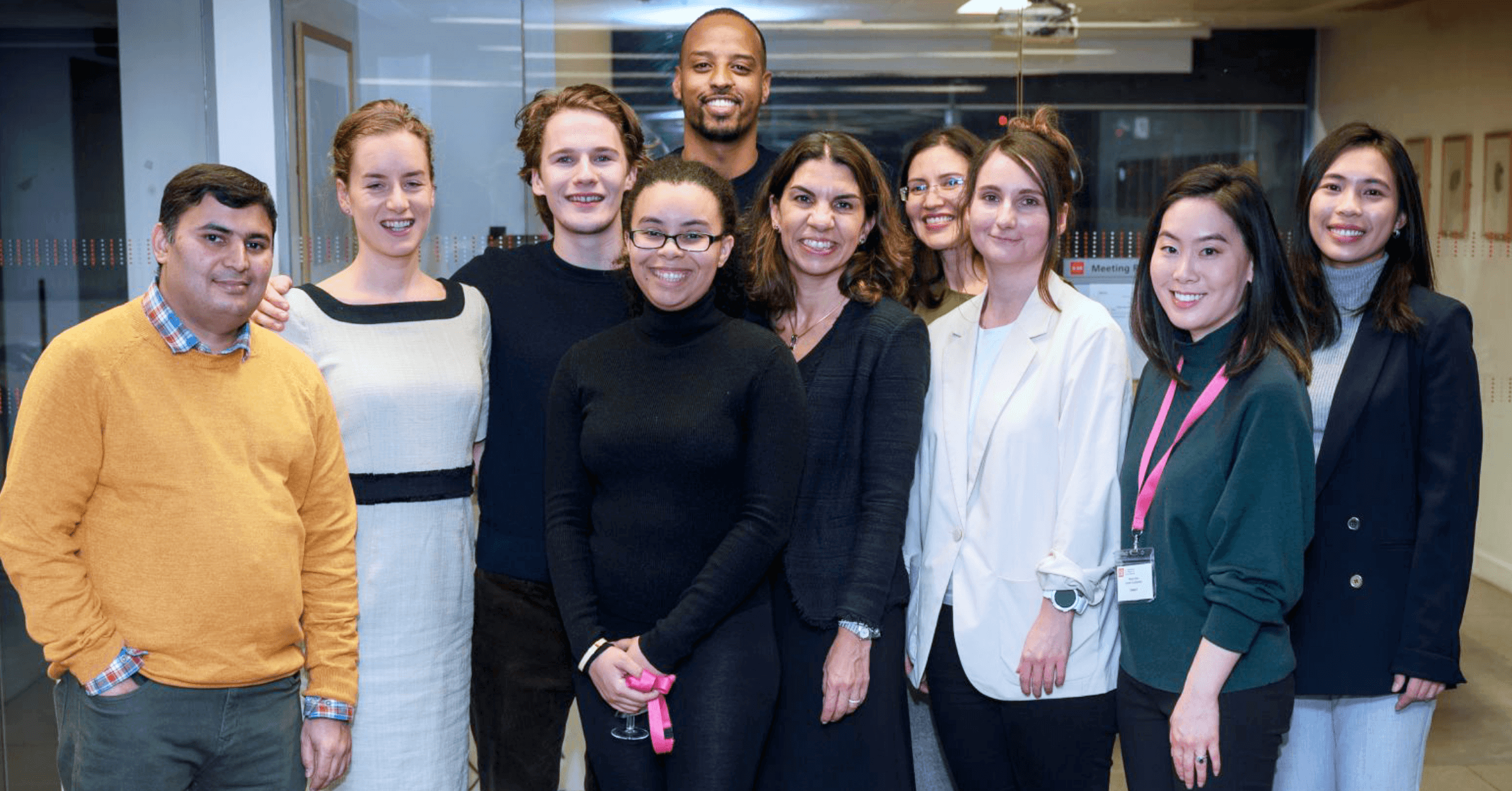
The Real-World Results of our LSE Learners

A common concern for learners everywhere – whether they’re enrolled in degrees, short courses, bootcamps or Master’s programmes – is whether their education will translate into results in the real world. The challenge for education providers is that every learner’s goals are unique, so a one-size-fits-all approach doesn’t work equally well for everyone. 

To keep the focus on real-world results, the ultimate measure of success for a Career Accelerator is the number of “unique career outcomes” achieved; the number of learners who meet or exceed the goals they set in the first few weeks of orientation.

There are also elements of a Career Accelerator – like 1:1 career coaching and a support team of success managers and facilitators – that adapt to the specific needs of each learner. This team helps you map a tailored approach that considers your aspirations, limitations, and biggest opportunities. 

As of January 2024, 87.5% of learners have achieved their desired career goal within just six months of completing a Career Accelerator.1

Since 2022, 230+ learners from the LSE Data Analytics Career Accelerator have achieved the intended outcome they set at the start of the programme, and that number continues to grow.2

Meet our learners

While our Career Accelerator learners come from a range of backgrounds, they’re all ambitious professionals who understand that data fluency is essential for better decision-making, improved business performance, and standing out in a competitive job market.  

Get a glimpse of the people starting out; transitioning into new fields; getting promotions; securing salary increases, and building meaningful careers to thrive in.

Our learners join the programme because they want to:

  • transition into a data analytics role
  • gain the skills job ads ask for and fill their technical skills gap
  • boost their professional image and be more marketable in a competitive job market
  • get hands-on experience and build a portfolio that proves their skills

Most of our learners are full-time working professionals who needed a programme that was structured and supportive. They were able to fit studying into their busy schedules with the help of the asynchronous learning experience; you can study and catch up on recorded sessions when it suits you best. Plus, you have a dedicated Career Coach to help you set goals, and a Success Manager to help you keep your studies on track.

“The experience of the Career Accelerator has been great. I’ve learned so many things outside of the course content and felt supported throughout. This programme has surpassed all my expectations.”


Here’s what they’ve achieved*

*Since writing this article, our learner outcomes have grown to 239, and counting.

I changed industries

“I re-entered the job market during the pandemic after running my own business for 20 years. I had no previous data experience and was hired as a senior data engineer.” 

I got promoted

“I was happy with my job but I couldn’t help thinking, ‘What next?’ (I got) a fresh perspective and I saw how many opportunities there are working in data. My new skills helped me take on more responsibility at work and feel more fulfilled.”

The average salary increase reported by our learners since completing a Career Accelerator is 21.9%. Many of our learners were looking for a programme to help them boost their professional image and opportunities. Earning a formal qualification from LSE gives employers credible proof of what you’re capable of, and ensures the recognition – and promotions – you deserve.

I pivoted into a new role

“I was working in the training and development team, but wanted to move into data. My employer was so impressed with my progress on the Career Accelerator that they promoted me to an analyst role effective immediately.”

Highlights of the learning journey

Career coaching

“Working with my Career Coach was a real eye-opener for me. I really questioned whether it was too late to do something different at my age, and she helped me see the world of possibilities that are out there. I left my career in education after 16 years and am now thriving in my new role as a lead data scientist.” 

Structured learning

“The material is presented clearly and the online platform is easy to use. The concepts build logically throughout the course and I like all the additional support, like the live sessions and student community, that you don’t usually get on most programmes. I also like the fact that I can study at times that work for me.”

Course content

“This Career Accelerator teaches a high quality of content. It’s very interactive with good practical exercises and strong support from the programme team.”

You can learn more about the Career Accelerator structure and experience here.

Online learning

“Studying online gave me the freedom to decide my own hours. The original draw to it was that it was a part-time course where I could work on it as well as spend time for myself and work on projects. That split was very useful for my own mental health and physical health in general.”

1Based on FourthRev graduate data as of January 2024.

2 Based on FourthRev graduate data as of March 2025.

Overcoming Imposter Syndrome During a Career Change

Making a career change is exciting, but the new and unknown often come with uncertainties and anxieties. Something many people struggle with is ‘imposter syndrome’, and, if this is something that affects you, you might be holding yourself back from achieving what you’re capable of.

So, what is imposter syndrome, and how do you overcome it? How do you disrupt feelings of inadequacy and self-doubt and show up as an honest version of yourself? In this blog post, we’ll delve into these questions and offer some practical advice to help you move forward.

What is imposter syndrome?

Although not an official diagnosis, psychologists and others acknowledge that imposter syndrome is a very real form of intellectual self-doubt. It’s that pervasive feeling that you don’t deserve success and refuse to believe your accomplishments are earned.

People with imposter syndrome feel like frauds, especially in their work roles, and often fear they’re not as creative, intelligent or competent as others think. They’ll say, “I don’t deserve this,” or write accomplishments off as ‘just hard work.’ Instead of acknowledging their efforts and capabilities and accepting praise, they’ll attribute their achievements to good luck or timing.

Not dealing with impostor syndrome can rob you of years of progress and professional satisfaction, undermine your performance, or, in the worst-case scenario, lead to an early career exit. A study by MIT shows it can lead to burnout, emotional exhaustion, work-family conflict, low self-esteem and decreased job satisfaction.

How common is imposter syndrome?

Imposter syndrome is a lot more common than you’d think. Around one-third of millennials suffer from it, and the American Psychological Association estimates 70% of us are likely to experience it at some point in our lives.

It’s often associated with high achievers – a 2020 KPMG survey of 750 female executives found that 75% experienced imposter syndrome at some point in their careers. The MIT study shows it’s also common among high achievers in minority or marginalised groups.

Imposter syndrome affects everyone, no matter who you are or where you’re at in your career. Haroon had reached a point where he was wondering, “What next?” While he loved what he did, he wasn’t sure how he could progress with the skills he had. That’s where the LSE Data Analytics Career Accelerator came in. Hear more about how enrolling in this programme helped him on his career journey.

Five ways to overcome self-doubt during a career change

If you’ve made a career change, overcoming imposter syndrome may feel impossible. But if you fail to manage it now, it can have a detrimental impact on your performance and lead to burnout and depression in the longer term. Here are some practical steps you can take to boost your self-esteem and move forward in your career with confidence.

Challenge negative thoughts

Because our thoughts, emotions, and behaviours are all linked, if you continuously believe you’re an imposter, your actions and reactions will align with that belief. 

For example, think of a time when you did something really well, but you only focused on the one thing you were criticised for. That’s when negative thinking becomes pervasive and self-debilitating.

The trick is to reframe your self-talk with positive affirmations like “I can do this”, and, with practice, it will help you move past feelings of self-doubt and take ownership of your career.

One way to combat imposter syndrome is through a technique known as cognitive restructuring, where a therapist works with you to find the triggers that spark negative thoughts and feelings. They’ll help you challenge and reframe your distorted beliefs by asking how valid your negative self-assessment is and then guide you to form a balanced, realistic view of yourself.

Another is mindfulness. Neuroscientists have shown that practising mindfulness physically affects areas of the brain related to emotion regulation, introspection, complex thinking, perception, and sense of self. Learn to do it the right way with a mindfulness teacher, or try Mindful to get started.

Build a support network

Networking is a powerful personal development tool that can help you overcome imposter syndrome by building your confidence and improving your relationships and communication skills. It provides the opportunity to talk to others who may have been in the same situation and allows you to identify your strengths and share your value, thereby helping you overcome your fears, doubts, and insecurities. Similarly, reaching out to a colleague or mentor could give you the reassurance you need to tackle a new job with more confidence. 

Working with a Career Coach has been a highlight for many Career Accelerator learners. After closing her business and considering a career move into product management, Iryna was convinced she’d have to start from scratch as an intern. Her coach helped her see the value of her previous experience and worked with her to build a CV that impressed her new employer so much that she was hired into an established role before even completing the programme. Read her story here.

Research suggests discussing your feelings with someone outside of your professional circle, such as a loved one, is one of the best ways to combat impostor syndrome. That’s because those close to you are more likely to care for you unconditionally and can better confirm your sense of worthiness, helping you put your doubts into context.

Own your achievements

Confident people own their accomplishments. Acknowledging and celebrating your accomplishments – both personally and publicly – is integral to internalising your achievements and interrupting the cycle of self-doubt. Doing this could also be as simple as learning to accept compliments rather than brushing them off.

Once you can do that, you’ll embody confidence and competence. Over time, this leads to improved performance, increased motivation, and a sense of well-being.

Let go of perfectionism

Adjusting your standards for success doesn’t mean you have to lower the bar, but it will make it easier for you to internalise your accomplishments and take on your new job with confidence.

Focus on your progress rather than trying for perfection, and learn to be okay with being good enough.

When you don’t quite meet your standards, learn to reframe ‘failures’ as opportunities to grow and learn. This will move you towards the success you’re after.

Embracing continuous learning

If you have imposter syndrome, you will likely avoid new opportunities and challenges because you fear rejection and failure. This can negatively affect your learning and growth and prevent you from reaching your full potential. 

When you adopt a growth mindset – the belief that your abilities and talents can be developed through practice, feedback and effort – you are better armed to embrace challenges, persist when things go wrong, and overcome setbacks.

If you struggle with imposter syndrome and constantly think that others are ‘better ‘ than you or know more than you, why not invest some time in upskilling yourself? When you acquire more skills and knowledge in your field, your confidence soars, and you can comfortably hold your own without feeling like you’re faking it.

Ready to step into a new career with real confidence?

Overcoming imposter syndrome is hard, and many people need the support of someone they can trust to build up their confidence.

The majority of learners on our Career Accelerators are in the process of changing their career trajectories and have benefited from the support of a Career Coach as they take this significant step forward. Take Elodie for example – after 16 years in the same profession, she let go of her fear that it was ‘too late for her’ and embraced a whole new career at age 50.

If you’re considering a fresh start and want some support as you recalibrate your career, take a look at our Career Accelerator portfolio and get in touch to find out more about how our career coaching works.

Start-up, Scale-up or Big Corp: How to Choose the Right Work Environment for You

On average, people spend about 50% of their waking hours working. It’s no wonder our work environment significantly impacts our happiness and satisfaction, and if we have a choice, we all want the time we spend working to be time well spent. 

Typically, the company type or stage and the size set the tone for the culture and environment. You’ll find that experienced professionals have preferences and passions for particular businesses, such as start-ups, scale-ups, or large corporations. Each has its pros and cons. 

Let’s look at the types of work environments and companies so that you can learn how to choose the right work environment for you.

Start-ups

A start-up is a company in the initial stages of business. It’s usually still developing its business model to grow exponentially. This phase is the riskiest stage of a company’s life cycle (around 75% of start-ups fail). Just this brief description gives a glimpse into what you can expect working here: you’ll experience change, focus on growth and experimentation, and must be hard-working, agile, and committed to the company’s purpose. 

10 Things to know about the start-up environment

  1. Employees tend to be young, collaborative risk-takers attracted to the creative culture and opportunity to build something from the ground up. 
  1. The job you’re hired for could evolve as the business’s strategy changes.
  1. Small teams mean you’ll often work out of your wheelhouse to get the job done. If the workload isn’t effectively managed, it could mean long hours. 
  1. Start-ups are rarely hierarchical, so ample opportunities exist to diversify your skillset. But, with only a few roles, promotions may be less common.
  2. You’ll have access to smart digital tools that make work asynchronous, efficient, and remote.
  1. Unfortunately, poor management is common among start-ups and contributes significantly to their failure, even in start-ups with high potential. Regardless, the environment offers an opportunity to learn directly from leaders and entrepreneurial founders.
  1. The niche focus, smaller size, and lack of bureaucracy allow start-ups to innovate and introduce new products and services faster than corporates.
  2. Communication between employees and leaders is transparent and open, and you’re likely to be involved in decision-making.
  1. It’s a fast-paced environment, so you must be flexible enough to adapt to constant change and be comfortable with uncertainty. 
  1. Start-ups typically don’t offer the benefits you get at larger companies. Still, the payoff is personally being able to impact the culture and business trajectory.

Scale-ups

When a company has a mature and profitable product or service and has established a product-market fit, it generally moves into scale-up territory. The scale-up phase is typically fast-paced, focusing on growth, recruitment, and market expansion. 

10 Things to know about scale-ups

  1. Employees’ experience levels range from junior to senior, teams are larger, and organisation structures are more formalised. 
  1. Joining a scale-up is less ‘risky’ – meaning the company has proven itself in the market but is still growing and evolving.
  1. Like start-ups, fast company growth means your role and competencies could change. It’s an exciting opportunity but can be challenging for some.
  1. With more roles and teams, you have the ability to promote and move laterally across departments.
  2. Scale-ups hire more specialised people with more defined roles instead of all-rounders.
  1. Scale-ups offer great opportunities to the emerging workforce, with eight in 10 employing graduates and six in 10 offering apprenticeships and/or work experience.
  1. Scaling up can create isolating silos as departments are formed, which could impact the ease of cross-functional collaboration.
  2. As a company scales up, it may become less transparent in its decision-making processes.
  1. Scale-ups are perfect for innovators who like to take the initiative and want to make a positive impact while meeting their career growth ambitions.
  1. Rapid organisational change means the ‘move fast and break things’ culture could replace a high-pressured, goal-focused market culture.

Big corporations

Large companies have established themselves as leaders in their respective industries. Although intensive growth could have slowed down by this stage, they have enough resources to weather economic downturns and invest in long-term projects and their people. Generally, they’ll seek to expand their product or service and global footprint.

10 Things to know about big corporations

  1. You’ll be working in large teams with diverse professionals who are potentially located around the world. 
  1. Big corporations typically have well-known brands, and working for them adds value and recognition to your CV.
  1. There is a clear organisational hierarchy and established job descriptions; you’ll operate in the role you were hired for. 
  1. Big companies have well-defined processes, which offer pros and cons. Decisions may be slower and processes less agile, but the steps are already established. 
  1. There’s often less transparency when sharing information with the employees. 
  1. You’ll typically be offered work perks and benefits, from subsidised food and free coffee to health insurance and retirement savings. 
  1. You have access to large pools of working resources and exposure to a diverse, multicultural working environment.
  1. While they’re highly efficient, large companies are less open to change. Your creativity, ingenuity, and ability to think outside the box may not be prioritised.
  2. There are many opportunities for professional development through learning and development programmes, mentorship, and networking.
  3. You’ll learn valuable skills to launch your own business and start-up. 

Align your strengths and interests with a company

Understanding a business’s structure and life cycle gives you a glimpse into the culture, pace, and career potential. 

Each company above shows the signs of a positive work environment – but there may be one more suited to your personality, strengths, and goals. Here are three steps for how to choose the right work environment for you:

  1. Understand yourself. Do a personality test like Enneagram or Gallop Clifton Strengths to help you figure out your character traits, preferences, and behavioural patterns. Consider how risk-averse you are, how important established procedures are, and whether you’d like to be a part of something new and evolving or join a more established and stable environment.
  1. Research the company culture. There are always exceptions to the norm – even the most established company can still be agile and open to change. You’ll learn much about the culture and environment by exploring a business’s careers and mission page, LinkedIn, and social media. Also, browse employer review sites. If it’s a large company, you can also research what press it receives (and even its stock fluctuation). 
  1. Start networking. If you’re interested in a company, reach out to an employee (LinkedIn makes networking very easy and accessible in this way). You may hear about opportunities before they’re advertised, establish a relationship before an interview, and get a first-hand account of the culture.


Use interviews to your benefit

Choosing the right work environment can lead to a job that increases your happiness and satisfaction, and influences your career trajectory.

One of the best opportunities to assess a working environment fit is during an interview.  You can unearth a lot when you phrase a question diplomatically and ask it with genuine interest. Here are ten questions to ask during a culture-fit interview:

  1. What would a typical day for me in this role look like?
  2. What is the preferred way of communicating here?
  3. Do you expect my responsibilities to change in the next six to 12 months?
  4. How will my role support the company to reach its goals?
  5. What type of people are successful here, and how are they rewarded?
  6. What’s your favourite part of working here, and what excites you about the company’s future?
  7. How do employees contribute to the company’s values?
  8. How has the company changed over the last few months/years?
  9. What challenges are the company facing?
  10. What’s your favourite office tradition?


What’s next? Once you’ve decided on a company and applied for a role, this is how you can prepare for (and nail) a job interview.

How to Take a Proper Year-end Break and Recharge

As the year draws to a close, it’s normal to feel a bit drained. While we all aspire for productivity and fulfilment, it’s crucial to acknowledge that allowing ourselves moments of rest is just as important as getting everything done.

The end of the year presents the perfect opportunity for a reset. It allows us to recharge for the new year ahead, reflect on our accomplishments, set new intentions, and relax – properly.

Here are some tips on how to take a better break from work during the end-of-the-year festive season. From planning a staycation to disconnecting from technology, we’ll discuss actionable strategies to leave you feeling refreshed and motivated, ready to take on the new year.

The importance of taking breaks

Taking time off from work to rest, relax, and recharge is not just a luxury – it’s a necessity. In today’s fast-paced lifestyle, it’s important to recognise that productivity and success are not synonymous with endless work hours and the absence of breaks.

Research shows that individuals who take breaks during the workday and utilise their holiday time perform better than those who don’t. Breaks are proven to decrease stress levels, lower the risk of burnout and mental health issues, and improve overall well-being.

In a society that encourages a fast-paced and highly productive lifestyle, it’s more crucial than ever to prioritise taking time off.  Rest is not a sign of weakness but a smart strategic decision that can lead to greater success in the long term.

4 ways to rest and take a real break

1) Plan ahead

Planning your off time and organising your workload ensures a smooth transition from work to rest.

Start by setting clear boundaries with your colleagues and stakeholders, and communicate these boundaries early on. Let them know what your tasks and deadlines are, and ensure everyone is aware of your leave time. This will help you avoid last-minute requests and keep your workload manageable before your break.

Delegating tasks is also an effective way to manage your workload and avoid unnecessary stress during your time off. Identify tasks that can be delegated and prioritise them based on their importance and urgency. Reach out to colleagues you trust and allocate the tasks accordingly.

Another effective way to manage your workload is to organise tasks and projects based on their importance and deadlines. Break down larger projects into smaller tasks and prioritise them based on urgency and importance.

Bonus tip: Always provide clear instructions and guidelines to avoid any misunderstandings or delays with your delegations. Create a to-do list and schedule your tasks accordingly to ensure maximum productivity.

2) Unplug from work

Amidst the hustle and bustle of our daily professional lives, it’s easy to get consumed by work-related tasks. Sometimes, it reaches the point where disconnecting from work feels impossible, even during our well-deserved breaks.

However, it’s imperative that you take the time to unplug and recharge to maintain a healthy work-life balance.

One way to achieve this is by managing email correspondence effectively, setting up auto-responders to let people know you will not be available, and establishing clearly defined boundaries that discourage work-related intrusions.

As professionals, we must prioritise our well-being to perform at our peak, achieve our long-term career goals, and present our best selves in both our work and personal lives.

3) Relax and take care of yourself

Taking time for relaxation and self-care is crucial for achieving success in both career and personal life. Engaging in activities such as spending time with loved ones, pursuing hobbies, doing physical exercise, and practising mindfulness can significantly rejuvenate your mind and body.

Spending quality time with loved ones can reduce stress and promote a positive mindset. Hobbies like reading, painting, or playing sports can help you unwind and stimulate creative thinking. Physical exercise can improve health, boost confidence, and increase energy levels. Practising mindfulness techniques such as meditation or deep breathing can reduce anxiety and increase focus.

Finally, taking a vacation can provide an opportunity to re-energise and remove yourself from the daily grind, giving your mind and nervous system a much-deserved and needed break.

Incorporating these activities into your routine can positively impact your overall well-being and enhance your productivity and motivation in the workplace.

Bonus tip: Take this holiday season as a time to experiment with what self-care activities work for you, and try to make them a habit for a more balanced mindset in the new year.

4) Reflect and set intentions

Take a moment to reflect on the past 12 months and consider your personal and professional growth. Introspection is a valuable tool that can help you identify your strengths and weaknesses and gain clarity on what you need to work on to reach your full potential.

Setting intentions for the upcoming year can help you realign and focus your energy and motivation towards achieving your goals. It’s a great way to ensure that you’re moving in the right direction and at the right pace.

Start the new year feeling fresh

Whether you’re starting a new job, looking to advance in your current role or switch career paths, the new year presents an opportunity for fresh starts and exciting opportunities. Take advantage of your break to plan and strategise for the upcoming year. With reflection, goal-setting, and planning, you can position yourself for personal and professional growth in the year ahead.

This holistic approach to success is something we prioritise in our Career Accelerator programmes. If you’d like to learn more about what we have on offer, take a look here.

In (and Out) of the Office with a Product Manager

We recently sat down with Nick Jemetta, a product management expert who contributed to the coursework material for the King’s Product Management Career Accelerator, to find out more about his day-to-day, both in and out of the office, to help paint a more holistic picture of what it’s like working in Product.

Nick has specialised in product management for the last 11 years.

His business, Stories Matter, enables teams and people to thrive by facilitating product-driven agility, wellbeing-first cultures and human leadership. It’s disruptive yet pragmatic – combining coaching, training, speaking and consulting – to create impact and generate value.

A day in the life of a Product expert

When asked about what a day in his life looks like, he said, “I don’t think there can ever be a ‘typical’ day for a business owner/dad/product manager. That’s the beauty of the worlds I work in and the roles I perform – every day is different, exciting and full of potential,” says Nick.

He did, however, share a snapshot of the routine he’s trying to cultivate:

☀️ Morning

  • Coffee first. I try to only have one per day.
  • I’m a morning person, so I try to get some exercise about 3 days a week.
  • Meditation and mindfulness, although I’m very inconsistent with this.
  • Before doing any work, I write my intentions, so I’m clear about where my energy will go and why/for what impact.
  • I turn on ‘Do not Disturb’ mode on my phone to facilitate deep work.

? Afternoon

  • I structure my work activities based on energy levels.
  • I try to go for a walk.
  • When my children come home from school, I focus on being present.
  • Throughout the day, I create physical separation from my phone – for example, there are no phones at family meal times.

? Night

  • I try not to burn the midnight oil unless it’s essential.
  • I consciously think about how I spend my time and what time I’ll go to bed to ensure I always sleep enough.

Interested in finding out more, we asked him to share some insights about his career journey, how he thinks about work/life balance and his advice on how to communicate effectively as a product manager.

Q&A with Nick

As a child, what did you want to be ‘when you grew up’?

I had no dream job until I fell in love with food. I made the decision to study Home Economics and had ambitions to be a chef. I was the only boy in my school studying the subject, so I was a target for the bullies.

It was a difficult time, but I didn’t let their ignorance stop me from completing my studies. In the end, it was my lack of ability that stopped me from pursuing a career in food. Burning one of the items in my final exam didn’t bode well!

Do you completely log off from work over weekends?

Since running my own business, work is one piece of my broader ‘life’ puzzle. That gives me the flexibility to move pieces around as necessary so whilst I prefer not to work on the weekends, I think less about what day it is and more about the balance I’m trying to create and the outcomes I want to achieve.

What are the main challenges product managers face on a daily basis?

Product managers have to balance and optimise for an almost unfair number of competing priorities. Recognising that they are only one person in a bigger team is crucial for managing the overwhelm.

There’s a constant risk of being drowned in ‘busy work’, which takes product managers away from the essence of their job – creating value for customers to create value for the business. Being very clear on the organisational goals and connecting the work of the team to these goals is a good sense check to mitigate this.

Many product managers can feel like order takers or backlog managers, which can be incredibly disheartening. These situations are often caused by a lack of strong product leadership and/or the absence of a compelling product vision underpinned by a clear product strategy. Getting these aspects right will start to shift conversations from building features to creating value.

Do product managers need to have a specific communication style? How do you best communicate with your team?

Effective product managers are like chameleons – they are adaptable. Communication, influencing and negotiation are three of the core ‘human skills’ for high-impact PMs. They need to be aware of their styles and adapt those styles to different situations and when working with different people.

Some general principles that served me well as a PM:

  • Over-communicate. Keep everyone updated on what you’re working on and why. Be clear about challenges and mitigations and don’t be shy to ask for help (just do it early and often).
  • Influence with context, not control. Unless you’re the manager of other product managers, you won’t have line management responsibility for the people you work with. But you’ll be completely reliant on them to achieve your goals. Focus on context and collaboration to drive alignment.
  • Show some humility and vulnerability. Product management can feel lonely and overwhelming. But remember, it’s a team sport. Share how you’re feeling with your team because a problem shared is a problem halved.

If you could go back in time and change one moment in your career, what would it be?

My first product job was a hybrid project/product role. I was given responsibility for building a strategic capability that would enable new customer experiences and open new revenue streams.

I was excited and anxious to have so much responsibility on my shoulders. I bore the burden of this responsibility too heavily, falling into the trap of believing success/failure was entirely down to me. I struggled to manage upwards and didn’t communicate early enough that I needed support.

The personal impact was substantial, and I nearly burned out.

I would go back to the moment I first felt completely overwhelmed, and I would have stopped. I would have communicated the challenges, communicated the impacts – customer, business and personal – and I would have insisted on the right level of support (resources, time, money, leadership engagement).

What would you say to someone who is keen to achieve a better work/life balance by moving into this career? Is this the role?

As I reflect on my own journey and look at how the industry is evolving, I believe product managers can have a fulfilling career and well-balanced life. To achieve this balance:

1) Individuals must take their well-being seriously, including setting clear boundaries.

2) Individuals must also accept that work will ebb and flow, which makes an ongoing commitment to well-being essential.

3) Organisational cultures and leadership structures need to evolve, creating the conditions for sustainable value creation instead of growth at any cost.

4) Line managers need to learn how to coach through context instead of managing through control.

For any aspiring product managers reading this, you can control points 1 and 2. For points 3 and 4, do your homework and ask the right questions of prospective employers.

Launch your own career as a product manager

You can now register to be part of the next cohort of the King’s Product Management Career Accelerator. Download a brochure here and then book a call with one of our friendly Enrolment Advisors to discuss your interest further.

The Future of Remote Work

Just three years ago, remote working jobs were only really available to people with special circumstances, and a geographically-flexible job role could have been a really big bonus. Fast-forward to 2022, and it’s estimated that 30% of the UK workforce is currently working remotely at least one day a week.

Findings by the global recruitment firm Robert Half also show a staggering 50% of professionals who began working from home would resign if they were forced to return to the office full-time. Research by Buffer shows that 97.6% of people who currently work remotely would like to continue to do so, at least some of the time, for the remainder of their careers.

More companies are urging their workers to return to the office, at least for a couple of days a week, but remote work – meaning from home, from shared spaces, a few days a week or permanently – is still very high on many employees’ lists when it comes to top-ranked company benefits.

We take a look at the future of remote working and the impact it’s having on employers and employees in 2023 and beyond.

Why full-time office work is not for everyone

Just two years ago, then-CEO of Twitter, Jack Dorsey, told employees they could work from home “forever”, making it one of the first companies to formalise a “lasting” remote work policy. Now, with new ownership under Elon Musk, the policy has been summarily scrapped. Twitter employees now have to put in 40 hours (of “hard grind”) a week at the office, or they’ll be out of a job.

Musk did the same at Tesla in May and although some resigned because they wanted more flexible working conditions, most complied out of necessity. Yet, the return-to-office policy has reportedly caused a significant decline in morale among employees. The policy has depleted some of Tesla’s power to recruit and retain top talent, and there are concerns that the company’s closed-mindedness about remote work could damage its diversity goals.

Experts warn that an authoritarian, top-down approach – rooted in mistrust and false assumptions – goes against best practices and creates an illusion of control that could undermine employee productivity, engagement, innovation, retention, and recruitment. Annie Dean, former Head of Remote Work at Meta, says Musk’s mindset is regressive and discounts the successes of the last two years of collaborative, digital-first work.

Groups most suited to remote working jobs

Not all industries are suited to remote work. Those requiring in-person contact or handling of materials and machinery will always require workers to be at their place of work. On the other hand, jobs where employees interact with computers, such as processing and analysing or interpreting data, and others that require creative thinking or learning, are ideally suited to remote work. Here are the groups of people who could remotely service these industries:

Tech industry workers

With the rapid expansion of the internet, mobile technology, and the internet of things (IoT), traditional and digital economies are merging into one. This means the demand for technical skills in fields such as data analytics, product management, UX/UI, cyber security and digital marketing is set to grow significantly across industries – and, along with it, accelerated educational opportunities to accommodate those making a career switch to tech.

Another change emerging a year into The Great Resignation is the power shift from employer to employee. Tech workers, in particular, hold this power and are one of the groups with the greatest ability to work remotely full-time. The fact is, remote working has always been a pretty natural fit for tech work, and we saw this at the start of the pandemic when the tech industry forged ahead, almost unaffected.

Today, employees use remote work possibilities as part of the job negotiation process and also demand access to innovation, upskilling and training. According to a June study by McKinsey, 52% of people in tech and math-related fields said they can work from home five days a week, while a further 37% said they can spend at least part of their week working remotely.

Tech companies that have embraced a remote-first policy include Facebook, GoPro, Reddit and Coinbase. Others, such as Dropbox and Slack, are allowing workers flexible options, like coming into the office for three days a week. FourthRev is proudly 100% remote and scored 95% on Flexa (which employs a strict verification process to see which companies are really flexible). It scores businesses on six key elements of flexibility: location, hours, autonomy, benefits, role modelling and work-life balance.

Underrepresented people and minorities

In its 2022 diversity report, Meta disclosed that most of its US candidates who accepted remote job offers were ethnic minorities, veterans and people with disabilities. Additionally, the report showed that globally, a big chunk of candidates who accepted remote job offers were women.

For women, the ability to work remotely has had a significant impact. It’s easier to integrate work and life activities and allows for autonomy when it comes to day-to-day work responsibilities. Women working in tech and fearing the Zoom ceiling (out of sight, out of mind) can take advantage of professional development opportunities that are essential to staying relevant.

The neurodivergent and those with cognitive differences

Another group that benefits from remote work is the neurodivergent – those with ADHD, dyslexia, Autism Spectrum Disorder, or other atypical neurological conditions. Workers with cognitive differences often struggle with in-person office culture and unpredictable commutes, but they offer traits and strengths such as inventiveness, creativity, strong attention to detail, and sustained focus.

Generation Z

According to the People at Work 2022 report, there is a lot of resistance to returning to the office full-time among younger employees. Almost 71% of 18-24 year-olds would consider looking for another job if their company insisted on a full-time return to the office.

Gen Z (those born between 1997 and 2012 and graduated between 2019 and 2021) sees working from home as an absolute necessity, more than any other generation. Many have only ever had remote working jobs, and one in five has never worked in an office environment.

A new global workforce

Employees are prioritising personal values, job security, well-being and flexibility over a big salary and a handful of perks. Nearly a quarter of workers said they are actively trying to change their job and/or move to a “future-proof” industry (the tech industry is one) where skills are in higher demand long-term, where they see the strongest earning potential and the best career development prospects.

The great productivity debate of remote work

For employers, flexible work arrangements not only make it easier to hire and retain tech workers, but they also see benefits in delivery. The Gartner 2021 Digital Worker Experience Survey showed that 43% of respondents believe flexibility in working hours enabled them to achieve greater productivity, and 30% of respondents said that time saved due to eliminating their commute was spent on being more productive.

Some academics argue that increased productivity is due to companies and employees becoming better at working from home. Their research also suggests that in-office employees tend to work much less than the full eight-hour day and, in reality, only spend around 39% of their time working. The rest is spent on reading news websites, checking social media, chatting with colleagues about non-work topics, going for lunch or coffee, making non-work calls, and even looking for other jobs.

What today’s remote-first generation wants from employers

Resourcing for remote desk job industries, such as financial services, technology, or professional services, is relatively easy and cost-efficient. Here are some steps companies can take to make remote work, work for them:

  • Offer learning and upskilling opportunities through courses, mentors and career coaches.
  • Provide office-grade furniture, computers, scanners, webcams, subscriptions to software and remuneration for WiFi.
  • Provide software and security training for employees to protect their information and devices.
  • Establish new roles to exclusively manage remote teams (Head of Team Anywhere, President of Flexible Work, Chief Remote Officer – see more at GitLab) and create a database of commonly used remote-work words and phrases, so everyone’s on the same page.
  • Shift to asynchronous work with asynchronous tooling. Async workers have the autonomy to set their own schedules around their objectives, and the tools allow flexible, remote-first to stand on its own.

A positive (and cost-saving) shift

Employers are seeing benefits to the bottom line, which comes from cutting overheads and the reduced cost of renting floor space. For employees, it means they have a better work/life balance and, financially, it’s estimated that the average UK employee is saving a total of £44.78 per week, primarily in travel and food, by working from home full time. With the cost of transport and daunting commutes, this makes remote working jobs in London particularly attractive.

The transition to remote work is well underway and is set to continue into 2023. This shift shows businesses are acknowledging advancements in business culture and technology, as well as addressing employee values. While every business’ pivot to hybrid and remote will look different, attracting and retaining top talent is key to business success, and remote working job opportunities create an atmosphere of trust and future-forward thinking – something Musk may learn too late.

Interested in developing your skills for a remote career? Book a call with an Enrolment Advisor to learn more about our Career Accelerators, a launchpad for those interested in a career in the fast-growing digital economy.

Your Guide to Switching Career Paths

In the wake of the Covid-19 pandemic, an interesting new statistic has emerged: 27% of students and graduates surveyed in the United Kingdom said the lockdown has had a significant impact on how they view their lives and has led them to rethink their careers. Reasons given included the increase in training and development opportunities and wanting to find a career that offered a better work-life balance.

Young people aren’t the only ones considering a career change. The UK Office of National Statistics published a report showing that 58% of workers aged over 50 years – who left employment since the start of the pandemic – are considering returning to work but are looking for jobs offering flexible working hours (32%), better pay (23%), and opportunities to work from home (12%). Incidentally, these are the professional values the tech industry provides in droves.

Considering a career change into tech?

Looking at the World Economic Forum’s Future of Jobs Report, the penetration of AI into virtually every industry is set to replace around 85 million jobs worldwide by 2025. That sounds alarming but in reality is a huge opportunity for those thinking of changing careers, especially if you’re drawn to a job in tech. The salaries are attractive, the work is stimulating, and very few other sectors can compete in terms of job security.

Not having a background in tech is also no longer a significant hurdle to making a career change into a digital field, and you don’t have to start at the bottom either. A background in finance, for example, sets you up for a job as a data analyst; a graphic designer can easily become a web designer, and a small business owner can quickly catch onto product management. Wise moves make career changes all the more accessible, and the barrier to entry may be less daunting when you consider your existing strengths.

What to consider before switching careers

Whether you’re in your 20s or approaching the half-century mark, it’s never too late to make a career switch and do what you love. The challenge, however, is knowing where to begin. If you’re ready for a change of career, follow along as we guide you through the five important career-switching steps that will greatly increase your chances of success.

1. Know yourself and discover your superpower(s)

One of the most important steps when considering a career change is to do some introspection. Jot down your interests, skills and values, what you’re good at, and where you want to go. Evaluate both your hard and soft skills and isolate those that are transferable. List positive feedback you’ve received and ask others for their objective opinion about what you’re good at.

Tracy Shuff, Career Coach at FourthRev has some great tips on how to get to know yourself. Her advice is relevant regardless of which direction you’re going in.

Transferable skills are those that enable you to do your job well, whatever it may be. They are personal skills that can be transferred between jobs, departments, and industries and are listed in almost every job posting.

In the job search Bible, Knock ‘em Dead: The Ultimate Job Search Guide, author and career guru Martine Yohn Yate lists the following as evergreen transferable skills: technical competence, communication, multitasking, teamwork, creativity, critical thinking, and leadership. If you’re considering a tech career, there are some specific transferable skills companies are looking for that should be added to the list. These are empathy, organisation, problem-solving, resourcefulness and time management.

As an example, and this goes for any industry, Randeep Sidhu, Chief Product Officer at Reliance Health, is clear when asked how easy it is to switch to a career in product management: “Easy – if you understand what you superpower is. Product Managers are like Avengers, each is different and we have each different specialist skills. Some powers are most useful in different environments, like I’m good at working in AI, Health and fast-growing start-ups. Understanding what your core skills are means that you can transition into a Product role, but only after you have mastered the basics.”

If you’re thinking of a career in tech, and once you’ve identified what skills your new career requires, the fastest route to acquiring them is by working with a career coach who can help you hone those skills and put them on your CV with confidence.

2. Are you happy in your current role/field?

You wouldn’t be considering a career change if you were happy in your job, right? This may mean the time is right for you to make the switch. See if any of these describe how you feel in your current job:

  • You’ve been robbed of your confidence
  • You have no work-life balance
  • You’re eternally bored and don’t see a future
  • You’re just in it for the money
  • You stay because it’s comfortable, despite being uninspired or demotivated
  • You feel undervalued
  • You’re not learning or growing
  • You’re don’t enjoy what you’re doing
  • You’re constantly stressed
  • Your place of employment’s values don’t align with yours

If you tick a couple of these boxes, the time may have come for you to not only make a job change but to rethink your entire career.

3. Research your future career

When preparing for a career change, the more research you do, the better position you’ll be in to make the right decision. Here are five actions you can take:

  • Browse job boards for careers you’re considering going into and note the job requirements, skills and KPAs.
  • Contact others who already work in the industry you’re interested in. LinkedIn is a great place to start, and you can also see what paths others have taken to get where they are.
  • Find out about courses you could take to give you the necessary hard skills needed to make the leap.
  • Speak to professional career coaches and mentors who can help you identify your strengths and weaknesses and how well you’re suited to your dream job.
  • Internships, job shadowing, work placements, volunteering and part-time work are great ways to build skills and try out a job before making a switch.

4. Upgrade your skills

Once you’ve narrowed down what human skills your new career requires, look for ways to develop those you’re not that good at before making the transition.

You can read books, watch YouTube videos, or do short online courses to learn how to be a good leader. Or, if you’ve decided to make a career change to tech, you can join our Career Accelerator programmes, where you can gain both the hard and soft skills you need to take the next step. Each learner is assigned a Success Manager and Career Coach who help them understand their skills gaps, such as collaborating with peers, goal setting, and ways to present themselves with confidence.

A career change likely comes with a new set of hard skills. Tackle this by finding out whether the path requires additional education or certifications, and consider taking online courses and gaining work experience in your new industry.

With COVID-19 accelerating the need for digital skills, employers are looking for people who can hit the ground running. To this end, a project-based learning approach provides those considering a change to a job in tech with the technical, business and human skills they need to solve real-world challenges and thrive in the digital economy.

Make your career change a reality

If you’re considering switching to a tech career, we have a dedicated team that will help you identify and develop your human skills – while providing technical knowledge in high-demand technologies – to ensure a holistic approach towards career advancement.

Speak with an Enrolment Advisor to learn more about our Career Accelerators and how our career coaches and success managers can enable you to harness your transferable skills and keep you on track to meet your present and future career goals.

Book a call with an advisor on the King’s Product Management Career Accelerator.

Book a call with an advisor on the LSE Data Analytics Career Accelerator.

5 Top CV Tips from a Product Management Recruiter

We asked a top UK recruiter to share her tips for getting noticed and hired as a Product Manager.

“There are plenty of Product Manager roles out there,” says Annie Jackson, Head of Talent at Cleo.

Although tech hiring has slowed globally, the impact of the recession has mostly hit roles like Talent Acquisition and Human Resources, Sales and non-technical positions rather than core technical roles like engineering and product management. Still, it means more than ever it’s essential to network and be proactive when approaching companies.

Here are Annie’s top tips for boosting your CV:

1) Great presentation. Try to keep your CV succinct and highlight your achievements instead of listing your responsibilities. I normally recommend a one-page CV. It’s fine to go over that, but no more than 2 pages, as the longer it gets, the less likely people are to read it. Try and stick to a simple and easy-to-read font. If you want to get creative, there are some great CV templates you can use online.

2) Highlight relevant skills. Tailor your CV to the roles you’re applying for. Review the job description, highlight two or three top skills needed for the role, and then make sure that you’re demonstrating them somewhere on your CV.

3) Showcase industry experience. If it’s a role within a specific industry, highlight any relevant industry experience or exposure you have. For example, if it’s a FinTech role, highlight any FS experience you might have.

4) Go above and beyond. A great cover letter, an accompanying case study, or a portfolio can really set your application apart.

5) Don’t just apply – hustle. Look on LinkedIn and see if you know anyone at the company you’re applying to. Try to find the VP of Product/CEO/Head of Talent or recruitment manager on LinkedIn at that company and write to them to follow up on your application. There are some great product management-specific agency recruiters who will be able to support you with industry information and tips to help you stand out. They may even be able to connect you to great junior product management opportunities.

Pivoting into product management? What to do before you start preparing your CV:

Be curious

Spend as much free time as you have talking to technical staff like Engineers and Designers to gain more insight into what they do at a day-to-day level. Working with Product Designers and Engineers is a large part of the role, and building relationships with them is key too.

Develop a business mindset

Having a commercial mindset and understanding of business strategy is also important for a Product Manager, so try and speak to commercial strategy and operations staff at your company or even your CEO/COO to learn more about how your business model works and how your business could improve. It’s also important to read up about these areas, so connect with product leaders on Linkedin and Twitter and see which resources they recommend. You can always highlight those you’ve read on your portfolio or CV.

Showcase your transferable skills

Once you start putting your CV together, focus on showcasing your experience and skills with user focus, appreciation for the voice of the customer and a high-level understanding of UX/UI, particularly for consumer-focused roles. Try to shadow or partner with your user research or customer support teams to learn about what customers are saying and how you can use their feedback to drive improvements to your company’s product or service.

Accelerate your career progress with our Career Accelerator in Product Management. For more information on the King’s Product Management Career Accelerator, request to download the course brochure here. The next intake starts 24 April 2023.

Bridging the digital skills gap: why human and technical capabilities need to go hand-in-hand

It’s no secret that the pandemic has accelerated the adoption of new technologies. Across every industry, we are seeing major changes to desired skill sets as employers attempt to rebalance and future-proof their workforces. The issue is that there aren’t enough suitable candidates to go around. If we take a global view, the working-age population is declining whilst the number of retirees is on the rise.

Meanwhile, executives are finding skilled workers hard to find: more than half of senior decision-makers have reported making a bad hire in the past 12 months. Smaller businesses are more likely to feel the impact too, with 82% of SMEs reporting severe negative effects.

Looking ahead, the problem is only going to get worse. According to the World Economic Forum’s Future of Jobs report, up to 85 million jobs could be displaced by 2025, while 97 million new roles emerge.

While predicting how the shift in technology adoption will affect recruitment in the longer term is not an exact science, employers are now clearly pressing to onboard candidates who have the right balance of skills needed for the digital economy. And, for me, the solution to this conundrum lies in greater university-employer collaboration, with a focus on programmes that can equip job seekers with both the technical and softer, more human skills businesses are now looking for.

What are employers looking for?

As technologies such as AI and automation take root in the new digital economy, the workforce of the future will clearly require new technological skills. Yet, looking at this issue from the technological lens leads to oversimplification and has arguably exacerbated the issue.

Let’s look at the accountancy sector as one example. Big data and AI are transforming the industry, with up to 42% of traditional finance activities set to become automated, according to a study by McKinsey.

As a result, successful candidates now require the ability to conduct financial analytics – drawing off both data sets and their wider industry knowledge. Yet, when we recently interviewed several major accounting firms, including EY, Baker Tilly, KPMG and Tech Mahindra, they all raised the same point first: today’s accountancy graduates are lacking in fundamental human, social and emotional capabilities in this new context.

As technology begins to automate elements of the profession, recruits are increasingly required to act more like business partners. They need to evaluate, question and interpret operational and financial information to generate insights. They need to be critical thinkers. And then, they need to effectively communicate those insights to stakeholders in the appropriate manner.

So, according to our consultation, entry-level accountants need better education in financial analytics, but also simultaneously in the human skills that enable recruits to effectively engage with the role and succeed within an organisation.

The same story is emerging across other industries looking to move forward in the digital economy; they now need workers with advanced technological skills, as well as unique sets of higher-order human skills.

Current solutions aren’t delivering

Ironically, in the past, many viewed automation as a direct threat to the job market, but as the WEF prediction shows, we’re actually seeing the opposite trend – technological adoption is creating new niches and a raft of new growth opportunities.

The trouble is we haven’t successfully filled them – yet. Part of the issue with traditional programmes is that they are academically robust and build “graduate attributes”, but they often fail to equip students with the real-life skills to be productive in the workplace.

However, private-sector training solutions, such as boot camps, simply do not build the critical thinking and problem-solving skills so crucial for longer-term success in growing and adapting to a changing world, and there’s no regulatory framework that monitors teaching standards and the academic rigour of these programmes.

At present, many employers also rely on apprenticeships to produce digital-economy-ready recruits. Whilst they do combine elements of work and study, by their very nature, they’re time intensive. It can take up to three years to complete a programme. And, with technological change occurring at an accelerated rate, I’d question whether they can move fast enough to solve the global digital skills crisis.

Combining academic rigour and industry insight

For SMEs, developing a competitive workforce from within is resource-intensive and may not be a quick solution to urgent growth needs. Sadly boot camps, traditional university degree offerings, and apprenticeships are all suboptimal.

Universities will ultimately be the key vehicle for developing the capabilities required by the digital economy. Individuals and employers look to higher education to develop the creative, complex and cognitive capabilities that are still in high demand. And they are also one of the few organisations with the scale to effectively tackle the problem.

To do this, they should combine their traditional academic rigour with the development of applied digital skills by partnering with the leading industry players in the world of technology. This best-of-both-worlds approach offers learners the chance to ground their technical skills with the high-order capabilities needed to accelerate their careers.

Industry partners can also inform project-based learning by leveraging in-demand enterprise technologies to allow learners to demonstrate their capabilities in real business contexts. This approach also helps to build sustainable and competitive workforces in the long term capable of learning and re-learning.

It’s clear that a focus on either the technical or the traditional skill set in isolation will not offer up enough work-ready recruits complete with the tangible and intangible skill sets required to thrive in the new business context. Yet, by combining the academic rigour of universities, which develops the human or soft skills, with employer insight focused on the technical skills of the moment, we can future-proof our workforces.

Learn more about our Career Accelerator programmes and our best-of-both worlds approach to education.

Written by Mark Lester

Also published by SMEweb.com – 22/06/2022